

Small Exercise Equipment for Home: Expert Guide 2026

Creating an effective home workout space no longer requires a dedicated room or expensive commercial-grade machines. Small exercise equipment for home use has evolved dramatically, offering professional-level training options that fit into apartments, bedrooms, and even corner spaces. Whether you're building strength, improving mobility, or maintaining cardiovascular health, compact fitness tools deliver results without sacrificing square footage or budget.
Why Small Exercise Equipment Works for Modern Lifestyles
The shift toward home fitness has accelerated dramatically since 2020, with millions discovering that effective training doesn't require bulky equipment. Small exercise equipment for home workouts addresses several critical challenges: limited space in urban living environments, budget constraints, and the need for versatile tools that serve multiple training purposes.
Research supports this approach. The World Health Organization's physical activity guidelines recommend adults engage in 150-300 minutes of moderate-intensity activity weekly, goals entirely achievable with compact equipment. Additionally, the American College of Sports Medicine demonstrates that resistance training with small tools provides substantial health benefits, including improved bone density, metabolic health, and functional strength.
Key advantages of compact fitness equipment include:
- Space efficiency allowing training in 4-6 square feet
- Portability for travel or outdoor workouts
- Lower initial investment compared to large machines
- Versatility across strength, cardio, and flexibility training
- Easy storage in closets, under beds, or on shelves
The psychology of home fitness also favors smaller equipment. When tools are accessible and visible, you're significantly more likely to use them consistently. A resistance band hanging on a door hook prompts spontaneous training sessions that a buried treadmill cannot.
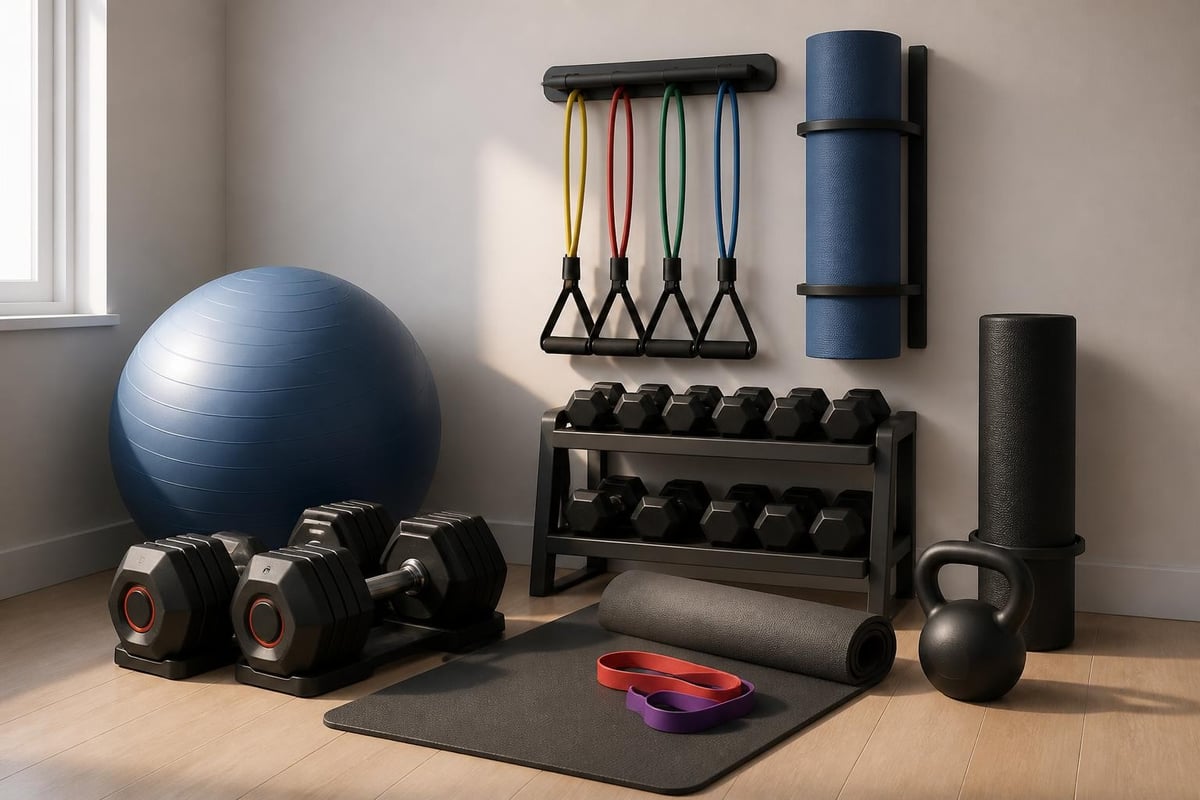
Essential Categories of Small Exercise Equipment for Home
Resistance Training Tools
Resistance bands rank among the most versatile small exercise equipment for home strength training. A systematic review published in PLOS ONE demonstrated that elastic-band resistance training significantly improves both physical and mental health outcomes, particularly in older adults. Recent research in Frontiers in Sports and Active Living further validates elastic bands for lower-limb strength and balance improvement.
Resistance band benefits:
- Progressive resistance from 5 to 150+ pounds
- Target every major muscle group
- Joint-friendly resistance curves
- Cost typically $15-$50 for complete sets
- Pack flat for travel or storage
Adjustable dumbbells represent another cornerstone of compact home training. Modern designs replace 10-15 pairs of traditional weights with a single adjustable system occupying roughly one square foot. These tools enable resistance training workouts recommended by the American Council on Exercise, from basic movements for beginners to advanced compound exercises.
| Equipment Type | Space Required | Price Range | Versatility Score |
|---|---|---|---|
| Resistance Bands | 1 sq ft | $15-$50 | 9/10 |
| Adjustable Dumbbells | 2 sq ft | $150-$400 | 10/10 |
| Kettlebells (16-24kg) | 1 sq ft | $40-$80 | 8/10 |
| Suspension Trainer | Door mount | $100-$200 | 9/10 |
Understanding how to transform your fitness journey with smarter gear means selecting tools that match your training goals and available space.
Bodyweight Enhancement Equipment
Yoga mats and exercise mats serve as the foundation for bodyweight training, stretching, and core work. Quality mats provide cushioning for joints while maintaining stability for balance exercises. Premium mats typically measure 6 feet by 2 feet when unrolled but store compactly when rolled.
Stability balls, also called Swiss balls or exercise balls, add instability to traditional exercises, forcing core engagement and improving balance. A 55-65cm ball suits most adults and deflates for storage. These tools excel for:
- Core strengthening exercises
- Flexibility and stretching routines
- Desk chair alternatives for active sitting
- Balance and proprioception training
- Pregnancy and postpartum exercises
Ab wheels and sliders create intense core challenges in equipment weighing under two pounds. Sliders work on carpet or hardwood, enabling exercises like mountain climbers, hamstring curls, and pike-ups with minimal space requirements.
Cardiovascular Equipment Options
Jump ropes deliver exceptional cardiovascular training in the smallest possible package. Professional-grade speed ropes cost $15-$40 and require only ceiling height and 6 feet of floor space. Ten minutes of jump rope burns approximately 100-150 calories while improving coordination, bone density, and cardiovascular endurance.
Mini steppers and under-desk ellipticals provide low-impact cardio alternatives. These compact machines occupy less than four square feet and enable exercise while watching television or working. Consumer Reports' home gym setup guide highlights these options for individuals with joint concerns or limited mobility.
Folding exercise bikes represent the larger end of small exercise equipment for home use but still collapse to approximately 18 inches wide for storage. Modern designs include magnetic resistance, digital tracking, and quiet operation suitable for apartments.
Selecting the Right Small Exercise Equipment for Your Goals
Strength Building Priorities
For those focused on strength and muscle workout goals, prioritize progressive resistance tools. Start with adjustable dumbbells or a comprehensive resistance band set, then add specialized equipment based on weaknesses or preferences.
Effective strength-focused combinations:
- Adjustable dumbbells (5-50 lbs) + pull-up bar
- Resistance band set + suspension trainer
- Kettlebells (16kg, 24kg) + ab wheel
- Dumbbells + stability ball + yoga mat
The key is ensuring progressive overload capability. Your small exercise equipment for home must allow incremental resistance increases over months and years. Many beginners underestimate how quickly they'll adapt, then face plateaus with fixed-weight tools.
Mobility and Recovery Focus
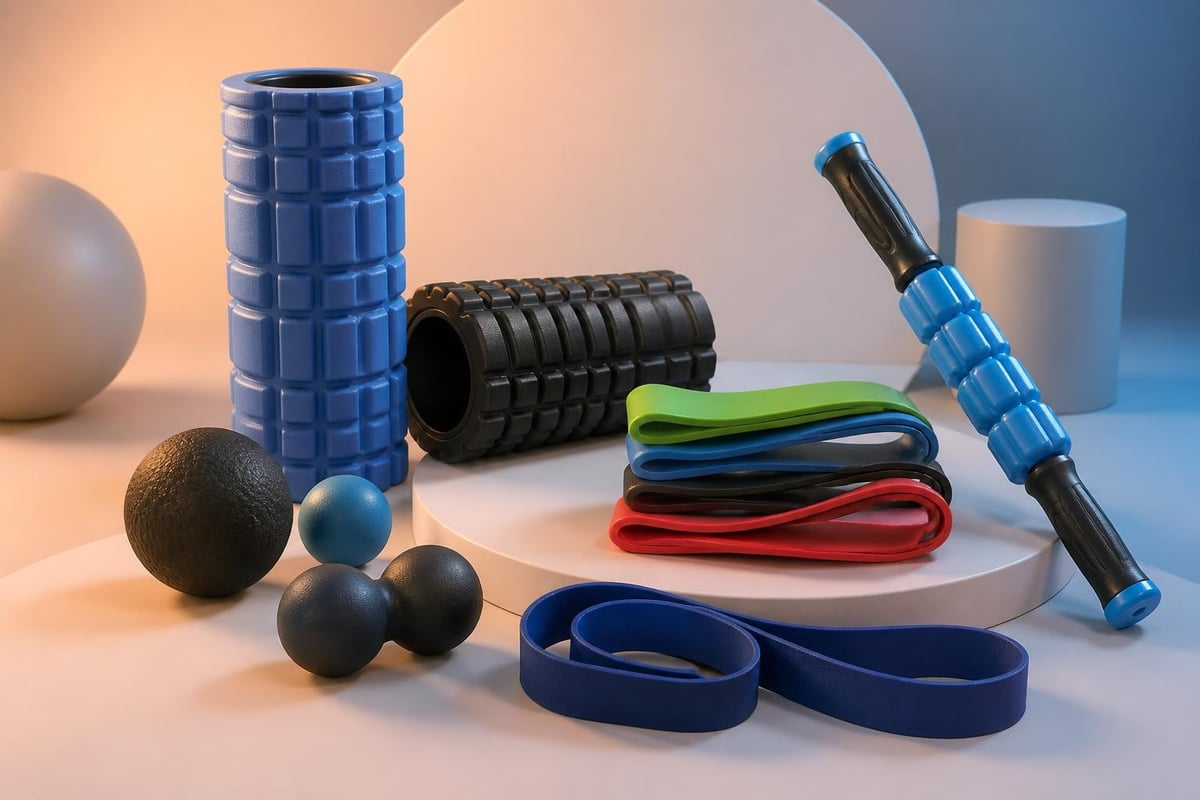
Active individuals benefit enormously from dedicating space to recovery and muscle care equipment. Foam rollers, massage balls, and stretching straps occupy minimal space but dramatically impact training sustainability.
Quality foam rollers cost $20-$60 and address muscle tension, improve blood flow, and maintain tissue health between sessions. Understanding why recovery matters as much as your workout helps prioritize these often-overlooked tools.
Space-Maximizing Strategies
Harvard Health's guidance on creating a customized home workout space emphasizes organization and accessibility. Even the best equipment fails if buried in a closet or requiring complex setup.
Strategic storage solutions include:
- Wall-mounted resistance band anchors and hooks
- Vertical dumbbell racks (12 inches wide)
- Door-mounted pull-up bars with hook storage
- Rolling carts for multiple small items
- Over-door organizers for bands, ropes, and straps
The Cleveland Clinic recommends keeping frequently-used equipment visible and accessible, which psychological research confirms increases usage frequency by 40-60%.
Building Effective Routines with Compact Equipment
Full-Body Training Programs
Small exercise equipment for home enables comprehensive programming targeting all major movement patterns. A complete routine should include:
- Push movements: Push-ups, dumbbell presses, band chest press
- Pull movements: Resistance band rows, suspension trainer pulls
- Leg exercises: Goblet squats, Romanian deadlifts, lunges
- Core work: Planks, ab wheel rollouts, stability ball exercises
- Mobility: Dynamic stretching, foam rolling, yoga sequences
The Mayo Clinic Sports Medicine team suggests structuring home workouts into 20-40 minute sessions three to five times weekly. This approach fits modern schedules while providing adequate stimulus for adaptation.
| Training Split | Equipment Needed | Session Duration | Weekly Frequency |
|---|---|---|---|
| Full-Body | Bands, dumbbells, mat | 30-45 min | 3-4 days |
| Upper/Lower | Dumbbells, pull-up bar | 35-50 min | 4 days |
| Circuit Training | Bands, jump rope, kettlebell | 25-35 min | 3-5 days |
| Mobility Focus | Mat, foam roller, bands | 20-30 min | 5-7 days |
Progressive Programming Principles
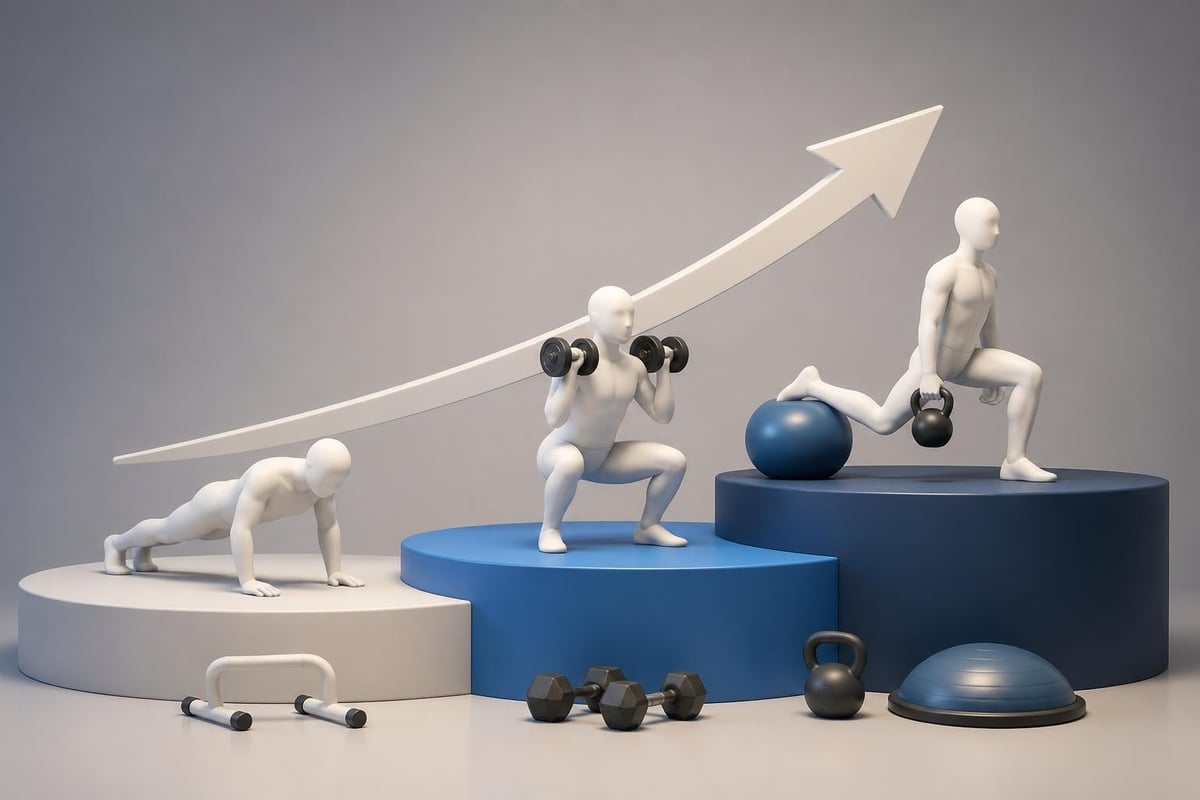
Success with compact equipment requires systematic progression. Simply repeating the same routine produces diminishing returns after 4-6 weeks. Implement these strategies:
Progressive overload methods:
- Increase resistance (heavier bands or weights)
- Add repetitions or sets
- Reduce rest periods
- Increase time under tension
- Advance exercise variations
For example, bodyweight squats progress to goblet squats, then to Bulgarian split squats, then to single-leg squats over 12-16 weeks. Each variation demands the same small exercise equipment for home but creates new adaptive stimulus.
Exploring functional gym equipment principles helps understand how simple tools enable complex movement patterns that translate to daily activities and sports performance.
Quality Considerations and Investment Strategy
Durability and Safety Standards
Not all compact equipment delivers equal value. Quality differences significantly impact longevity, safety, and training effectiveness. When buying exercise equipment, prioritize these factors:
Quality indicators:
- Warranty coverage (minimum 1 year, preferably 3-5)
- Weight capacity ratings 50% above your bodyweight
- Material certifications (latex-free options, phthalate-free plastics)
- Manufacturing transparency and brand reputation
- User reviews mentioning durability beyond 6 months
Resistance bands illustrate this principle perfectly. Budget bands ($10-15) frequently snap within weeks, creating safety hazards and frustration. Professional-grade bands ($30-50) utilize layered latex or fabric-covered construction lasting years with proper care.
Cost-Effective Building Strategies
Building a comprehensive home gym with small exercise equipment requires strategic purchasing rather than buying everything simultaneously. A phased approach allows budget spreading while ensuring you actually use each piece before adding more.
Recommended acquisition timeline:
- Month 1: Yoga mat, resistance band set ($50-80 total)
- Month 2: Adjustable dumbbells or kettlebell ($80-150)
- Month 3: Jump rope, foam roller ($30-60)
- Month 4: Suspension trainer or pull-up bar ($60-120)
- Month 5: Stability ball, ab wheel ($40-70)
This five-month plan costs $260-480 total while providing everything needed for years of effective training. Compare this to single commercial machines costing $500-2000 with limited exercise options.
Specialized Equipment for Specific Populations
Senior Fitness and Fall Prevention
Small exercise equipment for home proves particularly valuable for older adults seeking to maintain independence and prevent falls. The previously mentioned elastic-band research specifically validates bands for balance and lower-limb strength in seniors.
Age-appropriate equipment priorities:
- Light resistance bands (5-15 lbs) for joint-friendly strength work
- Foam balance pads for proprioception training
- Lightweight dumbbells (3-10 lbs) for upper body maintenance
- Chair-height stability balls for seated exercises
- Non-slip yoga mats with extra cushioning
These tools enable progressive training while minimizing injury risk, helping maintain functional capacity for daily activities like climbing stairs, carrying groceries, and preventing falls.
Rehabilitation and Physical Therapy Applications
Physical therapists frequently prescribe small exercise equipment for home rehabilitation programs. These tools enable consistent therapeutic exercise between clinic visits, accelerating recovery timelines.
Resistance bands dominate rehabilitation protocols because they provide accommodating resistance matching natural strength curves. Injury recovery progresses safely from passive range-of-motion work through progressive strengthening.
Prenatal and Postpartum Fitness
Pregnancy and postpartum periods benefit from home fitness equipment that adapts to changing capabilities. Stability balls support labor preparation and core rehabilitation. Light resistance bands enable strength maintenance without excessive loading.
Pelvic floor health receives particular attention, with small tools like Kegel trainers and resistance bands supporting this often-neglected area critical to long-term wellness.
Maximizing Results Through Consistency
Habit Formation Strategies
The most sophisticated small exercise equipment for home delivers zero value if unused. Creating sustainable habits requires environmental design and psychological strategies.
Research on fitness routine adherence reveals that visible equipment cues increase workout frequency. Keep your most-used items in high-traffic areas rather than hidden storage. A resistance band draped over a bedroom door handle serves as a constant training reminder.
Consistency-building tactics:
- Schedule workouts as non-negotiable appointments
- Prepare equipment the night before morning sessions
- Use habit stacking (workout after coffee, before shower)
- Track sessions visually with calendars or apps
- Start with 10-minute minimum commitments
The principle that consistency beats intensity for long-term fitness applies powerfully to home training. Three weekly 25-minute sessions outperform monthly 90-minute marathons.
Tracking Progress and Adaptation
Monitoring performance ensures your compact equipment investment generates measurable results. Document these metrics:
- Strength markers: Repetitions, resistance levels, exercise variations
- Endurance measures: Total workout time, rest periods, circuit completions
- Mobility assessments: Range of motion tests, flexibility benchmarks
- Body composition: Measurements, photos (more reliable than scale weight)
- Functional capacity: Daily activity ease, energy levels, sleep quality
Digital apps streamline tracking, but simple notebooks work equally well. The key is consistent recording enabling pattern recognition and informed programming adjustments.
Integration with Broader Wellness Goals
Small exercise equipment for home supports comprehensive wellness extending beyond physical performance. Holistic wellness and nutrition recognize that training, recovery, sleep, and nutrition function as interconnected systems.
Your compact home gym enables:
- Stress management through movement and endorphin release
- Sleep quality via physical fatigue and circadian rhythm regulation
- Mental clarity from exercise-induced neurochemical changes
- Social connection when training with household members or virtual communities
- Confidence building through progressive achievement and capability expansion
These psychological and emotional benefits often outweigh physical changes, particularly during the first 8-12 weeks when visible transformation lags behind internal improvements.
Time-Efficient Training for Busy Professionals
Executive longevity strategies increasingly emphasize brief, intense training sessions using minimal equipment. High-intensity interval training (HIIT) with small tools delivers comparable benefits to longer moderate-intensity work in 40-60% less time.
A 20-minute circuit alternating kettlebell swings, jump rope intervals, and resistance band exercises elevates heart rate, builds strength, and improves metabolic health efficiently. This approach respects demanding schedules while preventing the deconditioning that undermines performance and health.
Maintenance and Longevity of Compact Equipment
Proper care extends equipment lifespan significantly, maximizing return on investment. Small exercise equipment for home requires minimal maintenance but benefits from consistent attention.
Care guidelines by equipment type:
| Equipment | Cleaning Method | Storage Best Practice | Lifespan Expectation |
|---|---|---|---|
| Resistance Bands | Wipe with damp cloth | Hang or lay flat, avoid sunlight | 2-5 years |
| Dumbbells | Occasional wipe-down | Rack or mat placement | 10+ years |
| Yoga Mats | Spray cleaner, air dry | Rolled or hung | 2-7 years |
| Jump Ropes | Check cable integrity | Coil loosely, dry storage | 1-3 years |
| Foam Rollers | Wipe surface, air dry | Vertical or horizontal storage | 1-5 years |
Temperature extremes, direct sunlight, and moisture dramatically reduce equipment lifespan. Garage storage in harsh climates particularly degrades resistance bands and foam products. Climate-controlled indoor storage preserves investment significantly.
Safety Considerations and Injury Prevention
Home training without supervision requires heightened safety awareness. Small exercise equipment for home generally presents lower injury risk than heavy machinery, but proper form and progression remain critical.
Foundational safety practices:
- Learn correct technique through qualified instruction (videos, apps, trainers)
- Warm up 5-10 minutes before resistance or high-intensity work
- Progress gradually, increasing difficulty 5-10% weekly maximum
- Maintain equipment regularly, replacing worn items promptly
- Clear adequate space eliminating trip hazards
- Use appropriate flooring protecting joints and preventing slipping
Understanding biomechanical precision and design flaws helps identify equipment setup errors that accumulate into overuse injuries over months. Proper band anchor height, dumbbell grip width, and exercise range of motion preserve joint health long-term.
Expanding Capabilities Over Time
As proficiency increases, small exercise equipment for home offers surprising scalability. Advanced exercisers maintain challenging workouts through creative programming rather than equipment accumulation.
Advanced training techniques:
- Tempo manipulation: Slow eccentrics (4-6 seconds) increase difficulty dramatically
- Pause reps: Holds at peak contraction or stretch add intensity
- Compound sets: Back-to-back exercises targeting same muscle group
- Complexes: Continuous exercise sequences without rest
- Unilateral work: Single-limb exercises double stability demands
These methods transform basic equipment into tools supporting elite performance. A single 24kg kettlebell enables hundreds of exercise variations spanning beginner through advanced difficulty.
Building an effective training environment with small exercise equipment for home empowers consistent progress without spatial or financial barriers. Strategic equipment selection, proper progression, and sustainable habits create the foundation for lifelong health and performance. SkyFitNet provides carefully curated training, recovery, and mobility essentials designed to support your journey, whether you're establishing your first home workout space or refining an existing setup. Explore quality tools that help you train smarter, recover better, and live stronger.