

Functional Gym Equipment: A Complete Guide for 2026

Training smarter requires the right tools. The fitness industry has evolved dramatically from isolation machines and single-purpose devices toward equipment designed to enhance real-world movement patterns. This shift reflects a growing understanding that effective training should prepare your body for the demands of daily life, sports, and functional tasks. Functional gym equipment emphasizes multi-joint movements, stability, coordination, and movement quality rather than simply building isolated muscle groups. Whether you're outfitting a home gym, selecting gear for specific goals, or understanding what makes equipment truly functional, this guide covers the essential categories, selection criteria, and evidence-backed benefits that define modern functional training.
Understanding Functional Training Equipment
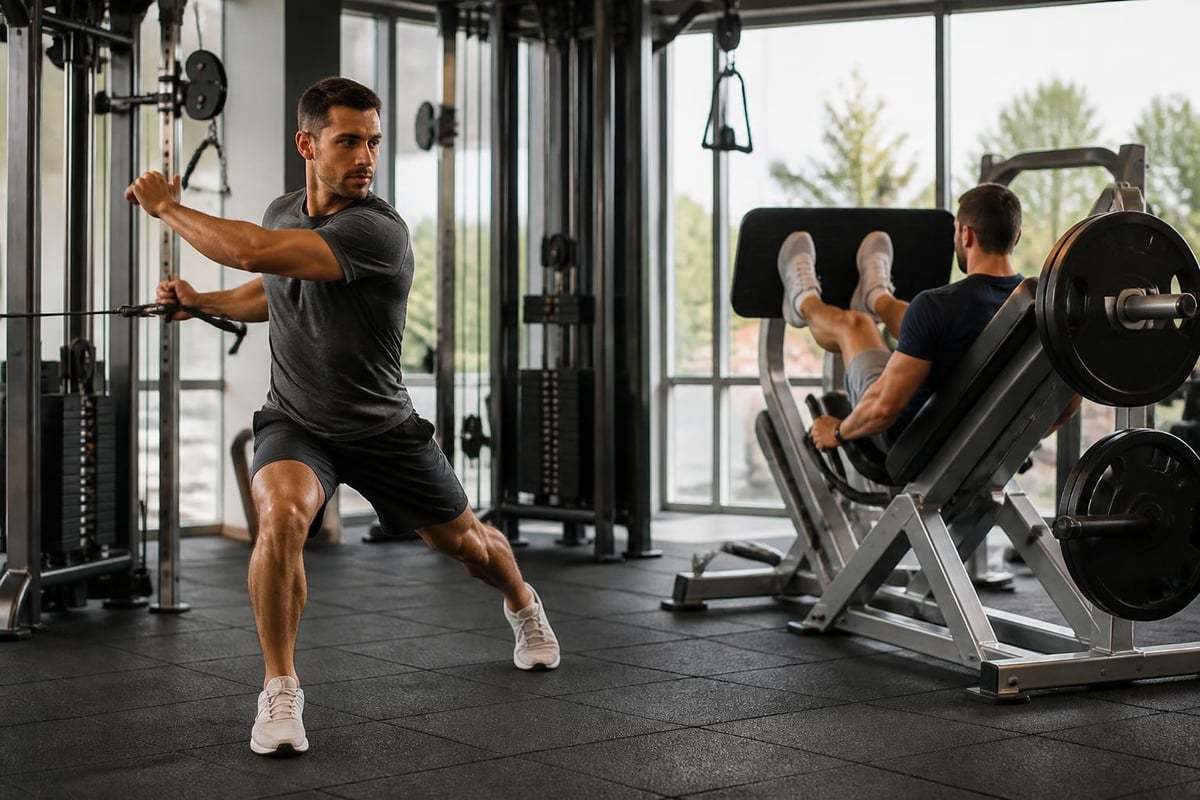
Functional gym equipment differs fundamentally from traditional machines in how it challenges your body. Rather than locking you into a predetermined movement path, functional tools allow and often require you to stabilize your own body position, engage multiple muscle groups simultaneously, and move through natural ranges of motion.
The American College of Sports Medicine facility standards emphasize that equipment selection should align with training objectives and user populations. For functional training, this means prioritizing versatility over specialization. A single kettlebell can facilitate dozens of movement patterns, while a leg extension machine serves one primary function.
Core Characteristics of Functional Equipment
Multi-planar movement capability stands as the defining feature of functional gym equipment. Human movement occurs across three planes: sagittal (forward/backward), frontal (side-to-side), and transverse (rotational). Equipment that accommodates movement in multiple planes better prepares your body for real-world demands.
Key characteristics include:
- Free movement patterns that allow natural joint mechanics
- Scalable resistance suitable for beginners through advanced athletes
- Minimal stabilization support requiring core engagement
- Portability or compact design for varied training environments
- Durability across diverse movement types without mechanical limitations
Research published in Frontiers in Physiology comparing resistance training modalities found that free-weight and functional equipment exercises produced superior improvements in functional performance measures compared to machine-based alternatives. This advantage stems from the neuromuscular coordination demands inherent in stabilizing loads during dynamic movements.
Essential Categories of Functional Gym Equipment
Breaking down functional gym equipment into practical categories helps identify what belongs in your training toolkit. Each category serves specific movement patterns while maintaining the versatility that defines functional training.
Foundational Free Weights
Dumbbells, kettlebells, and barbells represent the cornerstone of functional strength training. These tools require complete control through every phase of movement, engaging stabilizing muscles throughout your kinetic chain.
Kettlebells deserve special attention for their offset center of mass, which creates unique stability challenges during swings, snatches, and Turkish get-ups. The NSCA Certification Handbook identifies kettlebells as particularly effective for developing power, coordination, and posterior chain strength.
Dumbbells offer unmatched versatility for unilateral training, helping identify and correct strength imbalances between limbs. The independent movement of each arm requires additional stabilization compared to barbell work.
| Equipment Type | Primary Benefits | Typical Weight Range | Space Requirements |
|---|---|---|---|
| Kettlebells | Ballistic power, grip strength, coordination | 8-70 lbs | Minimal (stackable) |
| Dumbbells | Unilateral strength, movement variety | 5-100+ lbs | Moderate (rack needed) |
| Barbells | Maximum loading, bilateral strength | 45 lbs (bar) + plates | Significant (rack + floor space) |
Bodyweight and Suspension Training Tools
Your own bodyweight provides the most portable resistance available. Suspension trainers, gymnastics rings, and pull-up bars transform bodyweight exercises into scalable, progressive challenges.
Suspension systems like TRX utilize gravity and body positioning to adjust difficulty instantly. A systematic review on functional training effects found that bodyweight-based functional training produced significant improvements in strength, power, and agility across athletic populations.
The home fitness strength collection at SkyFitNet features equipment designed to maximize bodyweight training effectiveness, from resistance bands to specialized grip tools that enhance functional movement patterns.
Resistance Bands and Cable Systems
Elastic resistance provides unique training stimulus through variable tension that increases as the band stretches. Unlike gravity-based resistance, bands maintain tension throughout entire movement ranges and can create resistance vectors impossible with free weights.
Key advantages of band training:
- Accommodating resistance matching strength curves
- Joint-friendly loading with reduced impact
- Versatility for traveling or limited spaces
- Excellent for rehabilitation and mobility work
Cable systems offer similar benefits with more precise loading options. Both tools excel at rotational movements and movements in the frontal and transverse planes often neglected in traditional programming.
Medicine Balls and Plyometric Equipment
Explosive power development requires equipment designed for ballistic movements. Medicine balls, slam balls, and plyo boxes allow safe execution of high-velocity exercises that build rate of force development.
According to research on high-intensity functional training, plyometric exercises using functional equipment produced superior improvements in power output and athletic performance compared to traditional strength training alone.
Medicine ball variations include:
- Standard medicine balls for partner tosses and rotational throws
- Slam balls with reinforced shells for ground impacts
- Wall balls with larger diameters for squat-throw combinations
- D-balls with unique shapes for grip challenges
Selection Criteria for Functional Equipment
Choosing the right functional gym equipment requires evaluating multiple factors beyond price and availability. Quality, versatility, and alignment with your training goals determine whether equipment becomes a valued tool or garage clutter.
Quality and Durability Standards
Functional training subjects equipment to diverse stress patterns. A kettlebell might be swung, pressed, racked, or dropped. Quality construction ensures safety and longevity under varied demands.
Material considerations:
- Cast iron or steel for kettlebells and dumbbells provides superior durability
- Rubber coating protects floors and reduces noise without compromising function
- Industrial-grade webbing for suspension trainers ensures safety under dynamic loads
- Reinforced stitching on bags, weighted vests, and soft equipment prevents failure
Inspect welds on metal equipment, check for sharp edges or burrs, and verify weight accuracy. The NSCA guidelines recommend regular equipment inspection protocols to identify wear or damage before safety becomes compromised.
Space Efficiency and Versatility
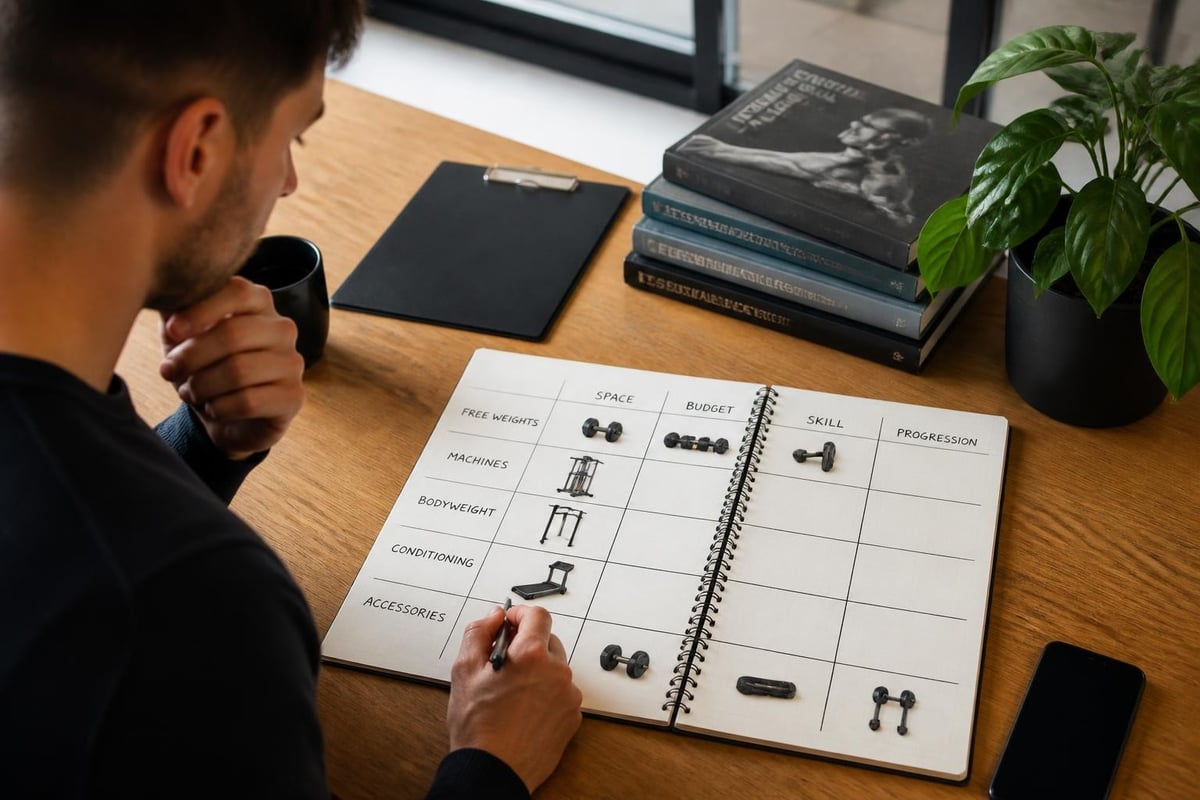
Home gyms particularly benefit from equipment serving multiple purposes. A single piece of quality functional gym equipment that enables twenty exercises provides better value than three specialized machines requiring dedicated floor space.
Calculate your available training area and prioritize compact, stackable, or wall-mounted options. The yoga pilates mobility collection demonstrates how carefully selected tools maximize training variety within minimal footprints.
Evidence-Based Benefits of Functional Equipment
The shift toward functional gym equipment reflects more than training trends. Substantial research demonstrates measurable advantages in performance, injury prevention, and real-world capability development.
Athletic Performance Enhancement
A systematic review published in the Journal of Exercise Science & Fitness analyzing 26 studies found functional training with appropriate equipment produced significant improvements across multiple performance measures. Athletes using functional gym equipment showed enhanced agility, balance, muscular endurance, and sport-specific power compared to traditional machine-based training.
The mechanisms behind these improvements involve neuromuscular coordination adaptations. When you perform a kettlebell swing, your nervous system must coordinate hip drive, core stability, shoulder control, and grip strength simultaneously. This integrated demand creates transfer to complex athletic movements in ways isolated exercises cannot replicate.
Injury Prevention and Movement Quality
The World Health Organization guidelines on physical activity emphasize that functional fitness activities improve balance, coordination, and fall prevention, particularly in older adults. Equipment enabling multi-directional movement patterns strengthens stabilizing muscles and improves proprioception.
Training with functional gym equipment also identifies movement asymmetries and weaknesses. Unilateral exercises with dumbbells immediately reveal strength discrepancies between limbs, while suspension training exposes core stability limitations.
| Benefit Category | Research Support | Practical Application |
|---|---|---|
| Balance & Coordination | Improved proprioception and neuromuscular control | Reduced fall risk, better movement confidence |
| Core Stability | Enhanced anti-rotation and anti-flexion strength | Spine protection during daily activities |
| Movement Pattern Quality | Corrected asymmetries and compensations | Reduced injury risk during sport and work |
| Power Development | Increased rate of force development | Enhanced athletic performance and reactive strength |
Accessibility and Progression
Quality functional gym equipment accommodates users across fitness levels through scalable challenge. Resistance bands provide measurable progression from rehabilitation settings through advanced athletic training. Harvard Health Publishing resources note that functional training equipment particularly benefits individuals returning to exercise after injury or managing chronic conditions.
The recovery muscle care collection complements functional training by providing tools that support tissue quality and movement preparation essential for safe progression.
Programming Considerations for Functional Equipment
Owning functional gym equipment provides value only when integrated into intelligent programming. Understanding how to combine tools, structure sessions, and progress appropriately separates effective training from random activity.
Movement Pattern Organization
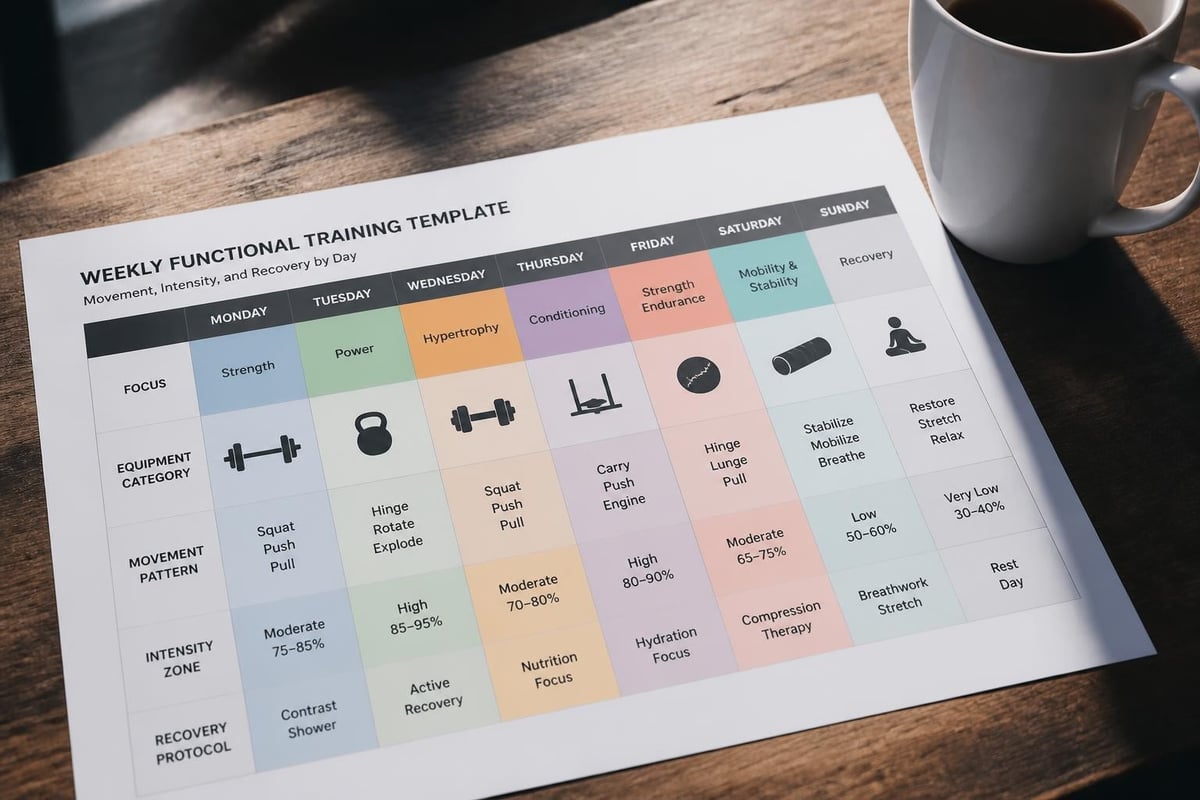
Organize training around fundamental movement patterns rather than muscle groups:
- Hip hinge patterns (deadlifts, swings, good mornings)
- Squat patterns (goblet squats, front squats, overhead squats)
- Push patterns (presses, push-ups, dips)
- Pull patterns (rows, pull-ups, face pulls)
- Carry and loaded locomotion (farmer carries, suitcase walks)
- Rotational patterns (chops, throws, rotational presses)
Each session should address multiple patterns using different pieces of functional gym equipment. A kettlebell might serve hip hinge patterns during swings and push patterns during overhead presses within the same workout.
Progressive Overload Strategies
Functional training demands progression beyond simply adding weight. Consider these variables:
- Load increase through heavier equipment
- Volume manipulation via sets, reps, or training density
- Tempo variation controlling eccentric, isometric, and concentric phases
- Stability reduction using suspension trainers or single-leg variations
- Complexity advancement combining movements or adding coordination challenges
The principle of specificity suggests your progression should align with goals. Training for general fitness emphasizes moderate loads with movement variety, while sport-specific preparation requires equipment and patterns matching competitive demands.
Integration With Recovery and Mobility Work
Functional gym equipment extends beyond strength sessions into recovery protocols and mobility development. Resistance bands facilitate joint mobility routines, while light kettlebells enable controlled movement exploration improving range of motion.
The posture everyday mobility collection provides specialized tools addressing movement quality between intense training sessions. Recovery equipment complements functional training by maintaining tissue quality and joint health necessary for continued progression.
Technology Integration and Modern Functional Equipment
The intersection of traditional functional gym equipment and modern technology creates new training possibilities. Wearable devices, app-connected tools, and sensor-equipped equipment provide objective feedback previously available only in laboratory settings.
Wearable Technology and Performance Tracking
A systematic review on consumer wearable devices found that accelerometers, heart rate monitors, and movement sensors provide valid data for tracking training volume, intensity, and recovery status. When paired with functional gym equipment, these devices quantify workload and progression with precision.
Smart kettlebells with embedded sensors track swing velocity and power output. Resistance bands with Bluetooth connectivity measure force production throughout movement ranges. While not essential, these technologies add objectivity to subjective effort perception.
App-Based Programming and Virtual Coaching
Digital platforms now deliver structured functional training programs synchronized with available equipment. Apps inventory your functional gym equipment and generate workouts matching your tools, space, and goals.
The value extends beyond exercise selection. Quality platforms provide video demonstrations ensuring proper technique, progression algorithms preventing plateaus, and recovery recommendations optimizing adaptation. For individuals training independently, technology partially fills the coaching gap.
Building Your Functional Training Space
Creating an effective training environment requires more than purchasing equipment. Thoughtful space design, safety considerations, and strategic equipment acquisition maximize training effectiveness while minimizing risk.
Essential Starter Package
Begin with versatile pieces covering fundamental movement patterns:
- Adjustable kettlebell or kettlebell set (16-32 kg range)
- Resistance band set with multiple resistance levels
- Pull-up bar or suspension trainer for upper body pulling
- Exercise mat for floor work and joint protection
- Foam roller or mobility tools supporting recovery
This foundation enables hundreds of exercise variations addressing all major movement patterns. The home fitness strength collection offers starter packages designed around functional training principles.
Expansion Priorities
Add equipment based on specific limitations or goals:
For power development: medicine balls, plyo boxes, or heavier kettlebells enabling ballistic movements
For maximum strength: barbell with plates and squat rack allowing progressive overload beyond bodyweight and kettlebell capacities
For movement variety: Bulgarian bags, sandbags, or clubs providing novel stability challenges
For mobility enhancement: yoga wheels, stretching aids, or specialized mobility tools from the yoga pilates mobility range
Budget constraints favor quality over quantity. One premium kettlebell outlasts and outperforms three cheaply constructed alternatives prone to handle failure or weight inaccuracy.
Safety and Maintenance Protocols
Functional gym equipment requires regular inspection and maintenance. Monthly checks should include:
- Examining welds and handles for cracks or deformation
- Testing resistance band integrity for tears or dry rot
- Verifying anchor points for suspension trainers remain secure
- Checking floor mats for adequate thickness and stability
- Cleaning equipment to prevent rust or material degradation
Proper storage extends equipment lifespan. Kettlebells and dumbbells benefit from rack storage preventing floor damage and tripping hazards. Resistance bands stored away from direct sunlight maintain elasticity longer. Climate-controlled environments prevent rust on metal surfaces and material breakdown on rubber components.
Functional Equipment Across Training Populations
Different populations derive distinct benefits from functional gym equipment. Understanding these variations helps tailor equipment selection and programming approach to individual needs and contexts.
Athletes and Sport-Specific Training
Competitive athletes use functional gym equipment to develop qualities transferring directly to sport demands. A basketball player might emphasize plyometric equipment and medicine balls for explosive power. A wrestler prioritizes odd-object lifting and grip-intensive tools building the specific strength their sport requires.
The key involves analyzing sport movement patterns and selecting functional gym equipment enabling similar neuromuscular demands under controlled conditions. This specificity principle ensures training transfers efficiently to competitive performance.
Older Adults and Fall Prevention
The WHO physical activity guidelines specifically recommend functional fitness activities for older adults to maintain independence and reduce fall risk. Light resistance bands, balance tools, and bodyweight exercises using stable supports provide appropriate challenge without excessive joint stress.
Functional gym equipment allows older adults to practice movement patterns essential for daily living: standing from chairs, reaching overhead, carrying groceries, and navigating uneven surfaces. This direct transfer distinguishes functional training from traditional machine-based approaches offering limited real-world applicability.
General Fitness and Lifestyle Enhancement
Individuals training for health, body composition, or general capability benefit from functional gym equipment's versatility and efficiency. Time-constrained professionals appreciate tools enabling complete workouts in 30-45 minutes without facility access.
The running active lifestyle collection complements functional training by supporting cardiovascular fitness and movement diversity beyond strength-focused sessions. Balanced programming addresses multiple fitness components using minimal equipment investment.
Functional gym equipment represents a paradigm shift from isolated muscle training toward integrated movement development that enhances real-world capability. The evidence consistently demonstrates superior outcomes in athletic performance, injury prevention, and functional capacity when training emphasizes multi-joint, multi-planar movements using versatile equipment. Whether you're building a home gym, refining training approaches, or seeking equipment truly supporting your lifestyle demands, prioritizing functional tools creates the foundation for sustainable progress. SkyFitNet offers carefully curated training, recovery, and mobility essentials designed to support exactly this kind of intelligent, results-focused approach to fitness. Explore our collections and discover how the right equipment transforms your training effectiveness and helps you live stronger every day.