

Reebok Gym Equipment: Performance Training Gear Guide

Reebok has established itself as a trusted name in athletic performance, and that reputation extends well beyond footwear and apparel into the realm of fitness equipment. Whether you're outfitting a home gym or evaluating commercial-grade solutions, understanding what makes reebok gym equipment a viable choice can help you make smarter investment decisions. From strength training benches to innovative all-in-one systems, Reebok's equipment lineup reflects the brand's commitment to functional fitness, durability, and user-focused design.
Evolution of Reebok in the Fitness Equipment Market
Reebok's journey from footwear pioneer to comprehensive fitness solutions provider mirrors broader industry trends. The brand recognized that athletes and fitness enthusiasts demand consistency across their training ecosystem. This insight drove Reebok to develop gym equipment that aligns with the same performance principles embedded in their training shoes and apparel.
The Reebok Fitness product line now encompasses everything from compact home solutions to studio-grade installations. Reebok's strategic partnerships have accelerated this expansion, most notably the collaboration with F45 Training that positioned reebok gym equipment in functional training studios worldwide. According to the official partnership announcement, this alliance emphasized how Reebok equipment could support high-intensity interval training and circuit-based programming.
Brand Positioning and Product Philosophy
Reebok distinguishes its equipment through three core principles:
- Functional integration: Equipment designed to support movement patterns rather than isolated muscle groups
- Space efficiency: Compact solutions that maximize training variety within limited footprints
- Durability standards: Commercial-grade construction available at consumer price points
The brand's positioning reflects current market demands. Data from Persistence Market Research indicates that home fitness equipment sales continue growing as consumers prioritize convenience and multi-functional training tools. Reebok has capitalized on this trend by creating equipment that bridges the gap between professional gym quality and residential accessibility.
Core Product Categories in Reebok's Equipment Range
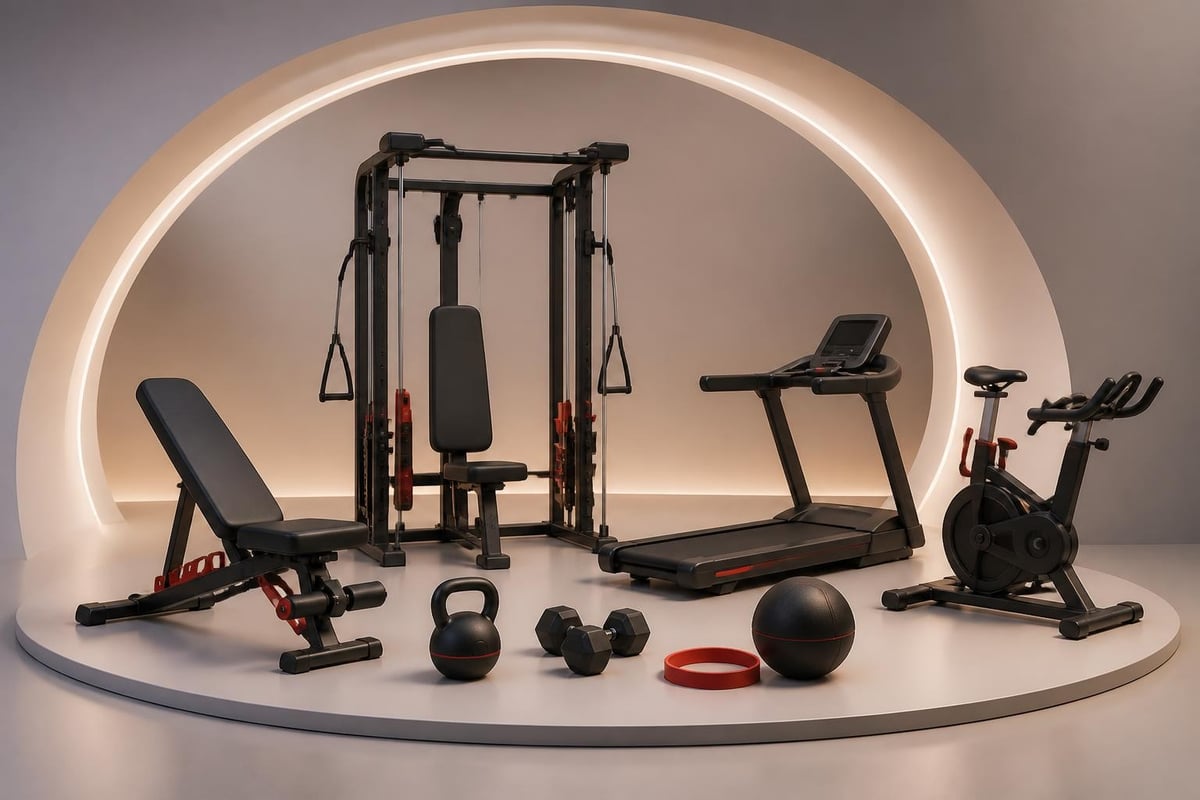
Understanding the breadth of reebok gym equipment helps identify which solutions best match your training goals and space constraints. The product lineup generally falls into several distinct categories, each addressing specific fitness needs.
Strength and Resistance Training Systems
Reebok's strength equipment emphasizes versatility without sacrificing structural integrity. Multi-position benches form the foundation of many home setups, offering incline, decline, and flat configurations. These benches typically feature:
- Heavy-duty steel frames with powder-coat finishes
- High-density foam padding with commercial-grade vinyl
- Transport wheels and compact storage positions
- Weight capacities ranging from 300 to 500 pounds
The brand also produces integrated rack systems that combine pull-up bars, dip stations, and plate storage. These space-efficient designs allow users to perform compound movements without requiring separate stations for each exercise type.
| Equipment Type | Primary Use Cases | Typical Footprint | Weight Capacity |
|---|---|---|---|
| Adjustable Bench | Pressing, rowing, core work | 4' × 2' | 300-400 lbs |
| Power Rack | Squats, pull-ups, rack pulls | 6' × 4' | 500-800 lbs |
| All-in-One System | Full-body circuit training | 8' × 6' | 250-350 lbs |
| Resistance Cage | Functional movement, bands | 5' × 3' | 400-600 lbs |
Cardio Equipment and Monitoring Systems
While Reebok is better known for strength equipment, the brand offers select cardio solutions designed for durability and user experience. Treadmills and exercise bikes in the Reebok lineup typically include:
- Direct-drive belt systems for reduced maintenance
- Console displays tracking speed, distance, heart rate, and calories
- Preset program options for interval and endurance training
- Foldable designs with hydraulic assistance
These cardio machines prioritize simplicity over advanced connectivity features, appealing to users who value straightforward operation and mechanical reliability. For those seeking complete home fitness equipment solutions, combining Reebok cardio and strength pieces creates comprehensive training environments.
Compact and Portable Training Tools
Reebok excels in creating portable resistance tools that complement larger equipment investments. Medicine balls, resistance bands, slam balls, and stability trainers carry the Reebok branding with construction quality that matches professional settings. These accessories integrate seamlessly into circuit training, warm-up protocols, and mobility work.
The portability factor matters considerably for those following functional gym equipment principles, where movement quality and exercise variety take precedence over machine-based isolation. Portable tools enable dynamic movement patterns that translate directly to athletic performance and everyday function.
Quality Standards and Safety Considerations
Equipment safety extends beyond user experience to regulatory compliance and manufacturing standards. Fitness equipment manufacturers reference specifications published by ASTM International, including Standard F2276 which covers design and performance requirements. While reebok gym equipment is primarily consumer-grade, many products incorporate design elements that align with commercial standards.
Construction and Durability Benchmarks
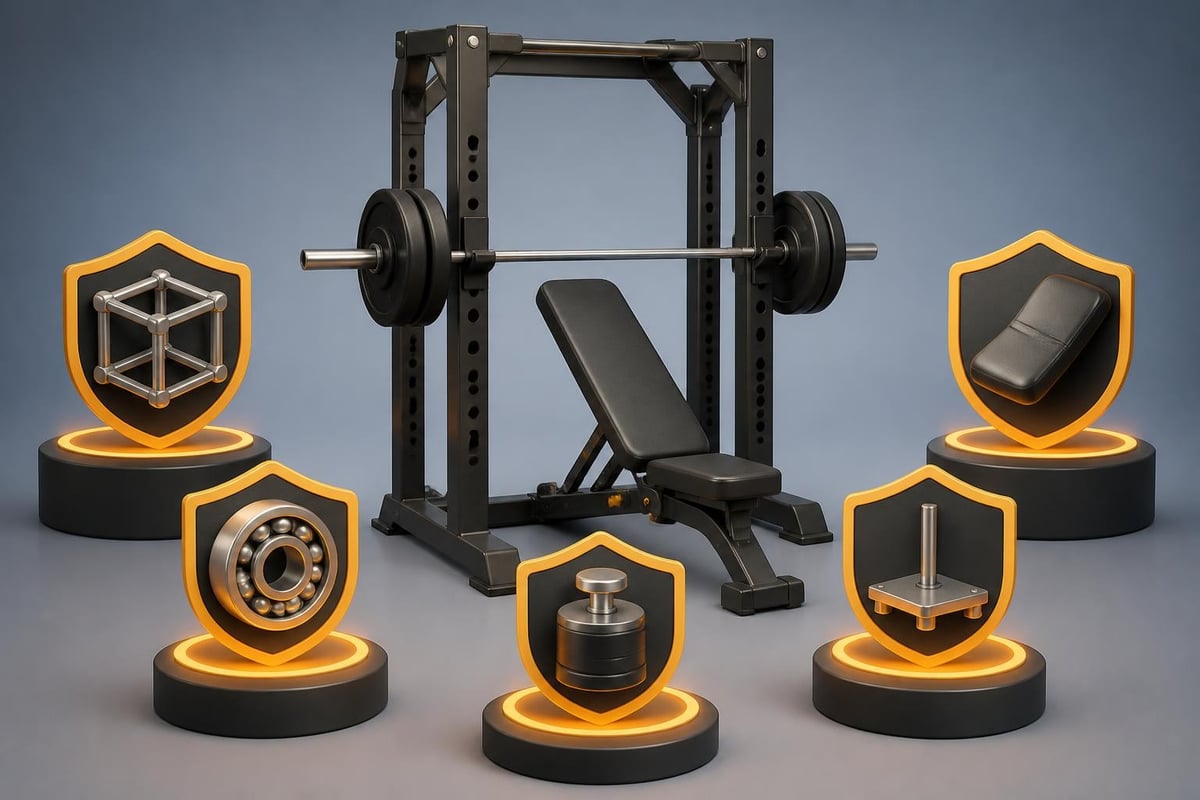
Quality reebok gym equipment shares several construction characteristics:
- Welded steel frames: Continuous welds rather than bolted connections at stress points
- Sealed bearings: Protected bearing assemblies in pivot points and guide rods
- Corrosion resistance: Powder-coat finishes and chrome plating on wear surfaces
- Reinforced contact zones: Double-thickness steel at user contact and load-bearing areas
The ASTM sports and recreation standards provide a framework for evaluating equipment across categories. Manufacturers who voluntarily comply with these specifications-tracked by the Consumer Product Safety Commission-demonstrate commitment to user safety beyond minimum requirements.
Warranty Coverage and Support Infrastructure
Warranty terms reveal manufacturer confidence in product longevity. Reebok typically structures warranties with tiered coverage:
- Frame warranty: 5-10 years on structural steel components
- Parts warranty: 1-2 years on mechanical parts and bearings
- Labor coverage: 90 days to 1 year on manufacturer defects
- Upholstery: 90-180 days on padding and vinyl surfaces
Support resources available through the Reebok Fitness website include assembly manuals, replacement part catalogs, and instructional videos. This infrastructure matters when equipment requires adjustment or component replacement years after purchase.
Strategic Equipment Selection for Different Training Styles
Your training methodology should drive equipment choices rather than purchasing based solely on features or aesthetics. Reebok gym equipment serves various training philosophies, but certain pieces align better with specific approaches.
Strength and Hypertrophy Programming
Traditional strength training and muscle-building programs require stable platforms for progressive overload. An adjustable bench paired with free weights forms the cornerstone of these approaches. Consider equipment that supports:
- Multiple bench angles for targeted muscle engagement
- Stable footing during heavy compound movements
- Spotting capabilities for maximum effort sets
- Sufficient rack height for proper squat depth
Those following structured strength and muscle workout programs benefit from equipment that accommodates gradual weight increases over months and years. Durability becomes paramount when handling loads that increase 5-10% every training cycle.
Functional Fitness and Conditioning
Functional training emphasizes movement patterns over muscle isolation. The T3 coverage of Reebok's Nano Gym 2.0 highlights how integrated systems support this methodology. All-in-one rigs with pull-up bars, resistance band anchor points, and plate storage enable circuit-style programming.
Functional training equipment should facilitate:
- Quick transitions between exercises
- Multiple movement planes (horizontal, vertical, rotational)
- Bodyweight and external load integration
- Minimal setup time between training rounds
This approach aligns perfectly with high-intensity protocols where rest periods are measured in seconds rather than minutes. Equipment versatility directly impacts workout effectiveness and time efficiency.
Home Gym Space Planning
Square footage constraints influence equipment selection as much as training goals. Effective home gym layouts with reebok gym equipment consider:
Minimum space allocations by equipment type:
| Equipment Category | Training Clearance | Storage Dimension | Ceiling Height |
|---|---|---|---|
| Adjustable Bench | 6' × 6' | 4' × 2' × 1' | 7' minimum |
| Compact Rack | 8' × 6' | 6' × 4' × 7' | 8' minimum |
| Treadmill | 7' × 4' | 6' × 3' × 5' | 8' recommended |
| All-in-One System | 10' × 8' | 8' × 6' × 7' | 9' minimum |
Strategic equipment placement maximizes usable training space while maintaining safety zones. The 5 essential fitness equipment pieces guide offers additional perspective on creating efficient training environments within residential spaces.
Maintenance Protocols for Extended Equipment Life
Regular maintenance extends equipment lifespan and preserves safety margins. Reebok gym equipment requires different maintenance schedules depending on usage frequency and environment conditions.
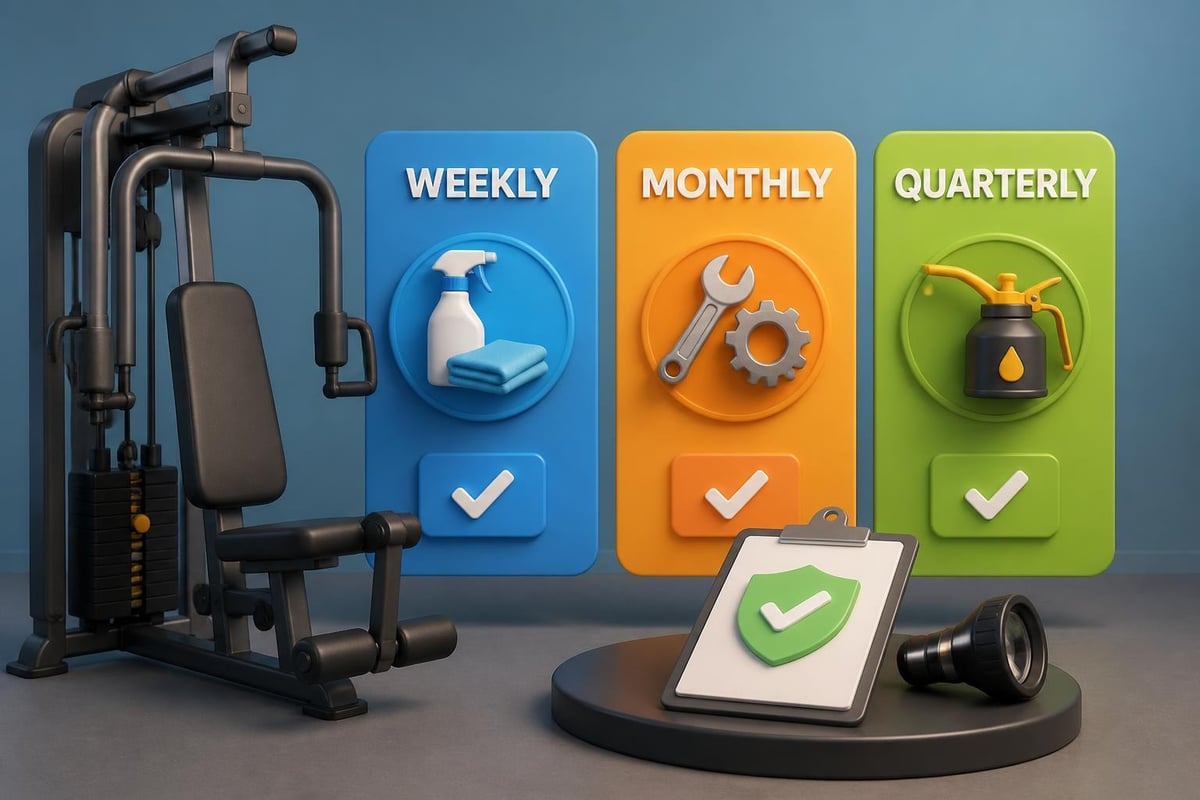
Weekly Maintenance Tasks
High-contact areas and moving parts benefit from weekly attention:
- Wipe down all padding and grip surfaces with mild disinfectant
- Check bolt tightness on benches and rack connections
- Inspect cable and band condition for fraying or degradation
- Lubricate guide rods and linear bearings if present
- Vacuum around and under equipment to prevent debris accumulation
These simple interventions prevent small issues from escalating into safety concerns or equipment failures. Users training from home often overlook maintenance because commercial gym staff typically handle these tasks in facility settings.
Monthly and Quarterly Inspections
More comprehensive checks should occur monthly or quarterly depending on usage volume:
- Frame integrity: Examine welds and joints for cracks or separation
- Bearing performance: Listen for grinding sounds in rotating assemblies
- Upholstery condition: Check vinyl for tears that could expose foam
- Weight stack alignment: Verify plates move smoothly on guide rods (if applicable)
- Console function: Test all display and control features on cardio equipment
Documentation of these inspections creates a maintenance history that helps identify patterns and predict component replacement needs. This proactive approach minimizes downtime and maintains safe operating conditions.
Comparing Reebok Against Alternative Equipment Brands
Market positioning matters when evaluating reebok gym equipment against competitors. The brand occupies a middle tier between budget options and premium commercial manufacturers. Understanding these distinctions helps set realistic expectations.
Price-to-Performance Analysis
Reebok equipment typically costs 20-40% more than entry-level brands but 30-50% less than premium commercial options. This pricing reflects:
- Better materials than budget alternatives
- More rigorous quality control
- Enhanced warranty coverage
- Brand recognition and resale value
However, top-tier manufacturers like Rogue, Life Fitness, or Hammer Strength offer features that justify higher prices for serious lifters or commercial applications. These include precision engineering tolerances, modular expandability, and institutional warranty terms.
Corporate Structure and Brand Evolution
Understanding brand ownership provides context for product strategy and future development. Authentic Brands Group now owns Reebok, following its acquisition from Adidas in 2021. ABG operates as a licensing company, which means Reebok gym equipment is manufactured by partner companies under licensing agreements.
This structure affects several practical considerations:
- Product development cycles may lengthen due to licensing approvals
- Quality control depends on manufacturing partner standards
- Innovation pace might lag behind vertically integrated competitors
- Replacement parts availability relies on manufacturer relationships
These factors don't necessarily diminish product quality but do influence long-term ownership experience and brand evolution trajectory.
Integration with Broader Fitness Ecosystems
Equipment purchases represent just one component of effective training systems. Reebok gym equipment integrates with programming, recovery protocols, and wellness strategies that determine ultimate results.
Programming Considerations
The American College of Sports Medicine publishes evidence-based guidelines for exercise prescription across populations. These recommendations help determine whether specific equipment supports your training objectives. For instance, ACSM suggests:
- Two days per week of resistance training for all major muscle groups
- Progressive overload through increased weight, volume, or intensity
- Exercise variety to prevent adaptation plateaus
- Adequate recovery between training sessions
Equipment selection should enable compliance with these principles. An adjustable bench and free weights provide nearly unlimited exercise variation, while single-function machines may limit programming flexibility.
Recovery and Performance Support
Training stimulus alone produces limited adaptation without proper recovery. Modern fitness approaches integrate equipment usage with recovery modalities. Those serious about progress understand why recovery matters as much as your workout.
Complementary tools that enhance Reebok equipment effectiveness include:
- Foam rollers for myofascial release between training days
- Resistance bands for mobility work and warm-up protocols
- Yoga mats for flexibility training and cool-down stretches
- Hydration systems to maintain performance during sessions
The recovery and muscle care collection at SkyFitNet demonstrates how recovery tools integrate with primary training equipment to create complete performance systems.
Smart Purchasing Strategies and Value Optimization
Maximizing return on equipment investment requires strategic purchasing decisions that balance immediate needs against long-term usage patterns.
New vs. Refurbished Equipment
Reebok gym equipment maintains decent resale value, creating a viable secondary market. Purchasing refurbished or lightly used pieces offers several advantages:
- Cost savings of 30-60% compared to retail prices
- Opportunity to acquire higher-spec models within budget
- Environmental benefits through equipment reuse
- Faster availability than special-order new units
However, used equipment carries risks including unknown usage history, reduced warranty coverage, and potential hidden wear. Thorough inspection before purchase mitigates these concerns. When buying exercise equipment, verification of frame integrity and moving part condition is essential.
Bundle Deals and Package Pricing
Retailers often discount reebok gym equipment when purchased as complete packages. These bundles typically include:
- Bench and weight set combinations
- All-in-one system with accessory package
- Cardio machine paired with floor mats and maintenance kit
- Multi-piece strength setups with storage solutions
Package pricing can reduce total cost by 15-25% compared to individual purchases. Evaluate whether bundled accessories match your actual needs rather than simply optimizing for discount percentage. Unused equipment provides zero value regardless of savings.
Timing Purchases Around Retail Cycles
Strategic timing significantly impacts equipment costs:
Optimal purchase windows:
| Time Period | Typical Discount | Inventory Consideration |
|---|---|---|
| January | 20-30% | High demand, good selection |
| April-May | 10-15% | Moderate availability |
| September | 15-25% | Back-to-fitness promotions |
| November-December | 25-35% | Black Friday/holiday sales |
Patience and planning enable significant savings without compromising equipment quality. Monitor pricing trends across multiple retailers to identify genuine discounts versus inflated reference pricing.
Certifications, Standards, and Professional Recommendations
Professional organizations establish guidelines that inform equipment selection and usage. Understanding these frameworks helps evaluate reebok gym equipment within broader industry contexts.
Professional Standards and Guidelines
Exercise science professionals reference specific criteria when recommending equipment. The American College of Sports Medicine emphasizes equipment that supports:
- Proper biomechanical positioning throughout movement ranges
- Progressive resistance mechanisms for strength adaptation
- Safety features including spotter capabilities and emergency stops
- Accessibility for various user heights and ability levels
Equipment meeting these criteria enables safer, more effective training regardless of brand. Reebok's focus on functional fitness aligns well with contemporary exercise science emphasizing movement quality over machine-based isolation.
Facility Standards for Commercial Applications
Commercial gym operators face different requirements than home users. Facilities must consider:
- High-volume durability: Equipment rated for 8-12 hours daily use
- Maintenance accessibility: Easily serviceable components and clear maintenance schedules
- ADA compliance: Appropriate entry heights and transfer capabilities where applicable
- Insurance requirements: Specifications that satisfy liability coverage terms
While reebok gym equipment serves home and light commercial applications well, institutional facilities often require purpose-built commercial lines with enhanced specifications and service agreements.
Long-Term Ownership and Equipment Evolution
Smart equipment investments accommodate changing fitness goals and evolving training methodologies. Consider how reebok gym equipment adapts to different life stages and objectives.
Scalability and Upgrade Paths
Quality equipment purchases should support progression without complete replacement. Reebok's modular approach enables gradual expansion:
- Start with an adjustable bench and free weights
- Add resistance bands and portable tools for variety
- Incorporate a rack system as strength levels increase
- Integrate cardio equipment when conditioning becomes priority
This staged approach spreads costs over time while building comprehensive training capabilities. The home fitness strength collection demonstrates how individual pieces combine into complete training ecosystems.
Resale Value and Equipment Lifecycle
Well-maintained reebok gym equipment retains 40-60% of original value after 3-5 years of home use. Factors affecting resale include:
- Overall condition and maintenance history
- Original documentation and assembly hardware
- Market demand for specific equipment types
- Local fitness equipment availability
Quality equipment essentially rents for 40-60% of purchase price over several years when resale is factored into total cost of ownership. This perspective shifts purchasing decisions from pure expense to asset investment.
Selecting the right gym equipment involves balancing immediate training needs with long-term performance goals, space constraints, and budget realities. Reebok gym equipment offers a practical middle ground between budget-oriented options and premium commercial solutions, providing reliable construction and functional versatility for serious home trainers and light commercial applications. Whether you're building your first home gym or expanding existing capabilities, SkyFitNet supports your training journey with quality equipment, recovery essentials, and wellness tools designed to help you train smarter, recover better, and live stronger.