

Weight Loss Exercise Equipment: Complete 2026 Guide

Finding the right weight loss exercise equipment transforms your fitness journey from guesswork into measurable progress. Whether you're building a home gym or upgrading your current setup, understanding which tools deliver real results helps you invest wisely in your health. The landscape of fitness gear has evolved dramatically, with innovations in biomechanics, digital tracking, and space-efficient design making effective workouts accessible to everyone. This comprehensive guide explores the most effective equipment categories, evidence-based protocols, and strategic selection criteria that align with current physical activity guidelines and your personal weight loss goals.
Understanding Equipment-Based Exercise for Weight Management
Weight loss exercise equipment serves as the foundation for structured, repeatable training sessions that create the caloric deficit necessary for fat loss. According to the American College of Sports Medicine's 2024 consensus statement on physical activity and excess body weight, multimodal training combining cardiovascular and resistance work produces superior outcomes compared to single-modality approaches. Equipment enables you to control intensity, track progression, and maintain consistency across training cycles.
The physiological mechanisms behind equipment-based weight loss involve both immediate caloric expenditure and long-term metabolic adaptations. Cardiovascular machines create sustained energy demands that tap into fat stores, while resistance equipment builds lean muscle mass that elevates resting metabolic rate. This dual approach addresses weight loss from multiple angles simultaneously.
Key metabolic benefits include:
- Increased post-exercise oxygen consumption (EPOC) lasting 24-48 hours
- Enhanced insulin sensitivity from regular structured movement
- Preservation of lean body mass during caloric restriction
- Improved cardiovascular efficiency reducing perceived exertion over time
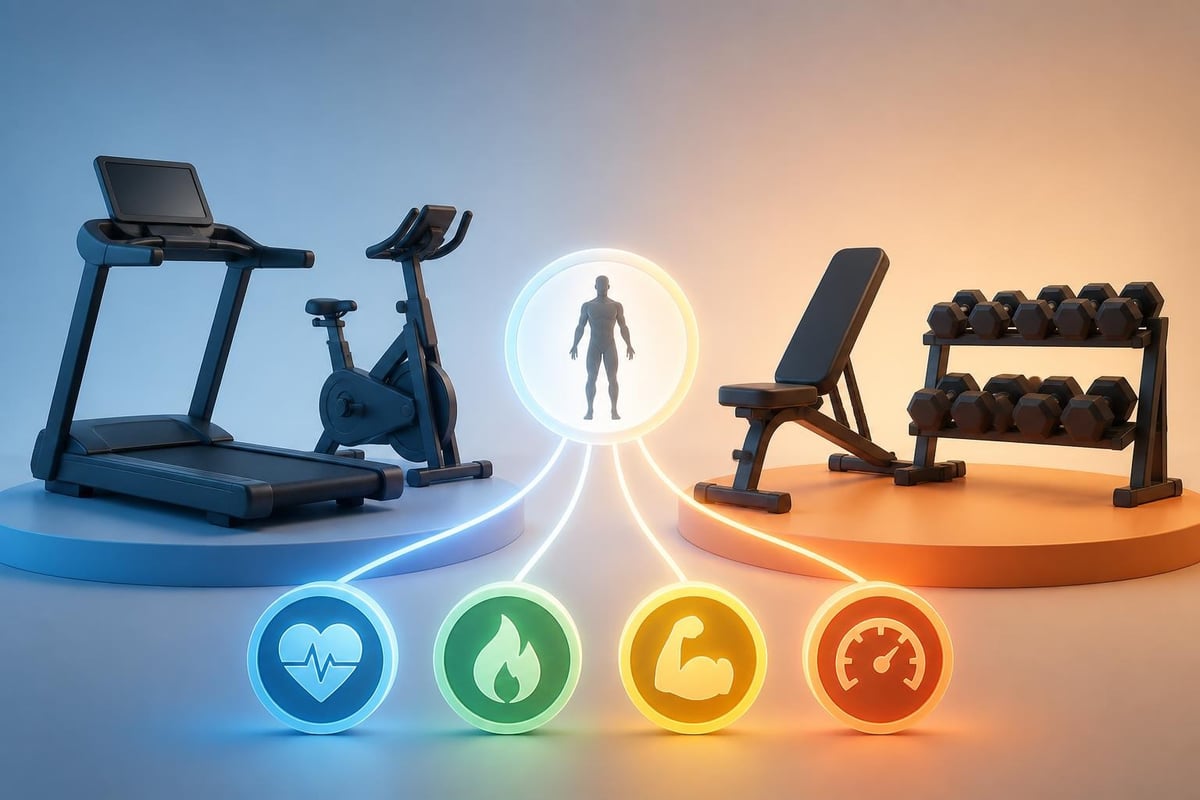
Different equipment types emphasize distinct energy systems and muscle recruitment patterns. Understanding these differences allows you to build a complementary equipment portfolio rather than redundant tools that provide similar stimuli.
Cardiovascular Equipment for Maximum Calorie Expenditure
Cardiovascular weight loss exercise equipment creates the sustained energy demands that drive immediate caloric burn. Treadmills, stationary bikes, rowing machines, and elliptical trainers each offer unique advantages depending on your mobility status, injury history, and training preferences. Harvard Health's guide to choosing exercise equipment provides clinician-reviewed comparisons of injury risk and usability across major cardio categories.
Treadmills and Walking Platforms
Treadmills remain the most popular cardiovascular equipment choice because walking and running are natural movement patterns requiring minimal skill acquisition. Modern treadmills offer programmable incline, speed intervals, and integrated heart rate monitoring that allows precise intensity control. The weight-bearing nature of treadmill exercise also supports bone density maintenance, an important consideration during weight loss phases when calcium absorption may be compromised.
Treadmill advantages for weight loss:
- Adjustable intensity through speed and incline modification
- Accessible to all fitness levels from rehabilitation walking to sprint intervals
- High caloric expenditure potential (400-800 calories per hour depending on intensity)
- Natural movement pattern requiring no specialized technique
Many quality treadmills now feature cushioned decks that reduce impact forces by 30-40% compared to outdoor surfaces, making them appropriate for individuals with joint concerns. When selecting a treadmill, prioritize motor power (minimum 2.5 continuous horsepower), belt dimensions (minimum 20" width for running), and maximum speed capacity that accommodates progression.
Stationary Bikes and Cycling Equipment
Stationary bikes provide non-impact cardiovascular training ideal for individuals with lower extremity joint limitations. The seated position reduces spinal loading while allowing significant power output through the legs. Upright bikes, recumbent bikes, and indoor cycling bikes each serve different populations and training objectives.
| Bike Type | Primary Benefits | Best For |
|---|---|---|
| Upright | Core engagement, space efficiency, traditional cycling position | General fitness, HIIT protocols, limited space |
| Recumbent | Lumbar support, reduced knee stress, larger seat | Lower back issues, obesity, older adults |
| Indoor Cycling | High resistance capacity, standing intervals, performance tracking | Advanced users, power-based training, group classes |
The U.S. Physical Activity Guidelines recommend 150-300 minutes of moderate-intensity or 75-150 minutes of vigorous-intensity aerobic activity weekly. Stationary bikes excel at delivering this prescription because resistance and cadence adjustments allow precise intensity targeting regardless of weather or outdoor conditions.
Rowing Machines and Total-Body Cardio
Rowing machines uniquely combine cardiovascular conditioning with resistance training across major muscle groups. Each rowing stroke engages legs, core, back, and arms in a coordinated movement pattern that burns calories while building functional strength. This makes rowing machines particularly effective weight loss exercise equipment for time-constrained individuals seeking maximum efficiency.
Quality rowing machines use air, magnetic, or water resistance systems. Air rowers provide unlimited resistance that scales with effort intensity, magnetic rowers offer quiet operation with programmable resistance levels, and water rowers deliver smooth, natural feel with auditory feedback. All three types effectively support weight loss when used consistently with proper technique.
Resistance Training Equipment for Metabolic Enhancement
Resistance-based weight loss exercise equipment builds lean muscle mass that elevates resting metabolic rate and preserves muscle during caloric restriction. Research on resistance training and weight loss demonstrates that strength protocols prevent the metabolic slowdown typically associated with dieting, maintaining higher daily energy expenditure even during rest periods.
Free Weights and Functional Strength Tools
Dumbbells, kettlebells, and adjustable weight sets provide versatile resistance training options that accommodate progressive overload across all major movement patterns. Unlike fixed machines, free weights require stabilizer muscle activation and proprioceptive control that translates to improved functional capacity outside the gym.
Essential free weight equipment for weight loss programs:
- Adjustable dumbbells (5-50 lb range for most users)
- Kettlebells in multiple weights for swings, presses, and carries
- Resistance bands for mobility work and travel portability
- Weight bench for pressing and supported rowing movements
The metabolic demands of compound free weight exercises like squats, deadlifts, and overhead presses create significant EPOC effects. A challenging 45-minute full-body strength session can elevate metabolic rate for 24-48 hours post-workout, adding 100-200 calories of additional daily expenditure during recovery.
SkyFitNet's home fitness strength collection provides carefully selected resistance tools designed for progressive training protocols. Quality free weights with ergonomic handles and durable construction ensure safety during high-intensity lifting sessions that drive body composition changes.
Suspension Trainers and Bodyweight Resistance Systems
Suspension training systems use bodyweight and gravity to create scalable resistance across hundreds of exercise variations. These portable systems attach to doors, beams, or outdoor structures, making them ideal weight loss exercise equipment for limited spaces or frequent travelers. The instability inherent in suspension training increases core activation and caloric expenditure compared to stable surface equivalents.
Bodyweight resistance equipment requires no external loading but challenges strength through leverage manipulation, tempo variation, and unilateral movements. Push-up bars, pull-up stations, dip stations, and ab wheels provide targeted stimulus for specific muscle groups while maintaining the functional movement patterns that transfer to daily activities.
Hybrid and Interval Training Equipment
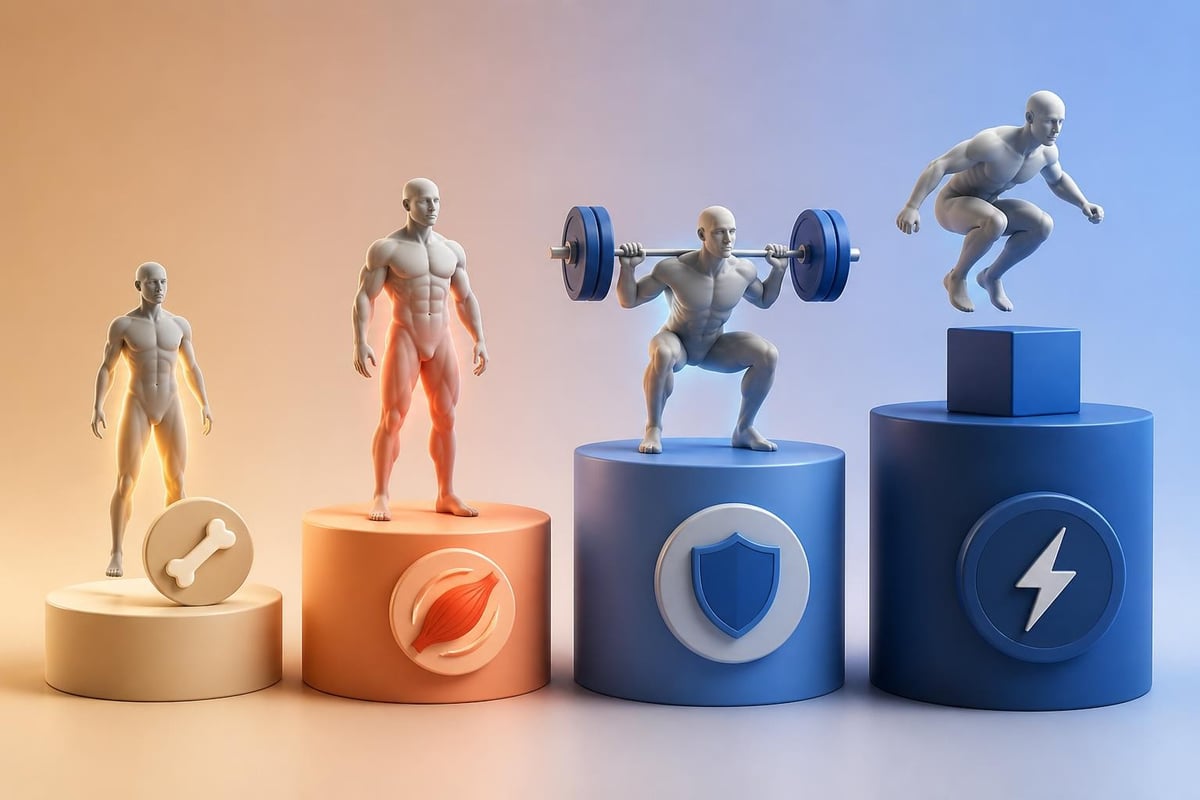
The most effective weight loss exercise equipment often combines cardiovascular and resistance elements within single training sessions. Hybrid equipment and interval-capable machines deliver the metabolic benefits of both training modalities simultaneously, maximizing caloric expenditure per minute invested.
High-Intensity Interval Training Machines
Evidence from systematic reviews on HIIT and interval training confirms that interval protocols produce superior fat loss and cardiovascular improvements compared to steady-state exercise when time is controlled. Equipment designed specifically for interval work features rapid resistance adjustment, clear interval timers, and robust construction that withstands repeated high-power outputs.
Assault bikes, ski ergs, and battle rope stations exemplify purpose-built interval equipment. These tools allow maximum effort bursts followed by active recovery periods without mechanical delays. A typical interval session might involve 20 seconds maximum effort followed by 40 seconds active recovery, repeated for 15-20 minutes, creating massive metabolic disruption from minimal time investment.
Multi-Station Home Gyms
Comprehensive home gym systems consolidate multiple resistance exercises into space-efficient designs. Cable-based systems with adjustable pulleys, leg press attachments, and chest press stations allow circuit-style training that maintains elevated heart rate while building strength. This continuous movement between stations creates cardiovascular conditioning alongside muscle development.
When evaluating multi-station equipment, consider:
- Weight stack capacity – Minimum 150 lbs for progressive training
- Cable smoothness – Quality pulley systems reduce friction and noise
- Adjustment speed – Quick-change mechanisms enable efficient circuit training
- Exercise variety – Minimum 20-30 distinct movements for program variation
- Footprint – Actual space required including movement clearance
Quality home gym systems represent significant investments but eliminate monthly membership costs while providing immediate workout access that removes common exercise barriers.
Tracking and Monitoring Technology
Modern weight loss exercise equipment increasingly integrates digital tracking that quantifies workout intensity, duration, and caloric expenditure. Research on wearable monitors and heart rate assessment confirms that consumer devices now deliver clinical-grade accuracy for heart rate monitoring, enabling precise intensity targeting during training sessions.
Heart Rate Monitors and Fitness Trackers
Heart rate-based training ensures you work within optimal zones for fat oxidation and cardiovascular adaptation. Most effective fat burning occurs at 60-70% of maximum heart rate, while higher intensities (80-90%) maximize post-exercise metabolic elevation. Quality chest strap monitors provide superior accuracy compared to wrist-based optical sensors during high-intensity intervals.
Heart rate training zones for weight loss:
| Zone | % Max HR | Primary Benefit | Session Duration |
|---|---|---|---|
| Recovery | 50-60% | Active recovery, movement quality | 20-45 minutes |
| Fat Burn | 60-70% | Aerobic capacity, fat oxidation | 30-60 minutes |
| Cardio | 70-80% | Lactate threshold, endurance | 20-40 minutes |
| Peak | 80-90% | VO2max, EPOC elevation | 10-20 minutes total |
Understanding these zones transforms generic "exercise more" advice into precise prescriptions. Evidence-based guidance from the American Council on Exercise emphasizes that matching intensity to training objectives produces superior outcomes compared to random effort levels.
Smart Equipment and Connected Platforms
Connected weight loss exercise equipment syncs with smartphone applications and online platforms that track long-term progress patterns. Smart treadmills, bikes, and rowers record every workout, displaying trends in average power output, distance covered, and estimated energy expenditure. This data visibility increases adherence by quantifying improvements that might not yet be visible in body composition.
Advanced platforms offer:
- Structured training programs periodized across 8-12 week cycles
- Virtual coaching with form feedback and encouragement
- Community features connecting users with similar goals
- Integration with nutrition tracking for comprehensive energy balance monitoring
The accountability created by data tracking significantly impacts long-term success rates. When individuals can visualize their consistency and progression, motivation remains higher during inevitable weight loss plateaus.
Equipment Selection Based on Individual Factors
Choosing optimal weight loss exercise equipment requires matching tool characteristics to your current fitness level, injury history, space constraints, and training preferences. The World Health Organization's physical activity guidelines provide evidence-based frameworks for exercise prescription across different populations, emphasizing that any movement is beneficial but structured progressive training yields superior outcomes.
Space and Budget Considerations
Home gym development works within space and financial constraints that vary dramatically across individuals. Prioritizing equipment that delivers maximum versatility per square foot optimizes limited areas. Adjustable dumbbells replace entire dumbbell racks, resistance bands provide hundreds of exercises from minimal storage, and foldable treadmills disappear into closets between sessions.
Budget allocation strategy for complete home gym:
- Foundation cardiovascular piece (40% of budget) – Treadmill, rower, or quality bike
- Adjustable resistance system (30% of budget) – Dumbbells, kettlebells, or suspension trainer
- Support equipment (20% of budget) – Mat, bench, resistance bands
- Tracking technology (10% of budget) – Heart rate monitor or fitness tracker
This distribution ensures you can perform both cardiovascular and resistance training immediately while leaving room for future additions as budget allows. SkyFitNet's equipment collections organize gear by training objective, simplifying selection for specific needs.
Injury History and Movement Limitations
Previous injuries significantly influence appropriate equipment choices. Individuals with knee arthritis benefit from seated or recumbent options that reduce joint loading, while those with shoulder impingement avoid overhead pressing stations. Quality equipment allows position modifications that work around limitations rather than aggravating existing conditions.
Non-impact options include:
- Recumbent bikes and steppers for lower body cardiovascular work
- Seated rowing machines with adjustable foot positions
- Resistance bands that accommodate limited range of motion
- Water-based equipment like aquatic treadmills for buoyancy support
Working within current capabilities while gradually expanding capacity prevents injury cycles that derail long-term progress. As research on older adults and resistance training demonstrates, even individuals with significant limitations achieve meaningful body composition improvements through properly adapted protocols.
Programming Strategies for Equipment-Based Weight Loss
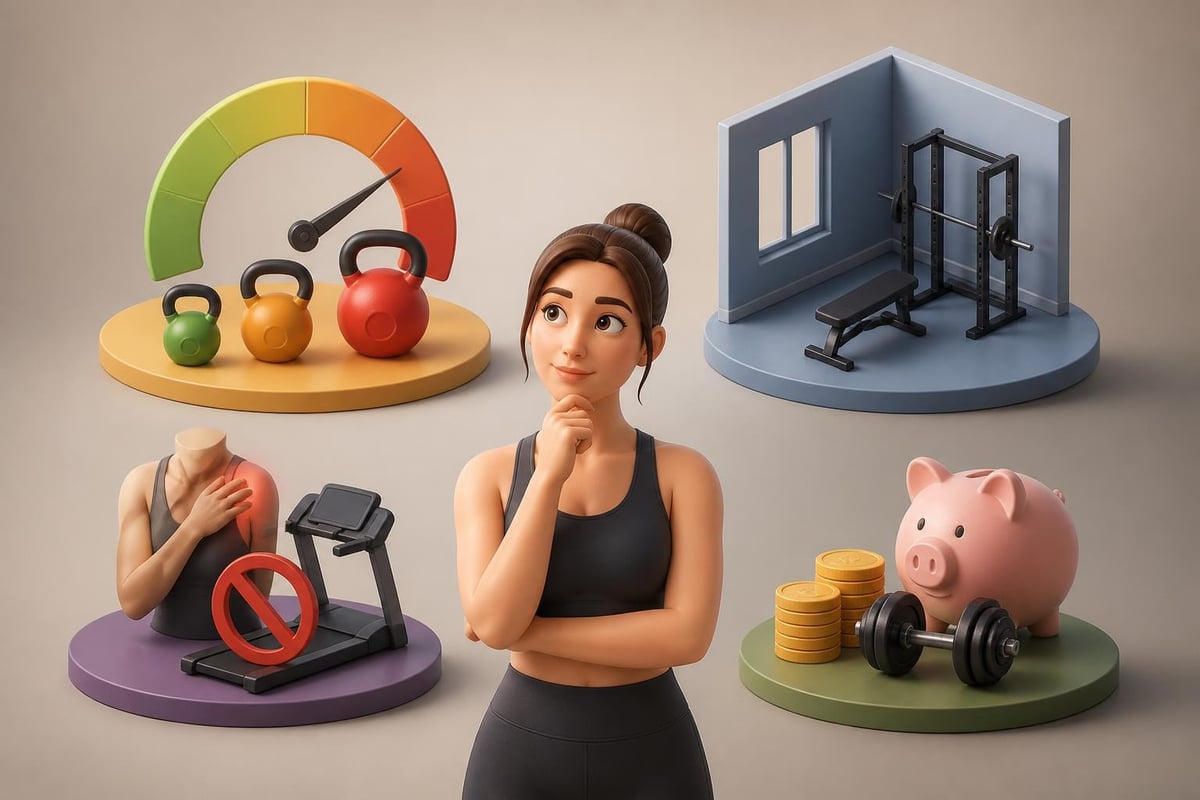
Owning effective weight loss exercise equipment represents only the first step. Strategic programming that balances training frequency, intensity, duration, and recovery determines actual results. The most sophisticated equipment delivers minimal benefits without structured application aligned with physiological adaptation timelines.
Weekly Training Structure
Optimal weekly schedules distribute cardiovascular and resistance training across 4-6 sessions, allowing adequate recovery while maintaining metabolic elevation. Combining both modalities within individual sessions (concurrent training) or separating them into dedicated workouts both produce results when total weekly volume meets evidence-based minimums.
Sample weekly equipment-based weight loss program:
- Monday: Full-body resistance training (45 min) + 15 min moderate cardio
- Tuesday: Interval training on cardio equipment (30 min)
- Wednesday: Active recovery with yoga or mobility work (30 min)
- Thursday: Upper body resistance + 20 min steady-state cardio
- Friday: High-intensity intervals (25 min)
- Saturday: Lower body resistance + 15 min cardio
- Sunday: Rest or light activity
This structure provides three resistance sessions, three cardiovascular-focused sessions, and one full rest day. Total weekly exercise time reaches approximately 200-250 minutes, exceeding minimum guidelines while remaining sustainable for most individuals.
Progressive Overload Application
Continuous adaptation requires systematic increases in training demands. With weight loss exercise equipment, progression occurs through increased resistance, extended duration, reduced rest intervals, or enhanced movement complexity. Documenting these variables across sessions ensures you're challenging your body rather than merely repeating familiar patterns.
Progressive overload methods by equipment type:
| Equipment | Progression Methods |
|---|---|
| Treadmill | Speed increase, incline elevation, interval intensity, session duration |
| Weights | Load increase, rep increase, set addition, tempo manipulation |
| Rower | Watts/power increase, stroke rate elevation, distance extension, interval density |
| Bike | Resistance increase, cadence elevation, standing intervals, program difficulty |
Planning progression across 4-6 week blocks prevents both stagnation and overtraining. Increase one variable by 5-10% every 1-2 weeks while monitoring recovery quality and performance consistency.
Complementary Equipment and Accessories
Beyond primary cardiovascular and resistance tools, supporting accessories enhance workout effectiveness and recovery quality. Recovery equipment addresses the tissue stress created by challenging training sessions, enabling faster return to high-intensity work that drives continued adaptation.
Recovery and Mobility Tools
Foam rollers, massage guns, and stretching aids facilitate tissue quality maintenance that prevents the chronic tightness and movement restrictions that commonly develop during intensive training phases. Self-myofascial release before workouts enhances movement quality, while post-session recovery protocols reduce delayed-onset muscle soreness and maintain training frequency.
Quality recovery tools include:
- High-density foam rollers for major muscle groups
- Targeted massage balls for feet, hips, and shoulders
- Resistance bands for dynamic stretching and activation
- Percussion massagers for deep tissue work
Integrating 10-15 minutes of recovery work daily supports the training volume necessary for meaningful weight loss. As detailed in SkyFitNet's recovery science article, strategic recovery protocols enhance performance capacity rather than simply managing soreness.
Environment and Safety Accessories
Creating a dedicated training environment with proper flooring, mirrors for form monitoring, and climate control increases workout consistency. Rubber flooring protects surfaces while dampening vibration and noise. Quality ventilation prevents overheating that reduces work capacity and increases perceived exertion.
Essential environmental elements:
- Interlocking gym floor tiles – Protects floors, reduces impact, defines space
- Full-length mirror – Enables form self-correction during movements
- Fan or climate control – Maintains comfortable temperature for sustained effort
- Proper lighting – Reduces eye strain and creates inviting atmosphere
- Equipment organization – Shelving and racks keep gear accessible and space tidy
These supporting elements transform random equipment ownership into a functional training facility that invites consistent use. Home gym equipment guides explore space optimization strategies that maximize utility from limited square footage.
Maintenance and Longevity Considerations
Quality weight loss exercise equipment represents significant financial investment that requires proper maintenance for maximum lifespan. Regular cleaning, lubrication, and inspection prevent premature failure while maintaining safe operating conditions. Most equipment failures result from neglect rather than inherent design flaws.
Equipment Maintenance Schedules
Different equipment types require specific maintenance protocols. Treadmills need belt lubrication and tension adjustment, bikes require chain or belt inspection, and cable systems need pulley lubrication. Following manufacturer recommendations extends equipment life while preventing dangerous malfunctions during use.
Basic maintenance timeline:
- After each use: Wipe down contact surfaces, remove sweat and debris
- Weekly: Inspect for loose bolts, unusual noises, or movement restrictions
- Monthly: Lubricate moving parts, check cable integrity, tighten all fasteners
- Quarterly: Professional inspection for major equipment, belt/chain replacement if needed
- Annually: Complete service including electronic calibration and wear part replacement
Maintaining detailed service logs helps identify developing issues before they cause complete failures. Most quality equipment provides 5-10 years of reliable service with proper care, while neglected machines often fail within 2-3 years despite premium pricing.
Safety Protocols and Proper Usage
Using weight loss exercise equipment safely requires understanding proper setup, operation, and emergency procedures. Each equipment type presents specific risk factors that proper technique mitigates. Treadmill users should familiarize themselves with emergency stop mechanisms, weight users must employ appropriate loading progressions, and all equipment requires adequate clearance space.
Safety fundamentals include:
- Starting all cardio equipment at minimum settings before mounting
- Maintaining three-point contact during treadmill speed or incline changes
- Using safety clips or lanyards that stop equipment if you fall
- Clearing adequate space around equipment (minimum 2-3 feet all directions)
- Securing free weights properly after use to prevent trip hazards
Understanding equipment capacity limits prevents both equipment damage and personal injury. Exceeding weight ratings on benches or machines compromises structural integrity and creates catastrophic failure risk during subsequent uses.
Integration with Nutrition and Lifestyle Factors
Weight loss exercise equipment delivers maximum results when combined with appropriate nutrition strategies and lifestyle behaviors. Exercise creates caloric expenditure and metabolic adaptations, but total energy balance remains the primary determinant of body composition changes. Equipment-based training should complement, not replace, nutrition fundamentals.
Energy Balance and Workout Nutrition
The calories burned during equipment-based exercise contribute to the energy deficit required for weight loss, but digestive system efficiency and food choices ultimately determine whether that deficit exists. Tracking both energy expenditure from exercise and energy intake from food provides the complete picture necessary for predictable results.
Modern fitness equipment provides caloric expenditure estimates, but these calculations involve significant assumptions about individual metabolism and efficiency. Using these numbers as approximate guides rather than precise measurements prevents the common mistake of "eating back" exercise calories through post-workout indulgence that eliminates the deficit created.
Holistic wellness approaches recognize that sustainable weight loss requires addressing sleep quality, stress management, and nutritional adequacy alongside structured exercise. The most effective weight loss exercise equipment serves as one tool within a comprehensive lifestyle modification program.
Behavioral Consistency and Habit Formation
Equipment ownership removes common barriers to exercise consistency by eliminating travel time, weather dependence, and facility access limitations. However, proximity alone doesn't guarantee usage. Successful equipment-based weight loss requires habit formation strategies that automate workout behavior rather than relying on daily motivation.
Consistency-building strategies:
- Schedule equipment sessions as non-negotiable appointments
- Prepare workout areas the night before to reduce friction
- Track completion rather than perfection to build streak motivation
- Connect equipment use to existing habits (morning coffee, evening TV)
- Join virtual communities using similar equipment for accountability
As explored in fitness routine development articles, consistency beats intensity for long-term results. Using weight loss exercise equipment for 30 minutes daily produces superior outcomes compared to sporadic 90-minute sessions regardless of equipment quality.
Selecting and using weight loss exercise equipment strategically transforms fitness goals into measurable progress. The combination of cardiovascular conditioning, resistance training, and proper recovery creates the physiological environment necessary for sustainable body composition improvement. SkyFitNet provides the training, recovery, and mobility essentials that support every phase of your transformation journey, from initial equipment selection through advanced programming refinements. Explore quality gear designed to help you train smarter, recover better, and live stronger while building the active lifestyle that sustains results for years to come.