

Best Weightlifting Workouts for Strength & Muscle

Building strength and muscle through weightlifting requires more than showing up to the gym and moving heavy objects. The best weightlifting workouts combine strategic exercise selection, proper programming, and progressive overload to deliver measurable results. Whether you're pursuing powerlifting totals, bodybuilding aesthetics, or general fitness performance, understanding which training approaches actually work separates those who plateau from those who consistently progress. This comprehensive guide breaks down proven weightlifting routines, programming principles, and exercise strategies backed by exercise science and real-world results.
Understanding Effective Weightlifting Program Design
The foundation of any successful strength training approach lies in understanding how your body adapts to resistance. When you lift weights, you create microscopic damage to muscle fibers, triggering a repair process that builds them back stronger and larger. This adaptation, known as hypertrophy and neural adaptation, requires specific training stimuli to optimize.
Key Variables in Strength Programming
Effective weightlifting programs manipulate several critical variables to drive adaptation:
- Training volume: Total sets multiplied by reps multiplied by load
- Training intensity: Percentage of your one-rep maximum (1RM)
- Training frequency: How often you train each muscle group weekly
- Exercise selection: Compound versus isolation movements
- Rest intervals: Recovery time between sets
- Progressive overload: Systematic increase in training stress
Research from the American College of Sports Medicine provides evidence-based guidelines for resistance training prescription. Their updated position stands emphasize that optimal strength development requires 2-3 sessions per muscle group weekly, with loads ranging from 60-90% of 1RM depending on your specific goals.
The relationship between these variables determines whether your program builds maximal strength, muscle size, muscular endurance, or a combination. Most of the best weightlifting workouts strategically balance these factors across training cycles.

Compound Movement-Based Strength Programs
Programs built around major compound lifts form the backbone of the best weightlifting workouts for developing total-body strength. These multi-joint exercises recruit large muscle groups and allow you to handle the heaviest loads, creating the greatest stimulus for adaptation.
The Big Four Foundation
The most effective compound-focused programs typically center on four primary movement patterns:
- Squat variations (back squat, front squat, safety bar squat)
- Hinge movements (conventional deadlift, Romanian deadlift, trap bar deadlift)
- Horizontal press (barbell bench press, dumbbell press, floor press)
- Vertical press (overhead press, push press, seated press)
Adding horizontal and vertical pulling movements (rows, pull-ups, lat pulldowns) creates a balanced program that develops strength across all major muscle groups. This approach, utilized in programs like Starting Strength and StrongLifts 5x5, prioritizes progressive overload on basic movement patterns.
A typical beginner-focused compound program might look like this:
| Training Day | Primary Lifts | Sets x Reps | Accessory Work |
|---|---|---|---|
| Day A | Squat, Bench Press, Barbell Row | 3-5 x 5 | Tricep extensions, bicep curls |
| Day B | Deadlift, Overhead Press, Pull-ups | 1-3 x 5 (deadlift), 3-5 x 5 (press) | Face pulls, lateral raises |
| Day C | Squat, Bench Press, Barbell Row | 3-5 x 5 | Core work, rear delt work |
This structure provides balanced development while allowing adequate recovery. Studies examining training frequency effects on strength suggest that hitting each major movement pattern 2-3 times weekly optimizes neural adaptations and skill development in the lifts themselves.
Upper/Lower Split Programming
For intermediate lifters, upper/lower splits offer increased volume while maintaining reasonable frequency. These splits allow you to train four days weekly, hitting each muscle group twice with greater exercise variety.
Upper Body Focus:
- Primary horizontal press (bench press variations)
- Primary vertical press (overhead press variations)
- Horizontal pull (barbell or dumbbell rows)
- Vertical pull (pull-ups or lat pulldowns)
- Arm and shoulder accessories
Lower Body Focus:
- Primary squat variation
- Hip hinge movement (deadlifts or Romanian deadlifts)
- Unilateral work (lunges, split squats, single-leg RDLs)
- Posterior chain accessories (leg curls, back extensions)
- Calf and core work
This approach allows for greater training volume per session while providing three full recovery days weekly. Many consider upper/lower splits among the best weightlifting workouts for balancing intensity with recovery, especially when consistency becomes the priority.
Hypertrophy-Focused Training Protocols
Building muscle mass requires different programming considerations than pure strength development. While the best weightlifting workouts for hypertrophy still utilize progressive overload, they emphasize higher training volumes and metabolic stress.
Volume Landmarks for Muscle Growth
Current research suggests optimal hypertrophy occurs within specific volume ranges:
- Minimum effective volume: 10-12 sets per muscle group weekly
- Maximum adaptive volume: 15-20 sets per muscle group weekly
- Maximum recoverable volume: Varies individually, typically 20-25 sets
These volume recommendations inform how you structure weekly training. A muscle-building program might spread 16-20 weekly sets for chest across two sessions, using various exercises and rep ranges to accumulate volume while managing fatigue.
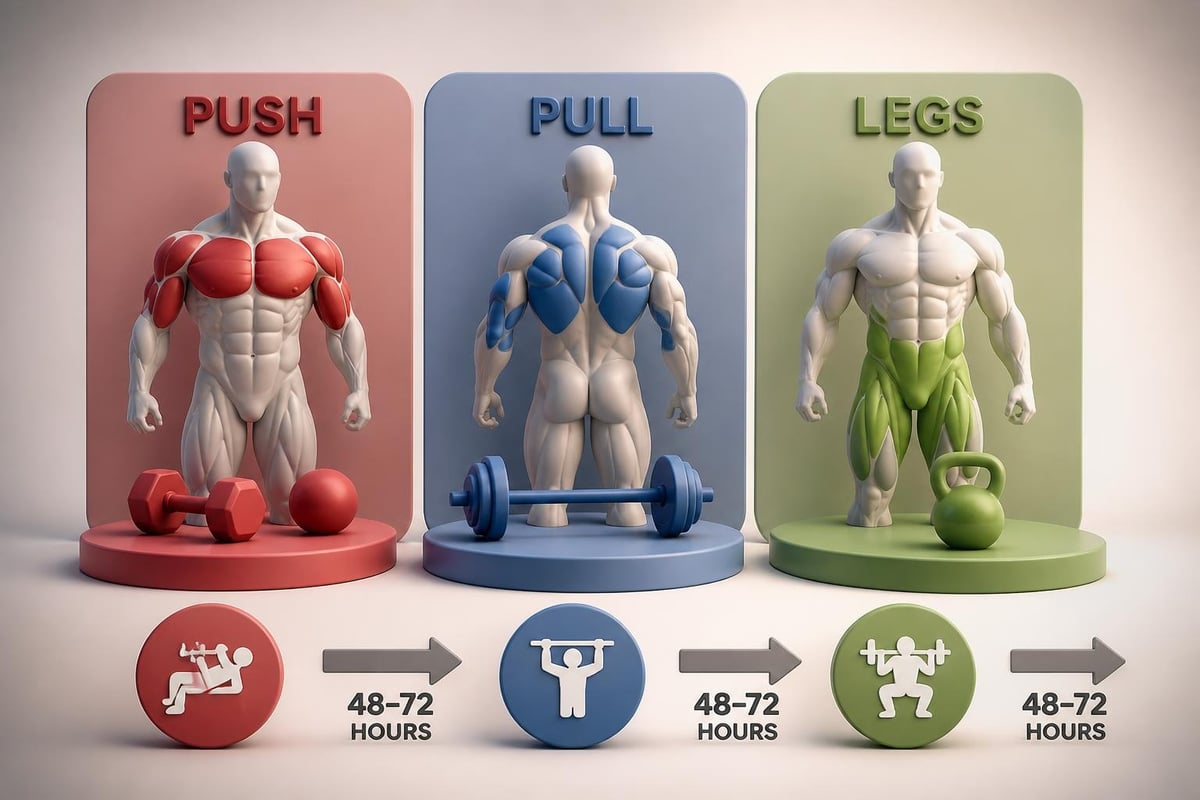
Push/Pull/Legs Split Structure
The push/pull/legs (PPL) division represents one of the most popular bodybuilding-style programs, allowing high frequency and volume:
Push Day (Chest, Shoulders, Triceps):
- Barbell or dumbbell bench press: 4 sets x 6-8 reps
- Incline dumbbell press: 3 sets x 8-10 reps
- Overhead press: 3 sets x 8-10 reps
- Cable flyes: 3 sets x 12-15 reps
- Lateral raises: 3 sets x 12-15 reps
- Tricep pushdowns: 3 sets x 12-15 reps
Pull Day (Back, Biceps, Rear Delts):
- Deadlifts or rack pulls: 3 sets x 5-8 reps
- Pull-ups or lat pulldowns: 4 sets x 8-12 reps
- Cable rows: 3 sets x 10-12 reps
- Face pulls: 3 sets x 15-20 reps
- Barbell or dumbbell curls: 3 sets x 10-12 reps
- Hammer curls: 3 sets x 12-15 reps
Legs Day (Quads, Hamstrings, Glutes, Calves):
- Back squats: 4 sets x 6-10 reps
- Romanian deadlifts: 3 sets x 8-10 reps
- Leg press: 3 sets x 12-15 reps
- Walking lunges: 3 sets x 10-12 reps per leg
- Leg curls: 3 sets x 12-15 reps
- Calf raises: 4 sets x 15-20 reps
Running this split twice weekly creates a six-day training schedule with each muscle group trained every 3-4 days. The increased frequency supports both volume accumulation and practice effect on movement patterns.
Periodization Strategies for Long-Term Progress
Continuous linear progression eventually stalls for all lifters. Periodization, the systematic variation of training variables over time, prevents plateaus and optimizes adaptation. The best weightlifting workouts incorporate periodization principles to sustain progress across months and years.
Linear Periodization Models
Linear periodization gradually shifts from higher volume/lower intensity toward lower volume/higher intensity across a training cycle:
| Phase | Duration | Rep Range | Intensity (%1RM) | Focus |
|---|---|---|---|---|
| Hypertrophy | 4-6 weeks | 8-12 | 65-75% | Muscle growth, volume |
| Strength | 3-4 weeks | 4-6 | 80-87% | Force production |
| Power/Peak | 2-3 weeks | 1-3 | 90-95%+ | Neural optimization |
This traditional approach works well for beginners and intermediates preparing for specific events or testing maximal strength. After completing a cycle, you start over at slightly higher absolute loads, driving long-term progression.
Undulating Periodization Approaches
Daily undulating periodization (DUP) varies intensity and volume within each week rather than across multi-week blocks. A DUP program might structure the same lift differently across three weekly sessions:
- Monday: 4 sets x 8 reps at 70% 1RM (hypertrophy focus)
- Wednesday: 5 sets x 3 reps at 85% 1RM (strength focus)
- Friday: 3 sets x 5 reps at 75% 1RM (moderate intensity)
Research comparing periodized versus non-periodized training demonstrates that varied programming typically produces superior long-term outcomes compared to constant training variables. This variation manages fatigue, provides different adaptation stimuli, and maintains training motivation.
For those balancing demanding schedules with training goals, time-efficient strategies become essential for maintaining consistency across periodized programs.
Accessory Work and Weak Point Training
While compound movements form the foundation of effective programs, targeted accessory exercises address weak points, prevent imbalances, and increase total training volume. The best weightlifting workouts strategically incorporate accessories to support primary lift progression.
Identifying and Addressing Weak Points
Sticking points in major lifts often reveal specific muscle group weaknesses:
Bench Press Weaknesses:
- Weak off chest: Paused bench, dumbbell presses, chest flyes
- Mid-range lockout issues: Board presses, close-grip bench, tricep work
- Shoulder instability: Face pulls, rear delt work, rotator cuff exercises
Squat Weaknesses:
- Hole strength: Pause squats, box squats, Bulgarian split squats
- Quad development: Front squats, leg press, leg extensions
- Posterior chain: Romanian deadlifts, good mornings, glute bridges
Deadlift Weaknesses:
- Off-floor strength: Deficit deadlifts, snatch-grip deadlifts
- Lockout issues: Rack pulls, Romanian deadlifts, back extensions
- Grip limitations: Farmer's walks, dead hangs, grip-specific training
Selecting 2-4 accessory movements per session, performed for 3-4 sets of 8-15 reps, provides adequate volume without excessive fatigue. Quality strength training equipment enables proper execution of both compound and accessory movements.
Unilateral Exercise Integration
Single-leg and single-arm movements address asymmetries and build functional strength:
- Bulgarian split squats
- Single-leg Romanian deadlifts
- Single-arm dumbbell rows
- Single-arm overhead presses
- Step-ups and lunges
Including 1-2 unilateral movements per training session helps balance development between sides and reduces injury risk from compensatory movement patterns.
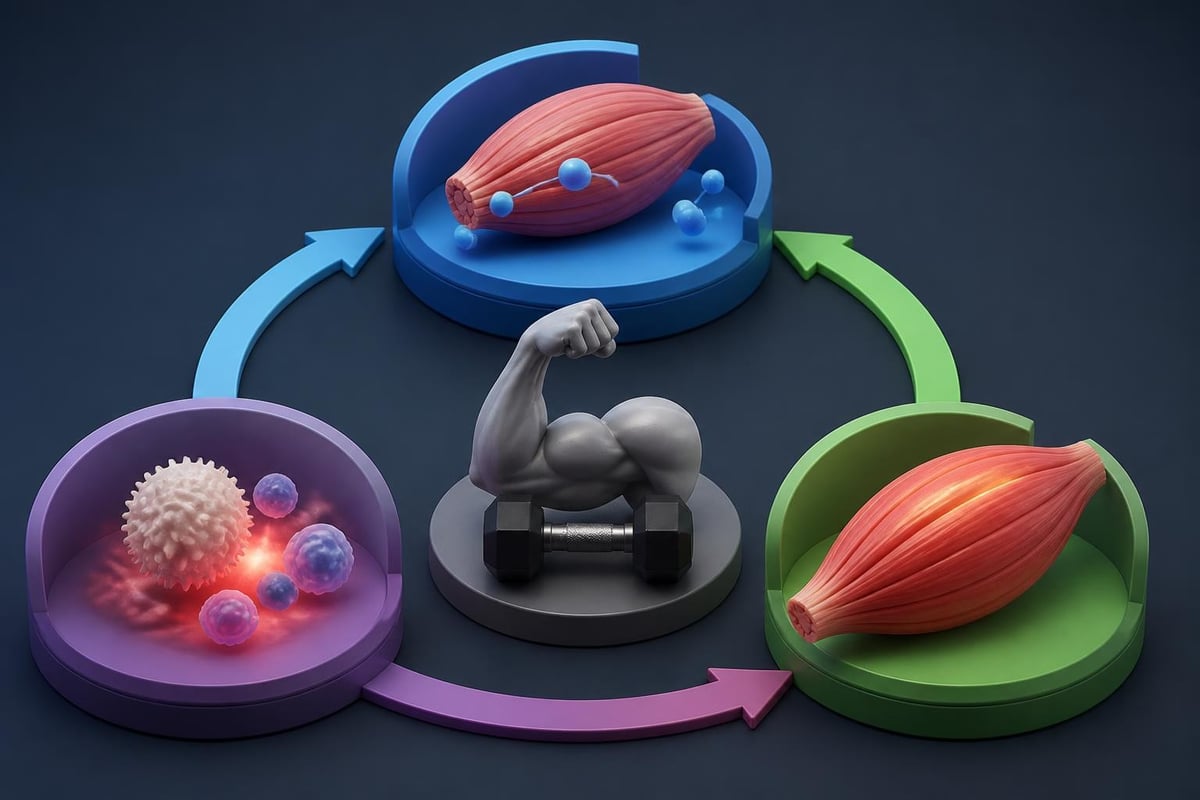
Recovery Considerations for Optimal Adaptation
Training represents only one part of the adaptation equation. Recovery processes, including sleep, nutrition, and active recovery, determine whether training stress becomes productive adaptation or accumulated fatigue.
Strategic Deload Protocols
Even perfectly designed programs require periodic recovery weeks to prevent overtraining. Deload strategies include:
- Volume reduction: Cut total sets by 40-50% while maintaining intensity
- Intensity reduction: Decrease loads to 60-70% 1RM while maintaining volume
- Complete rest: Take 4-7 days completely off from structured training
Most lifters benefit from scheduled deloads every 4-6 weeks, though individual recovery capacity varies. Signs indicating deload necessity include persistent fatigue, decreased performance, sleep disruption, or increased resting heart rate.
Harvard Health's overview of resistance training emphasizes that proper recovery practices significantly impact training outcomes. Recovery extends beyond passive rest to include active strategies.
Active Recovery Methods
Between training sessions, active recovery practices support adaptation:
- Light cardiovascular work (walking, cycling, swimming)
- Mobility and flexibility training
- Foam rolling and self-myofascial release
- Contrast showers or cold exposure
- Proper hydration and nutrition timing
Understanding why recovery matters as much as your workout helps you appreciate that adaptation happens during rest periods, not during training sessions themselves. Quality recovery tools and equipment can accelerate these processes.
Customizing Programs for Individual Goals
The best weightlifting workouts align with your specific objectives, experience level, schedule constraints, and recovery capacity. One-size-fits-all programming ignores individual differences that significantly impact results.
Experience-Based Modifications
Training experience directly influences optimal program design:
| Experience Level | Weekly Frequency | Primary Focus | Volume Progression |
|---|---|---|---|
| Beginner (0-1 year) | 3-4 days | Linear progression, technique | Session to session |
| Intermediate (1-3 years) | 4-5 days | Volume accumulation | Weekly progression |
| Advanced (3+ years) | 5-6 days | Periodized intensity | Block periodization |
Beginners benefit most from simple programs emphasizing technique development on compound movements. As you advance, increased training frequency, exercise variety, and sophisticated periodization become necessary to continue progressing.
Goal-Specific Programming Adjustments
Your primary objective should determine program structure:
Maximal Strength Goals:
- Emphasize loads above 85% 1RM
- Lower rep ranges (1-5 reps)
- Longer rest periods (3-5 minutes)
- Focus on compound lifts
- Moderate total volume
Hypertrophy Goals:
- Moderate loads (65-85% 1RM)
- Higher rep ranges (6-15 reps)
- Moderate rest periods (60-120 seconds)
- Greater exercise variety
- Higher total volume
General Fitness Goals:
- Variable loads and rep ranges
- Circuit and superset structures
- Shorter rest periods
- Full-body emphasis
- Balanced volume across movement patterns
Those pursuing general health and functionality rather than competitive performance might explore functional gym equipment options that support varied movement patterns and training styles.
Nutrition and Supplementation for Weightlifting Performance
Training stimulus combines with nutritional support to drive adaptation. The best weightlifting workouts deliver suboptimal results without adequate nutritional support for recovery and growth.
Macronutrient Targets for Strength Athletes
Protein intake particularly impacts strength and muscle development:
- Protein: 0.7-1.0 grams per pound of bodyweight daily
- Carbohydrates: 2-4 grams per pound for intense training
- Fats: 0.3-0.5 grams per pound for hormonal function
Distributing protein across 3-5 meals daily, with 20-40 grams per serving, optimizes muscle protein synthesis. Pre- and post-workout nutrition timing matters less than total daily intake, though consuming protein and carbohydrates within a few hours of training supports recovery.
Evidence-Based Supplementation
While whole foods provide the foundation, certain supplements offer measurable benefits:
Tier 1 (Strong Evidence):
- Creatine monohydrate (3-5g daily)
- Caffeine (3-6mg per kg bodyweight pre-training)
- Whey protein (convenience for hitting protein targets)
Tier 2 (Moderate Evidence):
- Beta-alanine (2-5g daily for high-rep training)
- Citrulline malate (6-8g pre-training)
- Vitamin D (if deficient)
Most other supplements lack sufficient evidence to justify their cost. Focusing resources on quality training equipment and proper nutrition provides better returns than elaborate supplement stacks. For comprehensive wellness support, consider holistic nutrition approaches that emphasize food quality and nutrient timing.
Implementation and Progressive Overload Strategies
Understanding effective programs means nothing without consistent implementation and systematic progression. The best weightlifting workouts require disciplined execution over months and years.
Tracking and Measurement Protocols
Quantifying training variables enables objective progress assessment:
- Training logs: Record exercises, sets, reps, loads, and RPE
- Performance testing: Assess 1RM or rep maxes every 8-12 weeks
- Body composition: Track weight and measurements monthly
- Video analysis: Record sets to evaluate technique quality
- Subjective feedback: Note energy levels, soreness, and motivation
Digital tracking apps simplify data collection, but simple notebook entries work equally well. The key is consistency in recording relevant information.
Progressive Overload Methods
Continuous adaptation requires systematically increasing training stress:
- Increase load: Add weight to the bar while maintaining reps
- Increase reps: Perform more repetitions at the same weight
- Increase sets: Add volume through additional sets
- Improve technique: Execute reps with better form and control
- Decrease rest: Reduce rest intervals between sets
- Increase frequency: Train muscle groups more often weekly
Cycling through these progression methods across training blocks prevents staleness and provides varied adaptation stimuli. Most programs prioritize load and rep increases as primary progression drivers.
Building a sustainable fitness routine requires balancing aggressive progression with adequate recovery. Pushing too hard leads to burnout or injury, while insufficient challenge produces minimal adaptation.
The best weightlifting workouts combine strategic exercise selection, appropriate volume and intensity, intelligent periodization, and consistent progressive overload to deliver measurable strength and muscle gains. Whether you're pursuing maximal strength, hypertrophy, or general fitness, these evidence-based programming principles provide a framework for long-term success. Remember that training represents only one component of the adaptation equation-adequate recovery, proper nutrition, and quality equipment all contribute to your results. SkyFitNet provides the training, recovery, and wellness essentials you need to support your performance and active lifestyle, helping you train smarter, recover better, and live stronger.