

Weight Workout Equipment Guide for Every Fitness Level

Strength training has become a cornerstone of modern fitness, with research demonstrating significant benefits for muscle development, bone density, metabolic health, and overall longevity. Whether you're outfitting a home gym or simply trying to understand which tools best support your training goals, understanding weight workout equipment is essential. The right equipment can transform your training experience, making workouts more effective, safer, and more enjoyable. From traditional barbells and dumbbells to innovative resistance tools, today's market offers countless options for every fitness level and budget.
Understanding the Foundation of Resistance Training
The science behind strength training is well-established. According to systematic reviews examining resistance training and health outcomes, regular weight-based exercise improves cardiovascular health, reduces disease risk, and enhances functional capacity across all age groups. This evidence underscores why selecting appropriate weight workout equipment matters for your long-term health and performance.
When choosing resistance training tools, consider three primary factors: your current fitness level, available space, and specific training objectives. Beginners might start with adjustable dumbbells and resistance bands, while advanced lifters often require barbells, weight plates, and specialty equipment for progressive overload.
Free Weights Versus Machine-Based Training
A comprehensive meta-analysis comparing free-weight and machine-based strength training reveals that both approaches deliver excellent results, though each offers distinct advantages. Free weights demand greater stabilization and core engagement, while machines provide controlled movement patterns ideal for isolation exercises and rehabilitation.
Free weight advantages:
- Greater muscle activation through stabilization demands
- Functional movement patterns mimicking real-world activities
- Compact footprint requiring minimal space
- Cost-effective for home gyms
- Versatility across hundreds of exercise variations
Machine-based advantages:
- Guided movement reducing injury risk for beginners
- Easier to target specific muscle groups
- Reduced technique learning curve
- Ability to train safely to failure without a spotter
- Consistent resistance throughout the movement range
Essential Weight Workout Equipment Categories
Building an effective strength training arsenal doesn't require every piece of equipment on the market. Strategic selection based on your goals creates a functional, efficient setup.
Dumbbells and Kettlebells
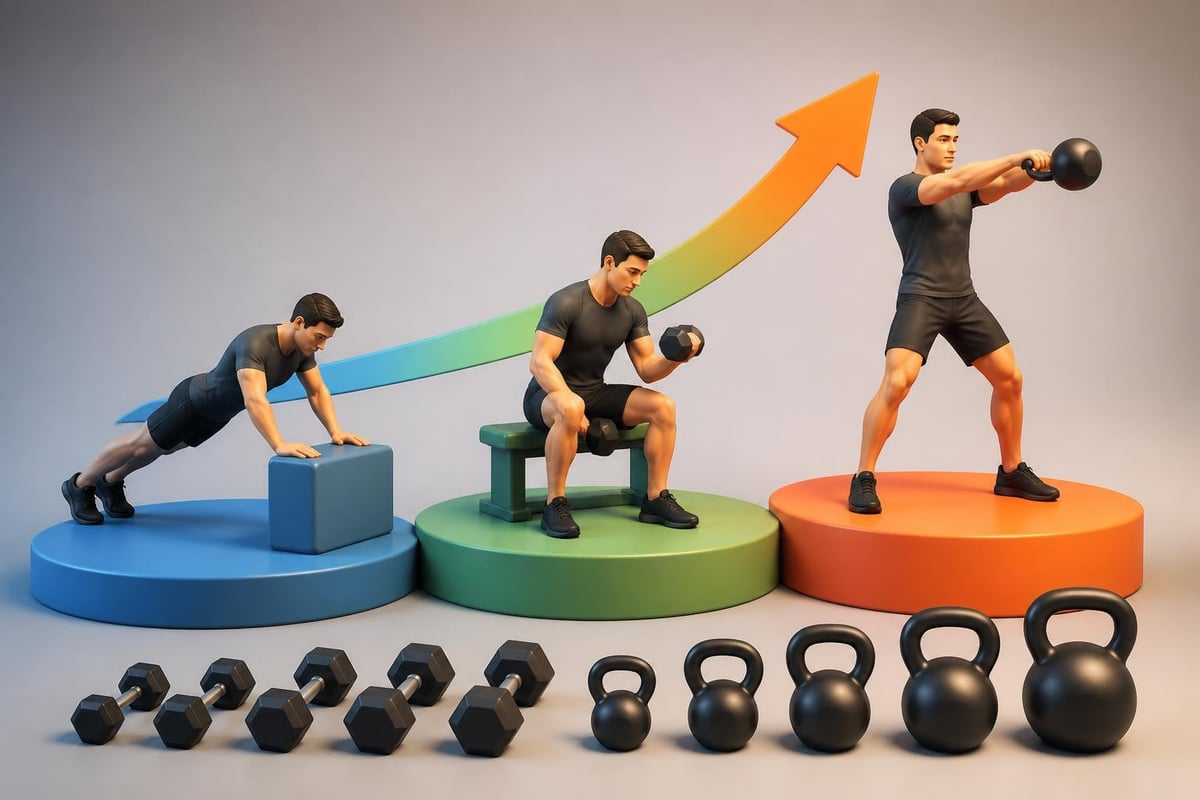
Dumbbells remain the most versatile weight workout equipment for home and commercial gyms alike. Fixed-weight dumbbells offer durability and convenience, while adjustable models save space and money. A quality set enables hundreds of exercises targeting every major muscle group.
Kettlebells bring dynamic training possibilities through ballistic movements like swings, snatches, and Turkish get-ups. Their offset center of gravity challenges grip strength and core stability differently than traditional dumbbells. For those seeking comprehensive upper-body development, specialized arm strength training equipment offers targeted resistance for biceps, triceps, and forearm muscles.
Barbells and Weight Plates
For serious strength development, barbells represent the gold standard. Olympic barbells (20kg for men, 15kg for women) accommodate heavy loads essential for compound movements like squats, deadlifts, and bench presses. Standard barbells (1-inch diameter) work well for beginners with lighter weight requirements.
Weight plate options include:
| Plate Type | Material | Advantages | Best For |
|---|---|---|---|
| Iron | Cast iron | Affordable, durable, compact | Home gyms, budget builds |
| Rubber-coated | Iron core, rubber exterior | Floor protection, noise reduction | Mixed-use spaces |
| Bumper | Solid rubber | Drop-safe, Olympic lifting | CrossFit, power training |
| Urethane | Polyurethane coating | Premium feel, minimal odor | Commercial facilities |
Resistance Bands and Cable Systems
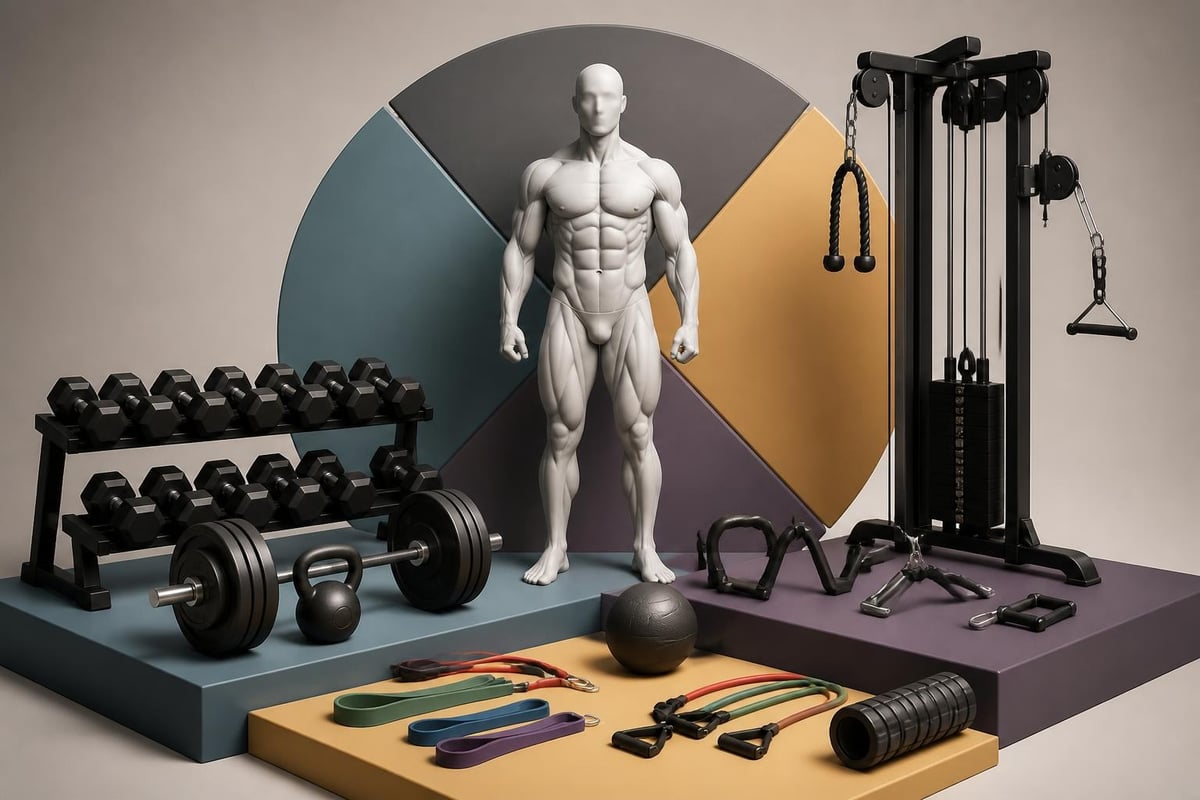
Not all effective weight workout equipment involves iron and steel. Resistance bands provide variable tension throughout movement ranges, creating unique muscle-building stimulus. Multi-functional resistance training tools offer portable strength training solutions perfect for travel or limited-space environments.
Cable systems deliver constant tension and infinite angle adjustments, making them invaluable for isolation work and rehabilitation exercises. The ACSM resistance exercise guidelines emphasize that resistance modality matters less than consistent progressive overload, meaning bands can deliver results comparable to traditional weights when programmed appropriately.
Specialized Equipment for Targeted Development
Beyond fundamental tools, specialized equipment addresses specific training needs and muscle groups that basic implements might miss.
Grip and Forearm Trainers
Grip strength predicts overall health outcomes and supports performance in virtually every lifting movement. Wrist strength devices and forearm training equipment target these often-neglected muscles, improving carrying capacity, deadlift performance, and daily functional strength.
Hand grippers, wrist rollers, and finger strengtheners each challenge grip from different angles:
- Crushing grip: Hand grippers and spring-based devices
- Pinch grip: Plate pinches and specialized pinch blocks
- Support grip: Dead hangs and farmer's walks with heavy implements
- Wrist extension/flexion: Wrist rollers and resistance bands
Comprehensive Training Stations
For those seeking maximum versatility from minimal equipment, multifunctional fitness strength training systems combine multiple training modalities into single units. These space-efficient solutions enable chest presses, rowing movements, and isolation exercises without requiring separate dedicated equipment for each function.
Power racks and squat stands create safe environments for heavy barbell training without requiring spotters. Safety pins or straps catch failed lifts, enabling confident progressive overload even when training alone. As Harvard Health Publishing notes in their strength training guide, safety should never be compromised, particularly when lifting near-maximal loads.
Building Your Home Gym Strategically
Creating an effective home training space requires balancing budget constraints, space limitations, and training priorities. Consumer Reports' home gym setup guide emphasizes starting with versatile foundational pieces rather than accumulating specialty items.
Budget-Conscious Equipment Selection
Starter package ($200-500):
- Adjustable dumbbells (5-50 lbs)
- Resistance band set with varying tensions
- Yoga mat for floor exercises
- Pull-up bar (doorway-mounted)
Intermediate setup ($500-1500):
- Olympic barbell with weight plates (300+ lbs total)
- Adjustable bench (flat, incline, decline)
- Squat stands or basic power rack
- Additional specialty bars (trap bar, EZ curl bar)
Advanced home gym ($1500-5000+):
- Full power rack with cable attachment
- Competition plates or bumpers
- Specialty equipment (chest expanders, arm blasters, landmine attachments)
- Platform with proper flooring
- Conditioning equipment (assault bike, rower)
Space Optimization Strategies
Even modest spaces accommodate effective weight workout equipment when thoughtfully arranged. Vertical storage maximizes floor space, using wall-mounted plate racks, dumbbell trees, and overhead bar storage. Foldable equipment like collapsible benches and wall-mounted squat racks disappear when not in use.
Multipurpose equipment reduces redundancy. An adjustable bench serves for presses, rows, step-ups, and core work. A quality barbell handles squats, deadlifts, presses, and Olympic lifts. Resistance training accessories that attach to existing equipment expand exercise options without consuming additional space.
Safety and Maintenance Considerations
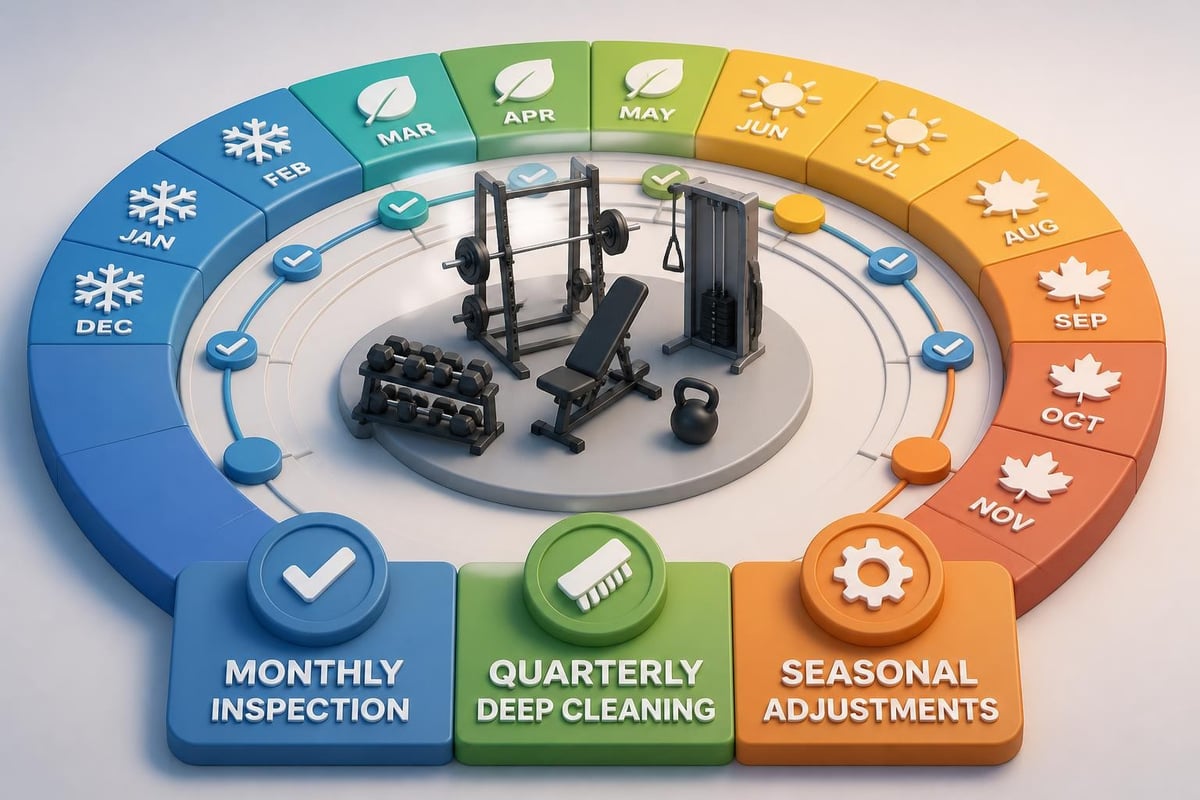
Proper equipment care ensures longevity and prevents injury. Weight workout equipment requires regular inspection and maintenance despite its apparent simplicity.
Equipment Inspection Protocol
Monthly checks should include:
- Barbell sleeve rotation and knurling condition
- Cable fraying or wear on pulleys and attachments
- Bench padding integrity and frame stability
- Weight plate collar security and threading
- Resistance band elasticity and material degradation
Replace any equipment showing significant wear before failure occurs. Frayed cables, cracked rubber, or loose connections pose serious injury risks during heavy lifts.
Proper Storage and Handling
Weight plates belong on racks, not stacked on floors where they damage flooring and create tripping hazards. Barbells require horizontal storage preventing warping, ideally in dedicated barbell holders. Finger strength training devices and smaller accessories need organized storage preventing loss and damage.
Climate control matters more than many realize. Extreme humidity accelerates rust on iron equipment, while excessive dryness cracks rubber and degrades band elasticity. Garage gyms in humid climates benefit from dehumidifiers, while those in arid regions should avoid direct sunlight exposure on rubber components.
Training Applications and Program Design
Equipment means nothing without effective programming. Understanding how different weight workout equipment supports various training goals optimizes results.
Strength Development Protocols
Pure strength requires heavy loads (85-100% one-rep max), low repetitions (1-5), and extended rest periods (3-5 minutes). Barbells excel here, allowing micro-loading and progressive overload tracking. Steel training equipment designed for heavy resistance provides the durability necessary for maximal strength development.
Sample strength-focused equipment usage:
| Exercise | Equipment | Sets x Reps | Rest |
|---|---|---|---|
| Back Squat | Barbell + Plates | 5 x 3 | 4 min |
| Deadlift | Barbell + Plates | 5 x 3 | 4 min |
| Bench Press | Barbell + Plates | 5 x 5 | 3 min |
| Overhead Press | Barbell or Dumbbells | 4 x 5 | 3 min |
Hypertrophy and Muscle Building
Muscle growth thrives on moderate loads (65-85% 1RM), moderate repetitions (6-12), and moderate rest (60-90 seconds). This approach utilizes the full spectrum of weight workout equipment, from machines for isolation to free weights for compounds. Comprehensive fitness equipment supporting various rep ranges and training intensities facilitates hypertrophy-focused programming.
Volume (total sets × reps × load) drives hypertrophy more than any single variable. Multiple exercises per muscle group, performed across various equipment types, accumulates sufficient volume for growth stimulus.
Bone Density and Health Applications
The NHS highlights resistance training's critical role in osteoporosis prevention, emphasizing weight-bearing exercises that stress skeletal structures. Progressive loading signals bones to strengthen, making weight workout equipment essential for long-term skeletal health, particularly for aging populations.
Impact loading through plyometrics complements traditional resistance training, but equipment-based resistance offers controlled, quantifiable progression safer for those with existing bone density concerns. Start conservatively and progress gradually, prioritizing consistency over intensity initially.
Emerging Trends and Innovations
The weight workout equipment landscape continues evolving, with technological integration and material science advancing training possibilities.
Smart Equipment Integration
Connected dumbbells and barbells now track velocity, power output, and rep counting automatically. This data enables precise autoregulation, adjusting daily training loads based on performance metrics rather than predetermined percentages. While traditional equipment remains effective, technology assists those seeking objective progression feedback.
Sustainable Materials and Manufacturing
Environmental consciousness drives innovation in equipment materials. Recycled rubber bumper plates, sustainably sourced wooden equipment, and powder-coated steel replacing chrome finishes represent growing market segments. Performance remains paramount, but environmentally responsible manufacturing increasingly influences purchasing decisions.
Compact and Modular Designs
Urban living spaces demand creative equipment solutions. Modular systems allowing weight stack adjustments, foldable power racks, and multi-function compact trainers address space constraints without sacrificing training effectiveness. The trend toward minimalist home gyms prioritizes versatile, space-efficient weight workout equipment over single-purpose machines.
Selecting Equipment for Different Training Levels
Matching equipment to experience level prevents frustration and optimizes safety.
Beginner Recommendations
New lifters benefit from equipment emphasizing technique development and versatile applications. Resistance bands, light dumbbells (5-25 lbs), and bodyweight-assistance tools like suspension trainers build foundational strength safely. Arm muscle training systems designed for progressive resistance help beginners build confidence without overwhelming complexity.
Machines with guided movement paths reduce injury risk while teaching basic movement patterns. Once technique solidifies over 8-12 weeks, transitioning to free weights challenges stabilization and coordination.
Intermediate Progression
After establishing technique competency, intermediate lifters require equipment supporting progressive overload and training variety. Full barbell sets with ample plates (300-400 lbs), quality adjustable benches, and specialty bars (trap bar, safety squat bar) enable systematic strength development.
This stage emphasizes perfecting major compound movements while adding targeted accessory work. Equipment supporting both approaches proves most valuable.
Advanced Athlete Considerations
Experienced lifters often need specialized equipment addressing specific weaknesses or sport-specific demands. Calibrated competition plates for precision loading, specialty bars reducing joint stress, and advanced cable systems for precise muscle isolation complement heavy barbell training.
Recovery tools become increasingly important as training intensifies. While focused primarily on strength equipment, remember that recovery equipment supports the adaptation process enabling continued progression. Training stimulus means little without adequate recovery facilitating supercompensation.
Integrating Equipment with Recovery and Mobility Work
Comprehensive fitness extends beyond strength training alone. Mobility work, active recovery, and tissue maintenance complement resistance training, and certain equipment serves dual purposes.
Light resistance bands facilitate dynamic warm-ups and mobility drills before heavy lifting sessions. Moderate resistance enables active recovery workouts promoting blood flow without accumulated fatigue. Strategic equipment selection supports training, recovery, and mobility within single investments.
Building strength through properly selected weight workout equipment creates lasting health benefits, from improved bone density and metabolic function to enhanced physical capability and confidence. Whether starting with basic dumbbells or assembling a comprehensive training facility, matching equipment to your current needs and future goals ensures sustainable progress. SkyFitNet provides the training, recovery, and mobility essentials you need to build strength intelligently, supporting your journey from first workout to lifetime fitness with quality equipment designed for real-world performance and durability.