

Space Saving Exercise Equipment: Smart Home Gym Solutions

Modern living often means working with limited square footage, but that shouldn't prevent you from maintaining an active lifestyle. The challenge of creating an effective home workout area in apartments, condos, or small houses has driven innovation in compact fitness solutions. Space saving exercise equipment has evolved dramatically, offering professional-grade performance in footprints that fit into closets, slide under beds, or fold against walls when not in use.
Why Space Efficiency Matters in Home Fitness
The typical American home dedicates minimal space to exercise, yet creating a customized home workout space remains achievable even in constrained environments. Research shows that proximity and accessibility directly impact workout consistency. When equipment is visible and easily deployed, adherence to fitness routines increases significantly.
Consider these spatial realities:
- Average spare bedroom measures 10x10 feet or smaller
- Multi-purpose rooms must accommodate multiple activities
- Storage limitations affect purchasing decisions
- Visual clutter reduces motivation and living space quality
Space saving exercise equipment addresses each of these challenges through intelligent design. Modern solutions incorporate folding mechanisms, vertical storage capabilities, and multi-function features that eliminate the need for separate machines. This consolidation doesn't sacrifice effectiveness; it simply acknowledges the premium on residential square footage.
The Psychology of Compact Fitness Solutions
Beyond physical dimensions, compact equipment influences psychological readiness. Large, permanent installations create barriers to starting workouts, particularly for beginners. Conversely, equipment that appears and disappears seamlessly integrates exercise into daily routines without overwhelming living spaces. The systematic review on home-based physical activity programs demonstrates that environmental accessibility correlates with sustained participation, especially among those new to structured exercise.
Resistance-Based Space Saving Options
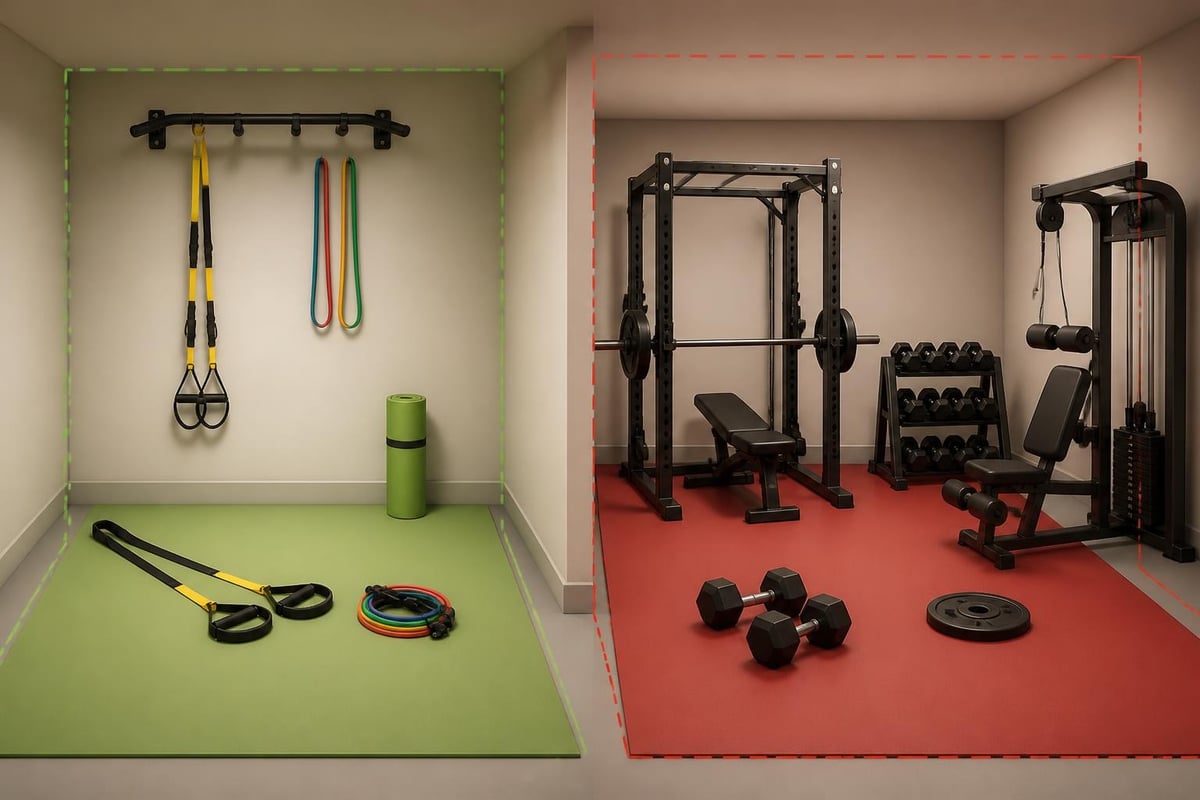
Resistance training forms the foundation of comprehensive fitness, and space saving exercise equipment in this category has reached impressive sophistication. Rather than dedicating entire rooms to cable machines and weight racks, modern alternatives deliver comparable resistance through innovative engineering.
Resistance Bands and Tube Systems
Resistance bands represent the ultimate space-efficient strength training tool. A complete set occupies less space than a single dumbbell yet provides progressive resistance across all major movement patterns. Multi-functional fitness strength resistance training equipment combines multiple resistance points into single units, replacing several traditional machines.
Key advantages include:
- Progressive resistance from 5 to 150+ pounds equivalent
- Attachment versatility for hundreds of exercises
- Door anchors and mounting systems requiring no installation
- Travel-friendly portability
| Equipment Type | Storage Space | Exercise Variety | Price Range |
|---|---|---|---|
| Resistance Bands | 1 cubic foot | 100+ exercises | $20-$80 |
| Adjustable Dumbbells | 2 cubic feet | 50+ exercises | $200-$500 |
| Traditional Dumbbell Set | 15+ cubic feet | 50+ exercises | $300-$1000 |
| Cable Machine | 25+ cubic feet | 75+ exercises | $800-$3000 |
Suspension training systems like TRX or similar alternatives anchor to doors or ceiling mounts, using bodyweight as resistance. These systems fold into pouches smaller than a laptop bag yet facilitate full-body workouts comparable to gym equipment. The adjustability allows users to modify difficulty through body positioning rather than changing weights, making them ideal for shared household spaces.
Adjustable Weight Systems
Space saving exercise equipment has revolutionized free weight training through dial-adjustable dumbbells and compact kettlebell systems. Traditional dumbbell sets require extensive rack space and multiple pairs to cover necessary weight ranges. Adjustable versions consolidate 15-20 pairs of dumbbells into two handles with quick-change mechanisms.
Products like the brachial strength device for arm muscle development demonstrate how targeted equipment can deliver specialized training without sprawling footprints. These tools focus on specific muscle groups through compact, efficient designs that complement broader training programs.
Cardio Equipment for Tight Spaces
Cardiovascular equipment traditionally dominates floor space, but innovations have produced genuinely compact alternatives. The Consumer Reports treadmill buying guide emphasizes evaluating folding mechanisms and storage dimensions alongside performance specifications when selecting space saving exercise equipment.
Folding Treadmills and Under-Desk Options
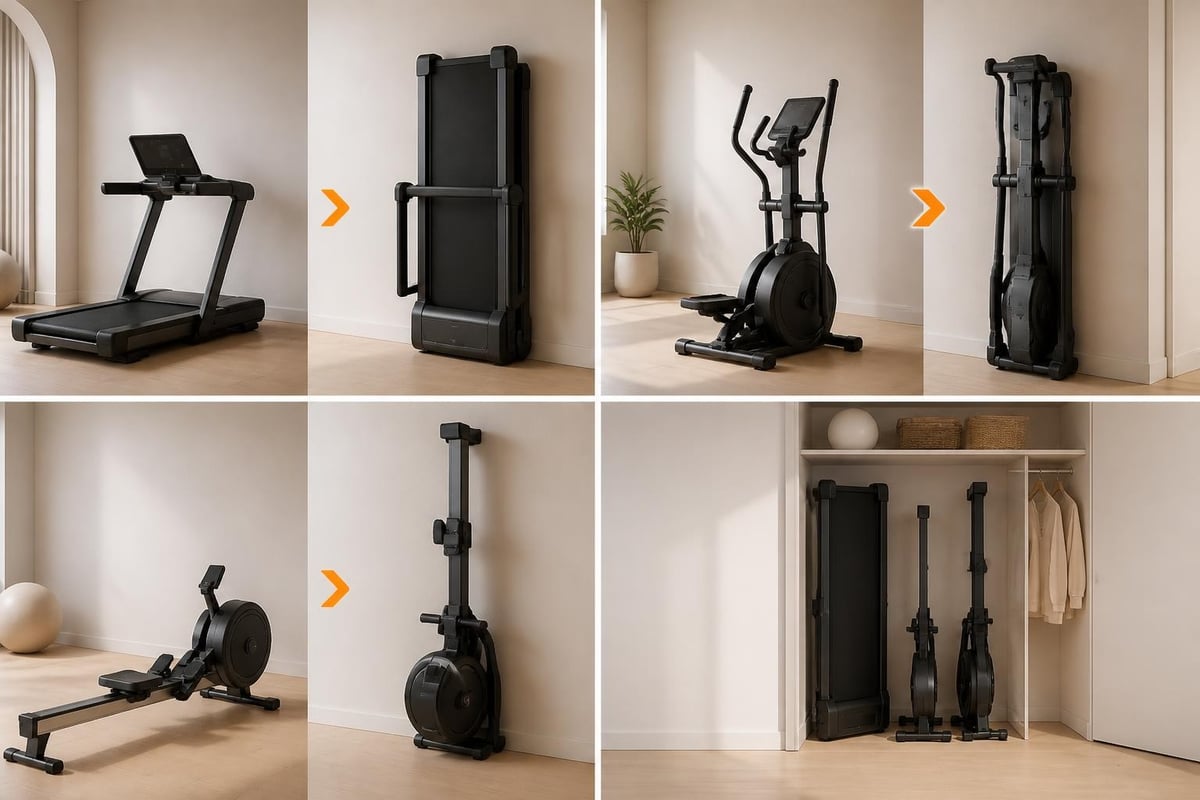
Modern folding treadmills reduce storage depth from 6-7 feet to under 12 inches when upright. Hydraulic assist mechanisms make folding effortless, and wheels facilitate movement to closets or corners. Under-desk treadmills take compactness further, operating at walking speeds beneath standing desks during work hours.
Performance considerations remain important. Walking decks should provide at least 18 inches width and 50 inches length for comfortable stride patterns. Motor quality determines longevity; continuous-duty motors rated at 2.0+ CHP handle regular use without overheating in compact designs.
Compact Ellipticals and Steppers
Budget-friendly elliptical options now include space saving exercise equipment models with 4-foot footprints, nearly half that of full-size trainers. These compact machines sacrifice some stride length but maintain smooth motion mechanics essential for joint-friendly cardio.
Mini steppers and portable pedal exercisers occupy mere square feet yet provide effective lower-body cardiovascular training. While limited in resistance compared to full-size equipment, they excel for active recovery, desk-side movement, and seniors seeking low-impact options. The research on home-based exercise for older adults highlights how accessible, compact equipment increases participation among populations most vulnerable to inactivity.
Comparison of compact cardio solutions:
- Folding Treadmill: 30-35" width, folds to 10" depth, $400-$1200
- Compact Elliptical: 48-52" length, fixed position, $300-$800
- Under-Desk Treadmill: 24" width, 48" length, $200-$600
- Mini Stepper: 15x15" footprint, portable, $50-$150
- Rowing Machine (folding): 24" width, folds to 20" length, $300-$1000
Rowing machines deserve special mention as exceptionally space-efficient cardio equipment. Quality folding rowers collapse to less than 2 feet in length and stand vertically in closets. They engage 85% of body musculature, delivering superior cardiovascular and strength benefits compared to single-mode cardio equipment while occupying minimal active workout space.
Multi-Function and Hybrid Systems
The most innovative space saving exercise equipment combines multiple training modalities into unified systems. These hybrid designs acknowledge that most home users need variety without space for specialized equipment.
All-in-One Strength Stations
Compact strength stations integrate pull-up bars, dip handles, push-up stations, and resistance attachment points into single frames measuring 6 feet tall by 4 feet wide. Wall-mounted versions reduce footprints further, folding against walls when not in use. These systems facilitate bodyweight progressions, resistance band work, and suspended exercises without requiring separate equipment for each modality.
The multi-functional fitness strength resistance training tensioner exemplifies equipment designed specifically for space constraints. By consolidating multiple resistance angles and attachment points, such tools eliminate the need for several individual pieces while maintaining exercise variety.
Adjustable Benches and Platforms
Quality adjustable benches serve as foundational space saving exercise equipment. Beyond supporting dumbbell and resistance band exercises, they function as step platforms, decline stations, and stable surfaces for floor work. Models with wheels and folding legs store vertically in closets between uses.
Essential bench features for compact spaces:
- Seven or more angle positions (flat, incline, decline)
- Weight capacity of 600+ pounds for stability
- Folding mechanism with safety locks
- Transport wheels for easy repositioning
- Narrow profile (12-15 inches width)
Platforms and plyometric boxes serve similar multi-function roles. Adjustable-height plyo boxes replace three fixed boxes, and foam varieties collapse flat for under-bed storage. These simple tools enable step-ups, box jumps, elevated push-ups, and dozens of bodyweight variations while occupying minimal space.
Storage Solutions and Space Optimization
Even the most compact equipment requires thoughtful storage strategies to maximize living space utility. The design solutions for organizing home workouts demonstrate how architectural thinking transforms small areas into functional fitness zones.
Vertical Storage Systems
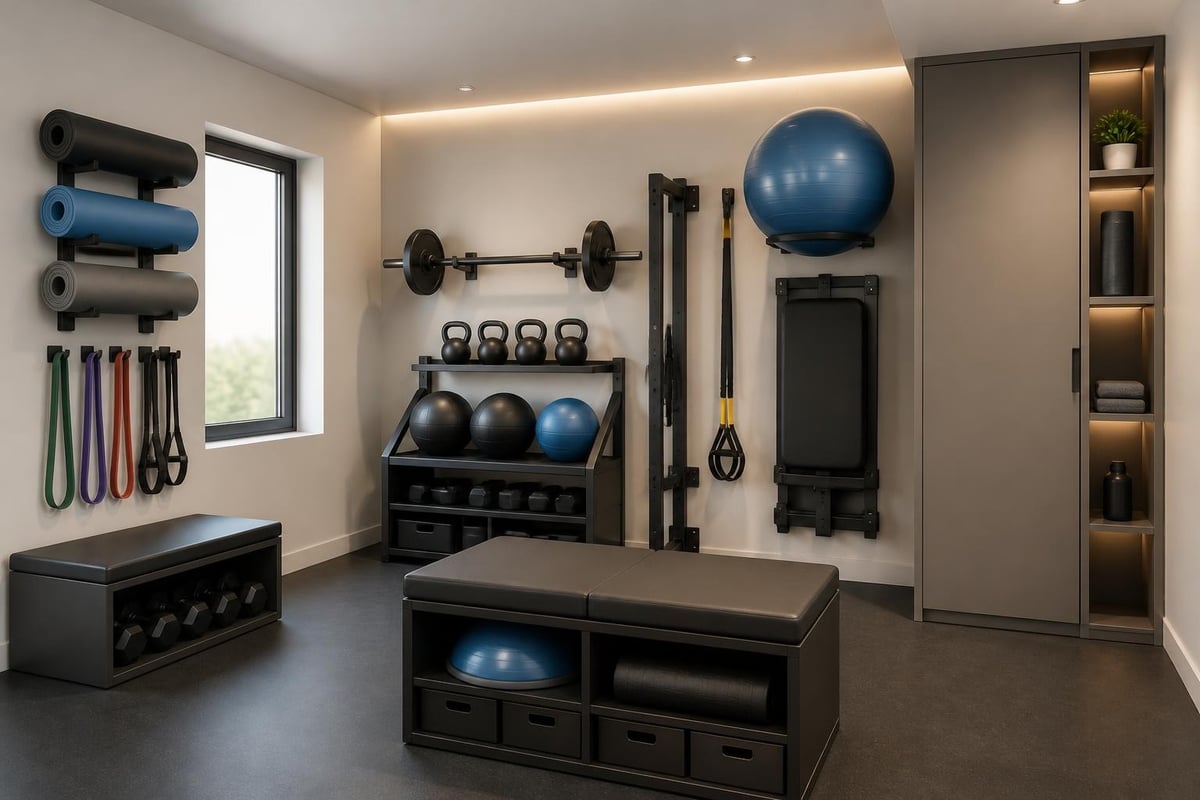
Wall-mounted racks, pegboards, and hooks utilize vertical surfaces often wasted in small spaces. Resistance bands, yoga accessories, foam rollers, and small weights hang within reach yet off floors and furniture. Specialized mounts secure kettlebells, medicine balls, and even folded yoga mats along wall surfaces.
Ceiling-mounted storage works particularly well for seasonal or rotating equipment. Pulley systems lower items when needed and raise them out of sight during non-workout periods. This approach suits suspended training equipment, resistance bands, and lightweight cardio accessories.
Multi-Purpose Furniture Integration
Space saving exercise equipment increasingly disguises itself as conventional furniture. Ottoman-style storage benches conceal resistance bands, yoga blocks, and small weights while serving as seating. Coffee tables with lifting tops reveal storage compartments for workout gear without dedicating separate closet space.
The Architectural Digest feature on home gym design showcases how thoughtful integration maintains aesthetic appeal while supporting active lifestyles. Mirrors serve dual purposes as decorative elements and workout aids. Floating shelves display equipment as intentional design features rather than necessary evils of fitness commitment.
Digital Integration and Smart Equipment
Modern space saving exercise equipment increasingly incorporates digital connectivity, expanding functionality without physical bulk. The systematic review on digital technology in home-based exercise documents how apps, virtual coaching, and connected devices transform simple equipment into comprehensive training systems.
Smart resistance bands track repetitions and force output through smartphone apps. Connected jump ropes count revolutions and calculate calories. These digital enhancements eliminate the need for separate tracking devices and computer systems, consolidating workout management into existing smartphones and tablets. The data integration helps users maximize results from minimal equipment, addressing concerns about whether space saving exercise equipment can deliver professional-level training.
Bodyweight and Minimal Equipment Approaches
The most space-efficient fitness strategy relies primarily on bodyweight with strategic equipment supplementation. NHS home workout resources demonstrate effective routines requiring zero equipment, proving that space limitations need not restrict fitness goals.
Bodyweight exercises requiring minimal space:
- Push-up variations (standard, diamond, archer, pike)
- Squat progressions (bodyweight, pistol, jump squats)
- Plank series (forearm, side, dynamic movements)
- Lunge patterns (forward, reverse, lateral, walking)
- Core exercises (bicycle crunches, hollow holds, mountain climbers)
Strategic additions of resistance bands and ankle straps expand exercise libraries without requiring additional floor space. A single resistance band adds hundreds of possible movements to bodyweight foundations, creating comprehensive programs within footprints smaller than yoga mats.
Recovery and Mobility Tools
Complete fitness programs incorporate recovery and mobility work, areas where space saving exercise equipment excels. Foam rollers, massage balls, and stretching aids require minimal storage yet provide essential recovery support. Compact massage tools like handheld electric rollers deliver professional-quality muscle relief in devices smaller than water bottles.
Yoga and Pilates accessories represent peak space efficiency. Mats roll into tubes requiring mere inches of vertical space. Blocks, straps, and Pilates balls stack compactly in closets or under furniture. These tools facilitate flexibility, balance, and core training essential for comprehensive wellness without dedicating room to specialized equipment.
Making Smart Equipment Choices
Selecting appropriate space saving exercise equipment requires evaluating individual needs against available space and budget. The American College of Sports Medicine fitness trends indicate that home-based training continues growing, driving equipment innovation and competitive pricing.
Assessment Framework
Before purchasing, consider these critical factors:
| Factor | Questions to Ask | Impact on Selection |
|---|---|---|
| Space | Available floor space during workouts? Storage options between sessions? | Determines maximum equipment dimensions and folding requirements |
| Goals | Strength, cardio, flexibility focus? Specific performance targets? | Guides whether to prioritize resistance, cardio, or hybrid equipment |
| Budget | Initial investment capacity? Preference for few quality pieces vs. multiple budget items? | Affects whether to buy adjustable systems or basic equipment |
| Experience | Beginner, intermediate, or advanced training knowledge? | Influences complexity of equipment and need for guided programs |
| Household | Solo use or family sharing? Age ranges and fitness levels? | Determines adjustability requirements and safety features |
Start with versatile foundations rather than specialized equipment. Resistance bands, adjustable dumbbells, and a quality mat provide more training options per square foot than any single-purpose machine. Add targeted space saving exercise equipment as specific needs emerge rather than attempting comprehensive solutions immediately.
Quality Versus Cost Considerations
Budget equipment may appear attractive, but durability matters significantly in confined spaces. Failed equipment becomes junk cluttering limited areas, and replacement cycles waste more money than initial quality purchases. For questions about equipment selection and fitness planning, the SkyFitNet FAQ section offers guidance tailored to active lifestyle needs.
Prioritize equipment with warranties, established brand reputations, and verified user reviews. Space saving exercise equipment experiences higher stress from repeated folding, storage, and deployment. Construction quality directly impacts whether gear remains functional through years of use or becomes frustrating, space-wasting debris after months.
Investment hierarchy for limited budgets:
- Quality resistance bands with door anchor and handles
- Adjustable dumbbells (start with lower weight range if needed)
- Stability/exercise ball
- Folding exercise mat
- Adjustable bench or step platform
- Compact cardio equipment (based on preference: rower, treadmill, stepper)
This progression builds comprehensive capabilities incrementally, ensuring each purchase delivers maximum utility before adding specialized equipment. The approach prevents accumulating redundant gear that consumes storage without enhancing workout options.
Creating Sustainable Workout Habits
Equipment represents only one component of successful home fitness. Sustainable habits require addressing motivation, variety, and progression regardless of space constraints. Space saving exercise equipment succeeds when integrated into broader lifestyle patterns rather than purchased as isolated solutions.
Dedicate specific areas as workout zones, even if shared with other purposes. Consistent locations trigger mental associations that support routine adherence. Small visual cues-a mat corner visible from the couch, resistance bands hung near a doorway-serve as prompts that reduce activation energy required to begin workouts.
Schedule workouts as non-negotiable appointments. Home equipment eliminates travel time and gym hours excuses, making consistency more achievable. The convenience of space saving exercise equipment works against you if not paired with structured planning; easy access means easy procrastination without intentional scheduling.
Track progress through metrics beyond appearance. Measure repetition improvements, resistance increases, exercise duration extensions, and flexibility gains. These objective markers provide motivation when physical changes occur slowly, helping maintain commitment to compact home training programs.
Space saving exercise equipment has evolved into a sophisticated category offering genuine performance in minimal footprints, making effective home fitness accessible regardless of square footage limitations. By combining intelligent equipment choices, creative storage solutions, and strategic workout planning, you can build comprehensive training programs that fit seamlessly into compact living spaces. Whether you're starting your fitness journey or optimizing an existing routine, SkyFitNet provides the quality training, recovery, and mobility essentials designed to support your performance and active lifestyle without overwhelming your home environment.