

Pilates Exercise Equipment: Complete Guide for 2026

Pilates has evolved from a niche rehabilitation method into a mainstream fitness discipline that emphasizes controlled movement, core stability, and mindful body awareness. While mat-based Pilates requires minimal investment, apparatus-based training with specialized pilates exercise equipment unlocks greater resistance options, precise alignment cues, and progressive challenge that accelerates both strength and flexibility gains. Understanding the landscape of equipment available today helps practitioners, studio owners, and home fitness enthusiasts make informed decisions about which tools best support their training goals and wellness journey.
Understanding Traditional Pilates Apparatus
The classical Pilates method relies on five primary pieces of apparatus designed by Joseph Pilates during the early twentieth century. Each machine serves distinct biomechanical purposes and challenges the body through spring-based resistance that provides both assistance and opposition throughout movement patterns.
The Reformer: Foundation of Apparatus Work
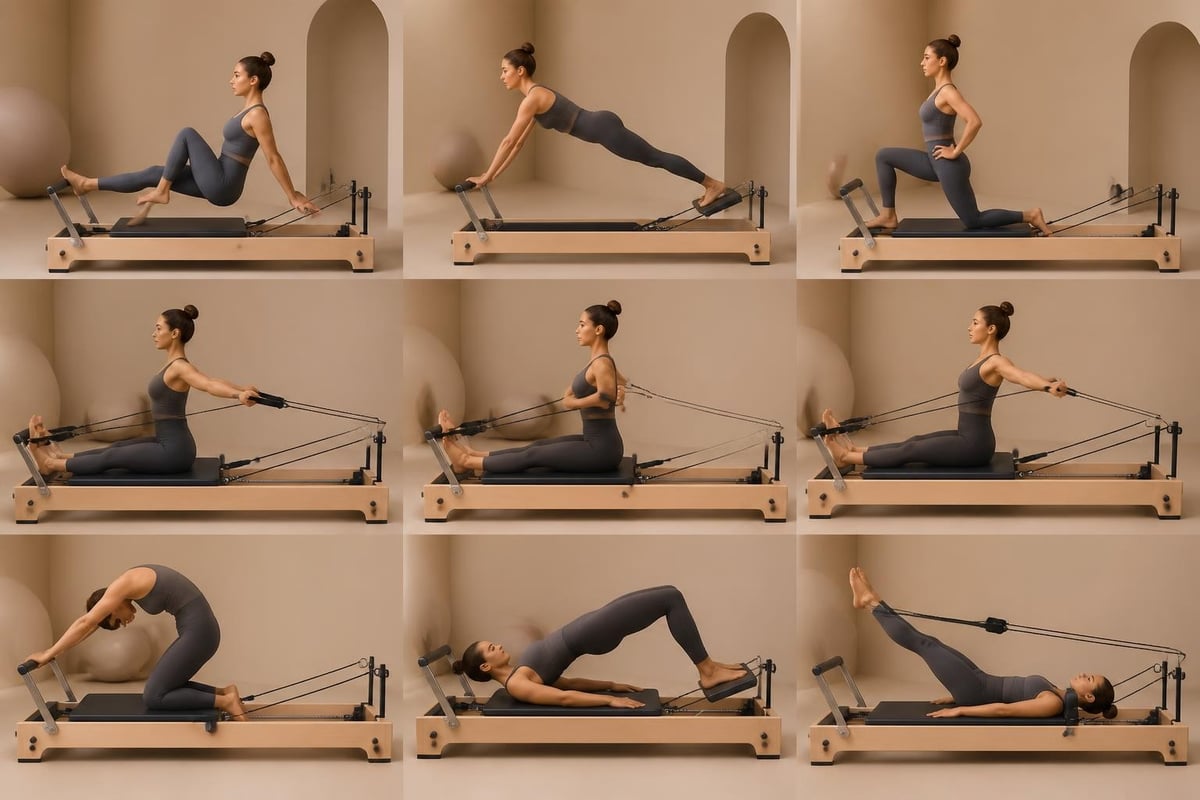
The reformer stands as the most recognizable piece of pilates exercise equipment, featuring a sliding carriage, adjustable springs, shoulder blocks, and a footbar. This versatile machine facilitates hundreds of exercises targeting every muscle group while emphasizing eccentric control and dynamic stabilization.
Key reformer components include:
- Sliding carriage with padded surface
- Four to five adjustable springs (varying resistance levels)
- Adjustable footbar with multiple height positions
- Shoulder blocks for secure positioning
- Long straps with handles and loops
- Adjustable headrest for cervical support
Research examining apparatus-based Pilates programs demonstrates significant benefits for individuals managing chronic low back pain, improving both functional capacity and quality of life. The reformer's adjustable resistance system allows precise load management critical for therapeutic applications and progressive overload in performance training.
Cadillac and Tower Systems
The cadillac, also called the trapeze table, represents the most comprehensive piece of pilates exercise equipment. Standing approximately six feet tall with a raised mat surface, this apparatus features a canopy frame supporting various bars, straps, and springs attached at multiple heights.
| Feature | Cadillac | Tower (Wall-Mounted) |
|---|---|---|
| Floor Space | 8-10 sq ft | 4-5 sq ft |
| Spring Attachments | 12-16 points | 8-10 points |
| Push-Through Bar | Yes | Yes |
| Leg Springs | Yes | Yes |
| Roll-Down Bar | Standard | Optional |
| Price Range (2026) | $3,500-$7,000 | $1,200-$2,500 |
The tower offers similar functionality in a wall-mounted format, ideal for space-conscious studios or home environments. Both systems excel at decompression work, advanced flexibility training, and exercises requiring overhead support.
Wunda Chair and Stability Challenges
Compact yet demanding, the Wunda chair presents one of the most challenging pieces of pilates exercise equipment. This apparatus features a padded seat with a spring-loaded pedal that can split into two independent sides, creating unique stability demands.
The chair's small footprint (approximately 2 feet by 2.5 feet) makes it practical for home use, yet its difficulty level often surprises newcomers. Exercises performed on the chair demand exceptional balance, control, and core integration because the narrow base of support eliminates compensatory movements available on larger apparatus.
Studies investigating acute physiological responses to different apparatus reveal that chair-based exercises elicit distinct cardiac autonomic responses compared to reformer and cadillac work, suggesting apparatus selection influences not only muscular demands but also cardiovascular adaptation.
Supplementary Equipment and Small Props
Beyond the major apparatus, numerous smaller tools complement pilates exercise equipment collections and enhance exercise variation. These props range from simple foam aids to specialized resistance devices that target specific movement patterns.
Essential Small Props
- Spine corrector and arc barrel: Support spinal extension and facilitate thoracic mobility
- Magic circle (Pilates ring): Provide isometric resistance for inner thigh, chest, and arm work
- Small stability balls: Challenge balance and add variable resistance to mat exercises
- Resistance bands and loops: Offer portable resistance options for travel or home practice
- Foam rollers: Support myofascial release and proprioceptive training
Those exploring yoga and Pilates mobility tools will find many crossover products that enhance both practices. The integration of resistance bands with traditional Pilates principles creates accessible entry points for practitioners building their home equipment collection.
Many studios incorporate specialized ankle straps and resistance bands that bridge the gap between mat-based work and full apparatus training. These tools prove especially valuable for targeting hip abductors, adductors, and posterior chain muscles with precise resistance curves.
Equipment Selection for Different Settings
Choosing appropriate pilates exercise equipment depends heavily on intended use, available space, budget constraints, and target population. Professional studios, home practitioners, and clinical rehabilitation environments each require different equipment configurations.
Studio and Commercial Installations
Professional Pilates studios typically maintain three to six reformers as their primary equipment foundation. Most successful studios add at least one cadillac or tower, two to three chairs, and a comprehensive collection of small props.
Recommended studio configuration:
- Five reformers with adjustable footbars
- One cadillac or two tower units
- Two Wunda chairs
- Three spine correctors (different sizes)
- Six magic circles
- Assortment of small balls, bands, and rollers
This configuration supports small group classes (four to six participants) while maintaining equipment variety necessary for private sessions. Studios serving clinical populations should prioritize equipment with smooth spring transitions and clear resistance indicators supporting evidence-based orthopedic interventions.
Home Equipment Strategies
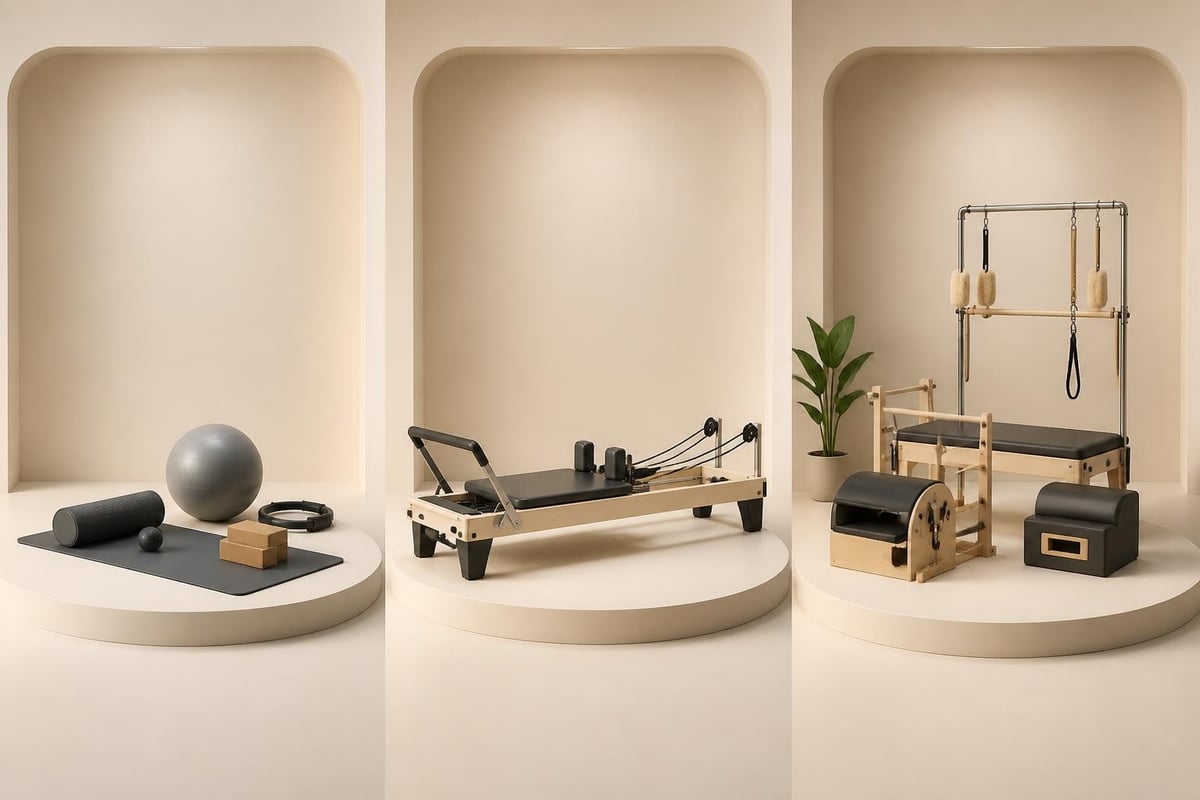
Home practitioners face space and budget limitations that require strategic equipment selection. The reformer remains the most versatile single investment, though quality varies significantly across price points.
| Home Equipment Tier | Investment (2026) | Suitable For | Space Required |
|---|---|---|---|
| Starter (mat + props) | $200-$500 | Beginners, limited space | Minimal |
| Mid-range (reformer) | $2,000-$4,000 | Dedicated practitioners | 8x4 feet |
| Advanced (reformer + chair/tower) | $4,500-$8,000 | Experienced students | 10x8 feet |
| Complete home studio | $8,000-$15,000 | Instructors, enthusiasts | Dedicated room |
Those beginning their journey might start with quality yoga and Pilates equipment before committing to major apparatus purchases. Building skills with resistance bands and small props establishes movement fundamentals that translate directly to apparatus work.
Clinical and Rehabilitation Applications
Physical therapy clinics and rehabilitation centers utilize pilates exercise equipment differently than fitness studios. Equipment selection emphasizes adjustability, precise resistance control, and support for clients with movement limitations or pain conditions.
Research from Harvard Health highlights Pilates as particularly beneficial for older adults when properly adapted. Clinical settings serving this population benefit from reformers with lower carriage heights, extended shoulder blocks, and additional grab bars for safe transfers.
Professional standards outlined by international physical therapy organizations emphasize evidence-based practice and appropriate scope when integrating Pilates methods. Therapists using apparatus-based training should document specific equipment settings, resistance levels, and exercise modifications supporting measurable functional outcomes.
Quality Considerations and Equipment Features
Not all pilates exercise equipment performs equally, and quality differences significantly impact user experience, safety, and longevity. Understanding construction details, material choices, and functional features helps buyers distinguish between consumer-grade and professional equipment.
Frame Construction and Stability
Professional-grade reformers utilize hardwood frames (typically maple or oak) with reinforced joints and powder-coated steel hardware. Consumer models often substitute engineered wood or aluminum, reducing both weight capacity and long-term durability.
Critical structural elements:
- Frame material and joinery method
- Carriage wheel quality and track alignment
- Spring attachment hardware (should be corrosion-resistant)
- Weight capacity (minimum 300 pounds for professional use)
- Warranty coverage (frame, springs, upholstery)
The carriage wheels deserve particular attention because poor-quality bearings create friction that distorts resistance feedback and accelerates wear. Professional equipment features sealed ball bearings that maintain smooth, quiet operation through thousands of repetitions.
Spring Systems and Resistance
Spring quality determines the accuracy and consistency of resistance throughout movement ranges. Professional pilates exercise equipment employs calibrated springs with specific tension ratings, typically color-coded for quick identification.
Standard reformer spring configurations include:
- Two heavy springs (blue or red coding)
- Two medium springs (red or green coding)
- One light spring (yellow or blue coding)
Total resistance combines selected springs, creating numerous load options. Advanced equipment offers micro-adjustability through intermediate spring attachments or gear systems that modify spring pre-tension.
Upholstery and Contact Surfaces
Contact surfaces endure significant wear from body friction, perspiration, and cleaning protocols. Professional equipment uses high-density foam with medical-grade vinyl or leather upholstery resistant to moisture, oils, and commercial disinfectants.
Home equipment may feature lighter upholstery adequate for personal use but vulnerable to accelerated wear in teaching or small group settings. Shoulder blocks and headrests should offer sufficient padding while maintaining firm support preventing excessive compression.
Advanced and Specialized Equipment
Beyond classical apparatus, contemporary pilates exercise equipment includes modern innovations and specialized tools addressing specific training objectives or populations.
Modern Reformer Variations
Several manufacturers produce reformer variations incorporating contemporary biomechanics research and user feedback. Split-carriage reformers allow independent leg movements challenging stability and addressing bilateral strength imbalances. Elevated reformers raise the machine height, reducing instructor strain during cueing and spotting.
Vertical reformers attach to walls, saving floor space while offering unique exercise angles impossible on horizontal machines. These specialized formats extend exercise variety but require additional training for safe, effective programming.
Portable and Travel Equipment
The demand for portable pilates exercise equipment has driven innovation in collapsible reformers and travel-friendly props. Folding reformers reduce storage footprints to approximately 12 inches deep, though they sacrifice some stability compared to fixed-frame models.
Lightweight resistance systems using bands, tubes, and handles replicate reformer movements without springs or carriages. While these systems cannot fully replace apparatus training, they maintain movement patterns and resistance training during travel or between studio sessions.
Specialized Clinical Equipment
Clinical settings sometimes incorporate modified pilates exercise equipment addressing specific patient populations. Pediatric reformers feature shorter carriages and lighter springs suitable for children. Bariatric-rated equipment provides reinforced frames, wider carriage surfaces, and higher weight capacities supporting clients with obesity.
Neurological rehabilitation may utilize reformers with extensive stabilization aids, including additional rails, vertical support poles, and modified strap systems accommodating limited grip strength or movement control.
Equipment Maintenance and Longevity
Proper maintenance extends pilates exercise equipment life and ensures safe operation. Professional apparatus requires regular inspection schedules and preventive maintenance addressing wear patterns before failures occur.
Regular Maintenance Tasks
Weekly maintenance includes:
- Inspecting springs for deformation, rust, or unusual wear
- Checking rope and strap condition for fraying
- Cleaning upholstery and wiping down frames
- Verifying secure attachment of all moving parts
- Lubricating carriage wheels and moving components
Monthly or quarterly tasks:
- Tightening all bolts and hardware
- Inspecting wooden frames for cracks or joint separation
- Testing spring tension against manufacturer specifications
- Replacing worn ropes, straps, or handles
- Professional servicing for heavily used equipment
High-traffic studios should maintain detailed service logs documenting maintenance dates, parts replaced, and any performance issues. This documentation supports warranty claims and helps identify equipment nearing end-of-service life before catastrophic failures.
Parts Replacement and Upgrades
Springs typically require replacement every 18 to 24 months under professional use, though home equipment may last significantly longer. Ropes and straps wear faster, often needing replacement every 12 to 18 months depending on usage intensity.
Upholstery represents the most visible wear component, and recovering carriage pads, shoulder blocks, and headrests refreshes equipment appearance while maintaining hygiene standards. Many studios reupholster high-use equipment every three to five years as preventive maintenance rather than waiting for complete upholstery failure.
Integration with Broader Fitness Programs
Pilates exercise equipment complements diverse training modalities when thoughtfully integrated into comprehensive fitness programs. The apparatus provides unique resistance profiles and movement patterns that enhance performance across various athletic disciplines and daily activities.
Cross-Training Applications
Athletes from running, cycling, swimming, and team sports incorporate Pilates apparatus work addressing sport-specific movement imbalances and injury prevention. The reformer's capacity for controlled eccentric loading supports tendon health and power development without the impact forces of traditional resistance training.
Those focused on running and active lifestyles benefit from Pilates exercises targeting hip stability, ankle mobility, and thoracic rotation-all critical for efficient running mechanics and injury resilience.
Recovery and Mobility Enhancement
Recovery-focused training utilizes pilates exercise equipment at lower resistance settings, emphasizing controlled movement through full ranges of motion. This approach supports active recovery between high-intensity training sessions while maintaining movement quality and body awareness.
Integrating recovery and muscle care strategies with Pilates-based mobility work creates comprehensive restoration protocols supporting consistent training capacity and reduced injury risk.
Posture and Daily Function
Modern sedentary lifestyles create postural adaptations that benefit from targeted Pilates intervention. Equipment-based training provides the external feedback and support necessary to restore optimal alignment patterns and movement efficiency in daily activities.
Practitioners interested in posture and everyday mobility find Pilates apparatus particularly valuable because spring resistance creates proprioceptive input highlighting movement compensations and asymmetries not evident during unsupported mat work.
Programming Considerations and Exercise Design
Effective use of pilates exercise equipment requires thoughtful programming that progresses logically from foundational movements to complex, integrated patterns. Understanding exercise regression and progression strategies ensures appropriate challenge across skill levels.
Foundational Movement Patterns
Beginning apparatus work should establish core stability, breath coordination, and spring resistance familiarity before advancing to complex choreography. Initial reformer programming typically emphasizes:
- Footwork series establishing leg alignment and spring control
- Bridging variations teaching spinal articulation with spring support
- Simple arm work introducing upper body pulling and pushing patterns
- Basic abdominal series coordinating breath with core activation
- Side-lying leg work addressing hip strength and stability
These foundational categories build movement vocabulary supporting more challenging exercises while establishing technical precision preventing compensation patterns.
Progression Principles
Progressive overload in Pilates manifests through multiple variables beyond simple resistance increases. Effective progression manipulates:
- Spring resistance: Heavier loads increase strength demands
- Base of support: Narrower stances challenge stability
- Movement speed: Slower tempos increase time under tension
- Range of motion: Full-range movements demand greater control
- Movement complexity: Combined patterns require enhanced coordination
- Equipment surface: Unstable surfaces add proprioceptive challenge
Advanced practitioners combine multiple progression variables, performing complex movement sequences on narrow surfaces at slow speeds through full ranges of motion. This multifaceted approach to progression distinguishes Pilates from traditional resistance training focusing primarily on load increases.
Class Formats and Teaching Models
Studios program pilates exercise equipment across various class formats serving different populations and objectives. Private sessions provide individualized programming addressing specific goals, limitations, and movement patterns. Semi-private sessions (two to three clients) balance personalized attention with cost-effectiveness.
Small group classes (four to six participants) represent the most common studio format, requiring participants share similar skill levels and movement capabilities. Large group classes using primarily reformers can accommodate eight to twelve participants when properly supervised and programmed.
Pilates exercise equipment transforms movement practice through precise resistance, adjustable support, and versatile exercise options that accelerate both strength and mobility development. Whether you're equipping a professional studio, building a home practice space, or integrating apparatus work into rehabilitation protocols, understanding equipment features, quality markers, and programming principles ensures optimal investment and training outcomes. SkyFitNet provides quality training and mobility essentials designed to support your performance and everyday active lifestyle, helping you train smarter, recover better, and live stronger through evidence-based equipment and thoughtful product selection.