

Home Gym Equipment Weights: Complete 2026 Guide

Building a home gym has become a cornerstone of modern fitness culture, and selecting the right weights is perhaps the most critical decision you'll make in that journey. Home gym equipment weights serve as the foundation for progressive resistance training, enabling you to build strength, increase muscle mass, improve bone density, and enhance overall athletic performance. Whether you're setting up your first training space or upgrading an existing setup, understanding the spectrum of weight options available, their specific applications, and how they integrate into a comprehensive training program will help you make informed investments that support your long-term fitness goals.
Understanding the Core Categories of Home Gym Equipment Weights
The landscape of resistance training equipment has evolved dramatically over the past decade. Traditional fixed-weight dumbbells and barbells now share shelf space with innovative adjustable systems, specialty bars, and precision-calibrated competition plates.
Fixed Weight Dumbbells
Fixed dumbbells represent the most straightforward option for home training. These single-piece weights come in predetermined increments, typically ranging from five pounds to over one hundred pounds per dumbbell. The advantages include durability, immediate use without adjustment time, and consistent balance during complex movements.
Benefits of fixed dumbbells:
- No mechanical parts to fail or wear out
- Fastest transition between exercises during circuit training
- Uniform grip diameter across weight ranges
- Zero risk of plates loosening during dynamic movements
The primary drawback centers on space requirements and cost. A complete dumbbell set occupying an entire wall requires significant square footage and represents a substantial financial investment. For individuals with limited space or budget, this creates a meaningful barrier to entry.
Adjustable Dumbbell Systems
Modern adjustable dumbbells have revolutionized home training by condensing an entire dumbbell rack into two compact units. These systems use various mechanisms including selector pins, twist-lock collars, and magnetic plates to modify resistance quickly. According to WebMD's overview of adjustable dumbbells, these versatile tools offer practical advantages for space-constrained environments while maintaining training effectiveness.
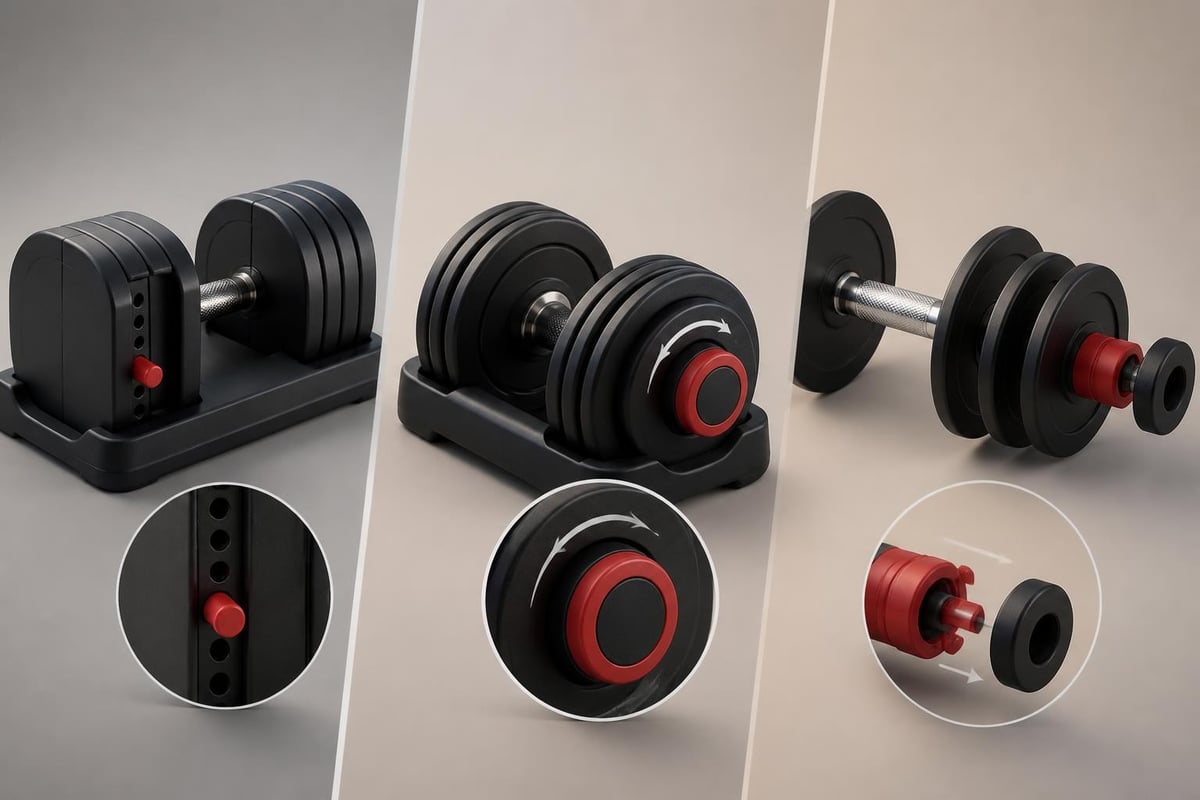
| Feature | Fixed Dumbbells | Adjustable Dumbbells |
|---|---|---|
| Space Required | High (entire rack) | Low (two units) |
| Cost Efficiency | Lower (per weight) | Higher (complete range) |
| Adjustment Speed | Instant | 3-10 seconds |
| Maximum Load | Unlimited options | Typically 50-90 lbs |
| Durability | Excellent | Good (mechanism-dependent) |
Barbell and Weight Plate Systems
Barbells paired with weight plates create the backbone of serious strength training programs. Olympic bars, power bars, and specialty bars each serve distinct purposes. Standard seven-foot Olympic barbells weigh forty-five pounds and accommodate two-inch diameter plates, while shorter bars and standard one-inch systems cater to different training styles and space constraints.
Weight plates themselves divide into several categories. Cast iron plates offer affordability and durability. Rubber-coated plates protect flooring and reduce noise. Bumper plates, designed for dropping from overhead, enable Olympic lifting movements safely in residential settings. Competition plates, manufactured to precise specifications outlined in standards like ASTM E617, ensure accuracy for serious lifters tracking exact loads.
Selecting Appropriate Home Gym Equipment Weights for Your Training Goals
Your training objectives should dictate your equipment choices. Building maximal strength requires different tools than improving muscular endurance or enhancing athletic power.
Strength and Hypertrophy Applications
For pure strength development and muscle growth, ACSM's position stand on resistance training recommends loads between 67 and 85 percent of one-repetition maximum, performed for six to twelve repetitions per set. This prescription demands a wide range of available weights with small incremental jumps.
Essential weight ranges for muscle building:
- Beginner lifters: 5-50 pounds per dumbbell
- Intermediate lifters: 10-75 pounds per dumbbell
- Advanced lifters: 20-100+ pounds per dumbbell
- Barbell training: 135-315 pounds total load minimum
Micro-loading plates (0.25 to 2.5 pounds) enable precise progression, particularly important for upper-body pressing movements where jumps of five or ten pounds prove too aggressive. These small increments support the principle of progressive overload without exceeding your current capacity.
Functional Fitness and Metabolic Conditioning
Kettlebells excel in dynamic, multi-planar movements that build functional strength and cardiovascular endurance simultaneously. The NASM kettlebell exercise library provides evidence-based guidance on appropriate weight selection for various movements.
Kettlebell weight recommendations vary significantly by gender and exercise:
- Women typically start with 8-12 kg (18-26 lbs) for foundational movements
- Men generally begin with 12-16 kg (26-35 lbs) for similar exercises
- Advanced practitioners use 24-32 kg (53-70 lbs) or heavier
- Ballistic movements require lighter loads than grinding strength exercises
The offset center of gravity in kettlebells creates unique stabilization demands absent in dumbbells, making them particularly effective for core engagement and rotational power development.
Space Planning and Storage Solutions
Efficient organization maximizes training space while protecting your investment and maintaining safety. Home gym equipment weights demand thoughtful storage that balances accessibility with floor space preservation.
Vertical Storage Systems
Wall-mounted racks and vertical trees minimize footprint while keeping weights organized and visible. Dumbbell racks should accommodate your current collection with room for expansion. Weight plate trees with multiple pegs sort plates by size, preventing the common problem of lighter plates buried beneath heavier ones.
Storage capacity planning:
- Count total dumbbell pairs in your planned collection
- Add 30% capacity for future expansion
- Measure wall space height and depth
- Verify mounting surface can support total weight load
- Confirm clearance for safe lifting and returning weights
Floor Protection and Safety Considerations
Residential floors require protection from the impact and static load of heavy weights. Rubber flooring, interlocking gym tiles, or dense foam mats prevent damage while reducing noise transmission to lower levels. The NIH guidance on home fitness safety emphasizes checking equipment weight ratings against your home's structural capacity, particularly in upper-floor installations.
Dropped weights create both noise complaints and potential structural issues. Bumper plates distribute impact across larger surface areas, while designated lifting platforms contain chalk dust and protect surrounding flooring.
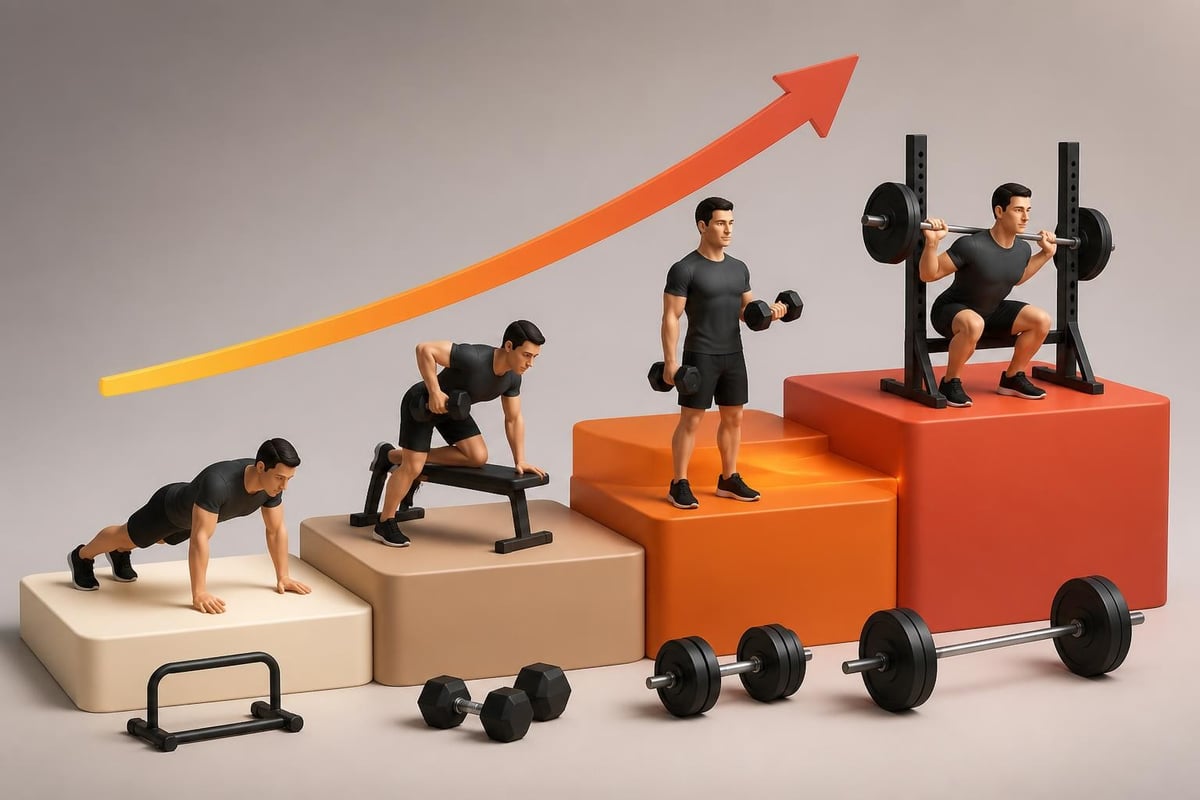
Progressive Loading Strategies Using Home Gym Equipment Weights
Systematic strength development requires intelligent load progression that challenges your muscles while managing fatigue and injury risk. Understanding how to manipulate resistance variables separates effective training from random exercise.
Linear Progression Models
Beginners experience rapid strength gains through simple linear progression, adding weight to the bar each session. A typical novice progression adds five pounds to lower-body lifts and 2.5 pounds to upper-body movements every workout, continuing until this rate becomes unsustainable.
Sample linear progression:
| Week | Squat Load | Bench Press Load | Deadlift Load |
|---|---|---|---|
| 1 | 95 lbs | 65 lbs | 115 lbs |
| 2 | 110 lbs | 72.5 lbs | 135 lbs |
| 3 | 125 lbs | 80 lbs | 155 lbs |
| 4 | 140 lbs | 87.5 lbs | 175 lbs |
This approach requires incremental weight plates and careful tracking. Resources from ACSM provide comprehensive guidelines for determining appropriate starting loads and progression rates based on training age and individual response.
Undulating Periodization
Intermediate and advanced lifters benefit from varied loading schemes that rotate between strength, hypertrophy, and power phases within the same week. Monday might feature heavy triples at 90% intensity, Wednesday could emphasize moderate sets of eight at 75%, and Friday might incorporate explosive work at 60% with maximum bar speed.
This variation requires a diverse inventory of home gym equipment weights spanning the entire intensity spectrum. Plates ranging from 2.5 pounds to 45 pounds enable precise load prescription across different training zones.
Specialty Bars and Advanced Equipment
Beyond standard Olympic bars, specialty equipment addresses specific training needs and physical limitations. Trap bars reduce lower-back stress during deadlifts while enabling heavier loads. Swiss bars offer neutral grip positions that spare shoulder joints during pressing movements. Safety squat bars redistribute load to minimize forward lean.
Specialty bar applications:
- Trap bars: Deadlift variations, farmer's walks, shrugs
- Swiss bars: Bench press, overhead press, rowing movements
- Safety squat bars: Squats with reduced mobility demands
- Cambered bars: Increased range-of-motion in squats and good mornings
- Log bars: Strongman-style pressing and carrying
These implements typically cost $150-400 each, representing significant investments that should align with specific training goals or address genuine physical limitations. For general strength development, a standard Olympic bar serves the majority of trainees effectively.
Integration with Complete Training Programs
Home gym equipment weights function as tools within comprehensive programs that balance resistance training with mobility work, cardiovascular conditioning, and recovery protocols. Consistency beats intensity for long-term results, making sustainable programming more valuable than sporadic heroic efforts.
Weekly Training Architecture
A balanced weekly split might incorporate three to five resistance sessions utilizing different loading patterns and movement categories. Upper-body push days alternate with lower-body sessions and upper-body pull workouts, allowing adequate recovery while maintaining training frequency.
Sample weekly structure:
- Monday: Lower body strength (heavy barbell squats, Romanian deadlifts)
- Tuesday: Upper body push (dumbbell bench press, overhead press variations)
- Wednesday: Active recovery (mobility work, light cardio)
- Thursday: Lower body power (kettlebell swings, jump squats)
- Friday: Upper body pull (dumbbell rows, pull-up variations)
- Saturday: Full-body conditioning (complexes with moderate loads)
- Sunday: Complete rest
This structure leverages diverse home gym equipment weights across different movement patterns and energy systems. The variety prevents accommodation while distributing stress across multiple muscle groups and joint structures.
Complementary Training Modalities
Resistance training with weights pairs synergistically with other fitness disciplines. Mobility work addresses movement quality and joint health, as discussed in resources about biomechanical precision in fitness gear. Cardiovascular training builds aerobic capacity that supports recovery between strength sets.
Recovery protocols deserve equal attention to training volume. Accelerated recovery techniques including percussion therapy, proper sleep architecture, and strategic nutrition enable higher training frequencies without accumulating excessive fatigue.
Budget Optimization and Phased Acquisition
Building a comprehensive weight collection requires strategic investment over time. Attempting to purchase everything simultaneously often results in compromised quality or incomplete ranges that limit training effectiveness.
Priority-Based Purchasing
Begin with versatile foundations that enable the widest variety of exercises. A quality adjustable dumbbell set paired with a basic barbell and 300 pounds of plates provides extensive training options. Add specialty items as specific needs emerge from your actual training rather than theoretical scenarios.
Recommended acquisition sequence:
- Adjustable dumbbells (5-50 lbs range minimum)
- Olympic barbell and 300 lbs of plates
- Kettlebell (single weight appropriate for your level)
- Additional dumbbell or plate increments
- Specialty bars or advanced implements
This phased approach spreads costs across multiple months while ensuring each purchase directly addresses current training limitations. Resources like essential fitness equipment guides help prioritize purchases based on training goals.
Quality Versus Quantity Considerations
Cheaper weights might save money initially but often prove more expensive long-term. Poorly machined plates fit loosely on barbells, creating dangerous instability during lifts. Low-quality dumbbells with inadequate knurling slip during sweaty sessions. Thin chrome plating flakes off budget bars, creating rust and poor aesthetics.
Professional-grade equipment maintains value and functionality across decades of use. The initial premium cost amortizes across thousands of training sessions, ultimately delivering superior value compared to replacing cheap equipment multiple times.
Maintenance and Longevity Practices
Proper care extends equipment lifespan while maintaining safe, enjoyable training conditions. Cast iron and steel require different maintenance than rubber-coated or urethane-covered implements.
Cleaning and Corrosion Prevention
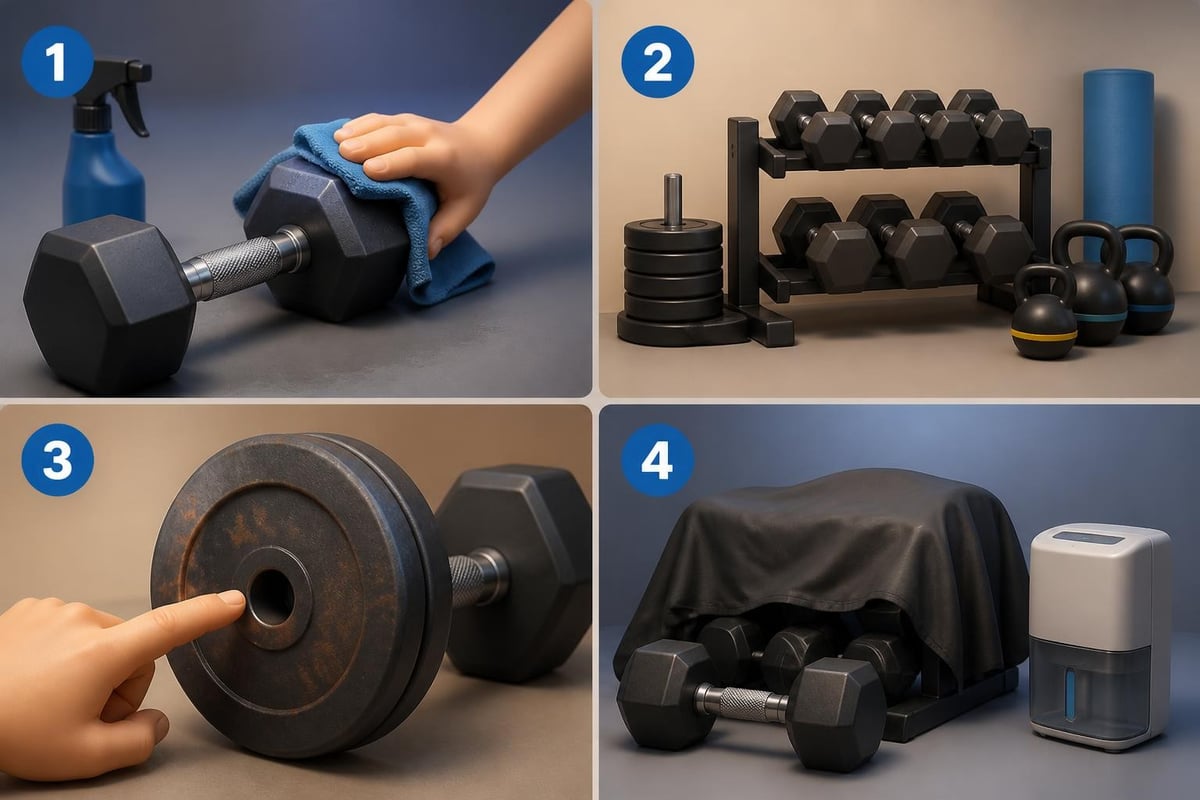
Bare steel barbells and cast iron plates develop surface rust when exposed to humidity and sweat. Regular cleaning with a wire brush removes chalk buildup and surface oxidation. Applying a thin coat of three-in-one oil prevents corrosion while maintaining proper knurling grip.
Monthly maintenance checklist:
- Brush chalk and debris from barbell knurling
- Wipe down all weight equipment with disinfectant
- Inspect plates for cracks or damage
- Check adjustable dumbbell mechanisms for smooth operation
- Lubricate moving parts on equipment as needed
- Tighten any loose collars or connection points
Rubber and urethane plates require gentler cleaning with mild soap and water. Harsh chemicals degrade rubber compounds, causing cracking and degradation. Store weights away from direct sunlight and extreme temperature fluctuations that accelerate material breakdown.
Systematic Inspection Protocols
Regular safety inspections prevent equipment failure during loaded lifts. Check barbells for bending, particularly in the center section that bears maximum stress during squats and deadlifts. Examine weight collars for stripped threads or weakened spring mechanisms that could allow plates to slide during exercises.
Adjustable dumbbells require special attention to locking mechanisms. Verify that all pins or dials fully engage and securely hold selected weight plates. Any looseness or partial engagement creates drop hazards during exercises.
Measuring Progress and Tracking Performance
Comprehensive training logs transform home gym equipment weights from simple tools into precision instruments for measuring strength development. Detailed records reveal patterns, identify plateaus, and guide programming adjustments.
Essential Tracking Metrics
Record more than just the weight lifted. Track repetitions completed, rest intervals between sets, rate of perceived exertion, and movement quality. This multi-dimensional data captures training stress more accurately than load alone.
Key performance indicators:
- Total volume (sets × reps × weight)
- Relative intensity (percentage of estimated one-rep max)
- Movement velocity and bar speed
- Fatigue accumulation across training week
- Recovery quality between sessions
Digital platforms and smartphone apps simplify data collection while providing visualization tools that highlight long-term trends. Comparing current capacity against six-month or yearly baselines demonstrates progress that might feel imperceptible week-to-week.
Adaptation Signals and Program Modification
Your body's response to training stimulus dictates when to progress, maintain, or reduce loads. Consistently completing prescribed repetitions with good form signals readiness for increased resistance. Persistent technique breakdown despite adequate rest indicates excessive loading or accumulated fatigue requiring deload phases.
Understanding these signals prevents both under-training that wastes potential and over-training that causes injury or burnout. Resources about transforming your fitness journey with smarter gear emphasize the importance of matching equipment capabilities with individual readiness.
Advanced Considerations for Serious Lifters
Competitive powerlifters, Olympic weightlifters, and strength athletes require specialized equipment that meets federation standards and supports maximal performance attempts.
Competition-Grade Specifications
Official powerlifting and weightlifting competitions mandate specific equipment standards. Barbars must meet diameter, length, tensile strength, and sleeve rotation requirements. Plates must be calibrated to precise weights with minimal tolerance variance.
For home training purposes, competition-grade equipment ensures consistency between home preparation and competition performance. The familiar whip of a certified barbell and exact plate loading removes variables during important training cycles.
Training Variation Tools
Chains and resistance bands add accommodating resistance that modifies loading throughout movement ranges. Chains become progressively heavier as more links lift from the floor during ascent. Bands increase tension as they stretch, creating maximum resistance at lockout positions.
These tools address specific weaknesses and provide novel training stimuli that spark new adaptations when standard progressive loading stalls. They represent advanced implements appropriate after establishing solid foundational strength through conventional loading.
Environmental and Sustainable Choices
Modern fitness consumers increasingly consider environmental impact when selecting home gym equipment weights. Manufacturing processes, material sourcing, and product longevity all contribute to overall sustainability.
Material Selection and Recycling
Cast iron weights represent one of the most environmentally friendly options, manufactured from recycled steel and essentially permanent in lifespan. Rubber and urethane coatings vary in sustainability based on natural versus synthetic rubber content and production processes.
Sustainability comparison:
| Material | Recyclability | Longevity | Environmental Impact |
|---|---|---|---|
| Cast Iron | Excellent | 50+ years | Low |
| Rubber Coated | Moderate | 20+ years | Moderate |
| Urethane | Low | 30+ years | Moderate-High |
| Chrome Plated | Good | 30+ years | Moderate |
Purchasing durable, professional-grade equipment reduces waste from replacing cheaper alternatives. Single high-quality purchases prove more sustainable than multiple budget replacements across the same timeframe.
The foundation of effective strength training begins with selecting appropriate home gym equipment weights that match your current abilities while accommodating future progression. By understanding the distinct advantages of different weight types, implementing intelligent loading strategies, and maintaining your equipment properly, you create a training environment that supports decades of consistent development. Whether you're pursuing muscle growth, athletic performance, or general fitness, the right combination of dumbbells, barbells, kettlebells, and plates transforms your home space into a complete strength-development facility. SkyFitNet provides the quality training essentials you need to build your ideal home gym, helping you train smarter with equipment designed for serious performance and everyday active lifestyles.