

Gym Equipment Bench Press: Complete Setup & Training Guide

The gym equipment bench press remains one of the most foundational movements in strength training, demanding proper setup, technique, and understanding of equipment specifications to maximize results while minimizing injury risk. Whether you're outfitting a commercial facility or building a home gym, selecting the right bench press equipment and mastering proper form creates the foundation for upper body development and measurable strength gains. This comprehensive guide explores everything from equipment selection to advanced programming considerations, helping you make informed decisions about your training setup.
Understanding Gym Equipment Bench Press Fundamentals
The bench press exercise targets the pectoralis major, anterior deltoids, and triceps brachii through a horizontal pressing motion. Proper equipment selection directly impacts your ability to execute this movement safely and effectively. A quality weight bench must provide stable support, appropriate dimensions, and adequate weight capacity to accommodate progressive overload over time.
When evaluating gym equipment bench press options, consider the primary components: the bench itself, the barbell, weight plates, and safety equipment. Commercial-grade benches typically feature reinforced steel frames, dense padding that maintains shape under load, and adjustable uprights to accommodate different user heights. According to biomechanical research on bench press performance, even small variations in equipment setup can significantly affect force production and muscle activation patterns.
Bench Construction and Stability
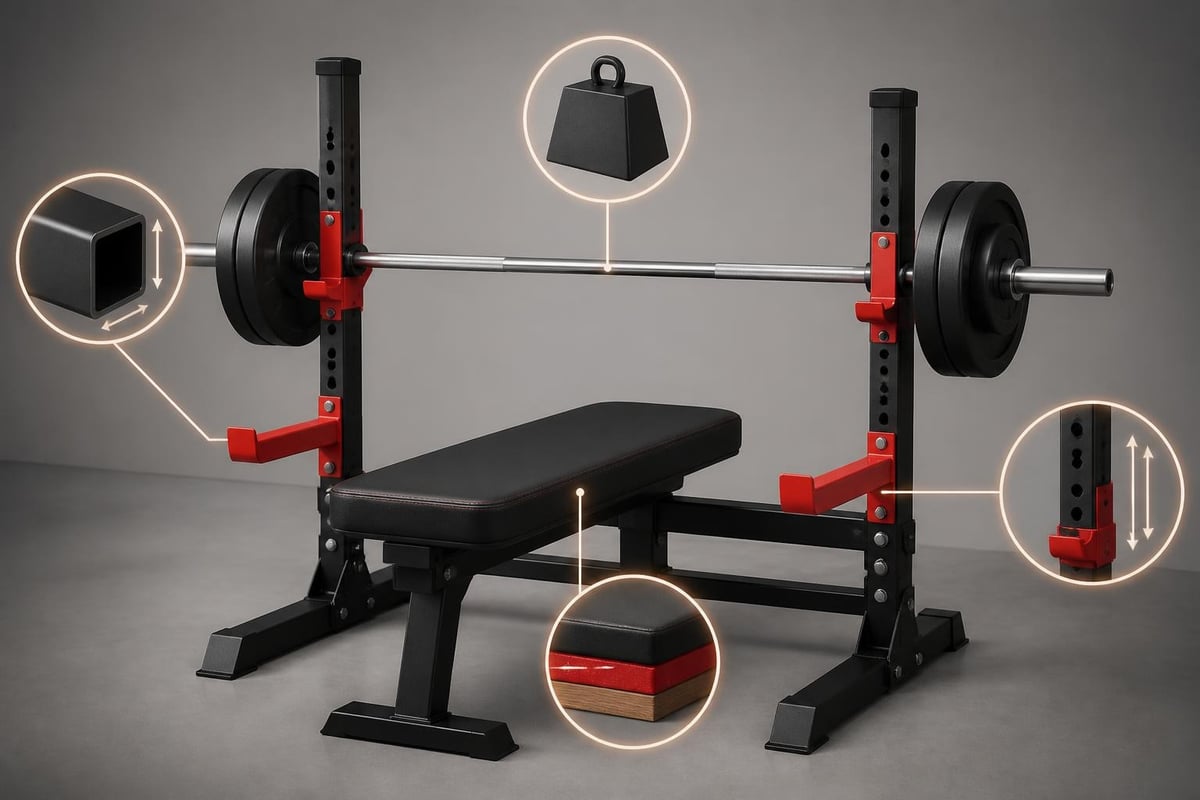
A properly constructed bench press station starts with a frame capable of supporting 600-1,000 pounds of total load. This capacity accounts for the combined weight of the barbell, plates, and the lifter. Width specifications matter considerably: regulation competition benches measure 29-32 centimeters wide, providing enough surface area for shoulder blade retraction while maintaining stability.
The padding density affects both comfort and performance. High-density foam (50-60 kg/m³) maintains firmness under heavy loads, preventing excessive compression that could compromise spinal position. The upholstery material should resist moisture, tears, and daily wear from repeated use.
Essential Features for Training Optimization
Modern gym equipment bench press stations offer various features designed to enhance training versatility and safety. Adjustable uprights allow precise bar height positioning, typically ranging from 24 to 48 inches. This adjustability accommodates different arm lengths and training preferences while ensuring safe bar clearance during setup and racking.
Safety considerations extend beyond just the bench construction. The NSCA safety guidelines emphasize proper equipment spacing, secure weight collars, and accessible spotter positions as critical elements of a safe training environment.
Flat vs. Adjustable Bench Configurations
Training goals dictate whether a flat or adjustable bench better serves your needs. Flat benches dedicated solely to the traditional bench press offer maximum stability and typically support higher weight capacities. These specialized pieces excel in powerlifting-focused environments where competition-standard equipment is essential.
Adjustable benches provide angle variation from decline (-15 degrees) through flat (0 degrees) to incline (15-85 degrees). This versatility enables targeted development of different pectoral regions and accommodates supplementary exercises. However, adjustable mechanisms introduce potential weak points. Quality models use heavy-duty pins and reinforced hinges rated for commercial use.
| Bench Type | Weight Capacity | Adjustability | Primary Use | Footprint |
|---|---|---|---|---|
| Competition Flat | 1,000+ lbs | Fixed | Powerlifting | 48" x 14" |
| Commercial Flat | 600-800 lbs | Fixed | General strength | 46" x 12" |
| Adjustable Multi-Position | 500-700 lbs | 7-12 positions | Versatile training | 52" x 16" |
| Home Gym Adjustable | 400-600 lbs | 5-8 positions | Home use | 44" x 13" |
When selecting equipment for your facility or home gym, expert reviews from consumer testing organizations can provide valuable insights into real-world durability and performance across different price points.
Barbell and Plate Specifications
The barbell component of gym equipment bench press setups demands equal attention to the bench itself. Olympic barbells measure 7 feet (2.2 meters) long with a 2-inch diameter sleeve designed for Olympic weight plates. These bars weigh 45 pounds (20.4 kilograms) and feature rotating sleeves that reduce wrist strain during the press.
Standard barbells measure 5-6 feet long with 1-inch diameter sleeves, weighing 15-25 pounds. While suitable for beginners and home gyms, standard bars limit loading capacity and lack the smooth rotation of Olympic models. For serious strength development, Olympic specifications provide necessary durability and capacity.
Weight Plate Selection and Loading
Iron plates remain the most economical option, offering durability at lower cost per pound. Bumper plates feature rubber coating that protects floors and reduces noise, making them ideal for training environments where dropped weights occur. Competition plates conform to strict thickness tolerances, ensuring consistent bar loading and proper form development.
Loading strategy affects both safety and performance. Progressive overload through small weight increments (2.5-5 pound increases) allows sustainable strength development. Fractional plates (0.5-1.25 pounds) enable even finer progressions, particularly valuable for intermediate and advanced lifters approaching physiological limits.
The resistance training principles outlined by sports medicine research demonstrate that systematic progression using appropriate loading schemes produces superior strength and hypertrophy outcomes compared to random variation.
Safety Equipment and Spotting Protocols
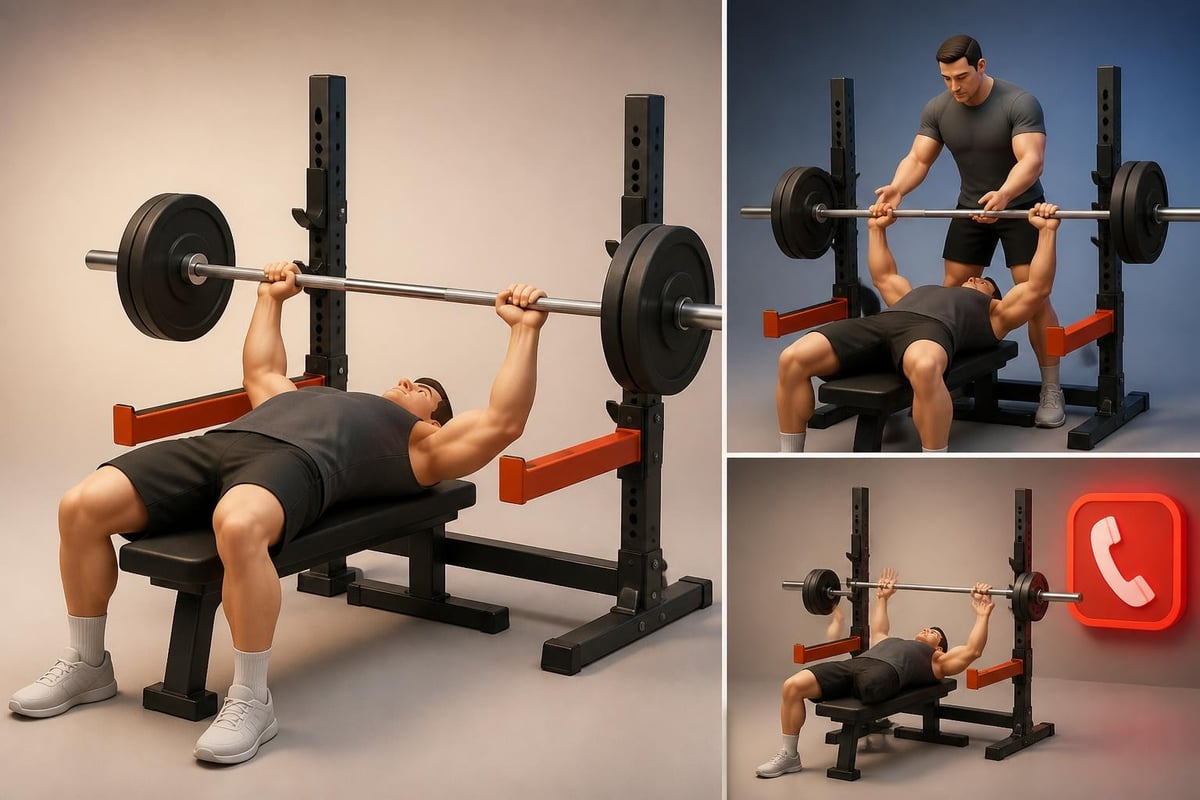
Even with perfect technique, gym equipment bench press training requires comprehensive safety measures. Safety bars (also called spotter arms or safety pins) mount to the rack at a height just below the chest when the bar is at the bottom position. These bars catch the barbell if the lifter fails a repetition, preventing the bar from pinning the lifter to the bench.
Power racks with integrated bench press stations offer adjustable safety bars on both sides of the bench. This configuration provides fail-safe protection during solo training sessions. The safety bars should be positioned to allow full range of motion while catching the bar 1-2 inches above the chest in case of failure.
Proper Spotting Techniques
A knowledgeable spotter significantly enhances training safety and effectiveness. The spotter should stand at the head of the bench with feet shoulder-width apart, hands positioned just inside the lifter's grip width. Communication protocols before each set establish whether the lifter wants a lift-off, how many repetitions are planned, and at what point assistance is needed.
According to WebMD's bench press safety guidelines, spotters should follow the bar path throughout the movement without touching it unless assistance is clearly needed. Premature intervention robs the lifter of training stimulus, while delayed assistance creates injury risk.
For comprehensive strength development beyond the bench press, consider incorporating complementary training accessories that target supporting muscle groups.
Competition Standards and Equipment Regulations
Powerlifting competitions impose strict specifications on gym equipment bench press setups to ensure fair and safe competition. The International Powerlifting Federation technical rules define exact dimensions, materials, and setup requirements for approved equipment.
Competition benches must measure 1.22 meters long, with padding height 42-45 centimeters from the floor. The bench width must fall between 29-32 centimeters. Upright placement positions the barbell 75-110 centimeters from the bench's foot end, allowing proper lifter positioning with eyes directly under the bar.
Bar Path and Technical Execution
Regulation bench press technique requires the bar to touch the chest at approximately nipple level before pressing upward. The bar path should travel slightly backward toward the rack as it rises, following the natural pressing arc determined by shoulder anatomy. Deviations from this path reduce mechanical efficiency and increase injury risk.
Foot positioning, although not directly related to equipment, affects stability dramatically. Lifters may position feet flat on the floor or on the bench's footplate, depending on their height and the bench configuration. The key requirement is maintaining consistent contact throughout the lift to prevent losing tightness.
Home Gym Equipment Considerations
Setting up gym equipment bench press capabilities in a home environment requires balancing space constraints, budget limitations, and training goals. Compact folding benches offer space efficiency for multi-purpose rooms, though they typically sacrifice some stability and weight capacity compared to commercial units.
When evaluating options for home use, independent consumer testing and reviews provide unbiased assessments of durability, safety, and value across different price points and manufacturers.
Space and Layout Planning
A dedicated bench press setup requires minimum clear space of 8 feet by 6 feet to accommodate the bench, barbell, and safe movement around the equipment. Additional clearance improves safety and allows for plate storage and accessory placement. Ceiling height should exceed 8 feet to provide adequate clearance for tall lifters when seated upright on the bench.
Floor protection becomes essential when setting up home gym equipment bench press stations. Rubber matting (3/4-inch thickness minimum) protects subfloors from impact and distributes weight across a broader surface area. This protection is particularly important in second-story rooms or spaces above occupied areas.
- Measure available space including clearance for bar rotation and plate loading
- Calculate total weight including bench, bar, plates, and user bodyweight
- Verify floor load capacity, especially in upper-story installations
- Plan for adequate ventilation and temperature control
- Consider noise transmission to adjacent rooms
Maintenance and Longevity
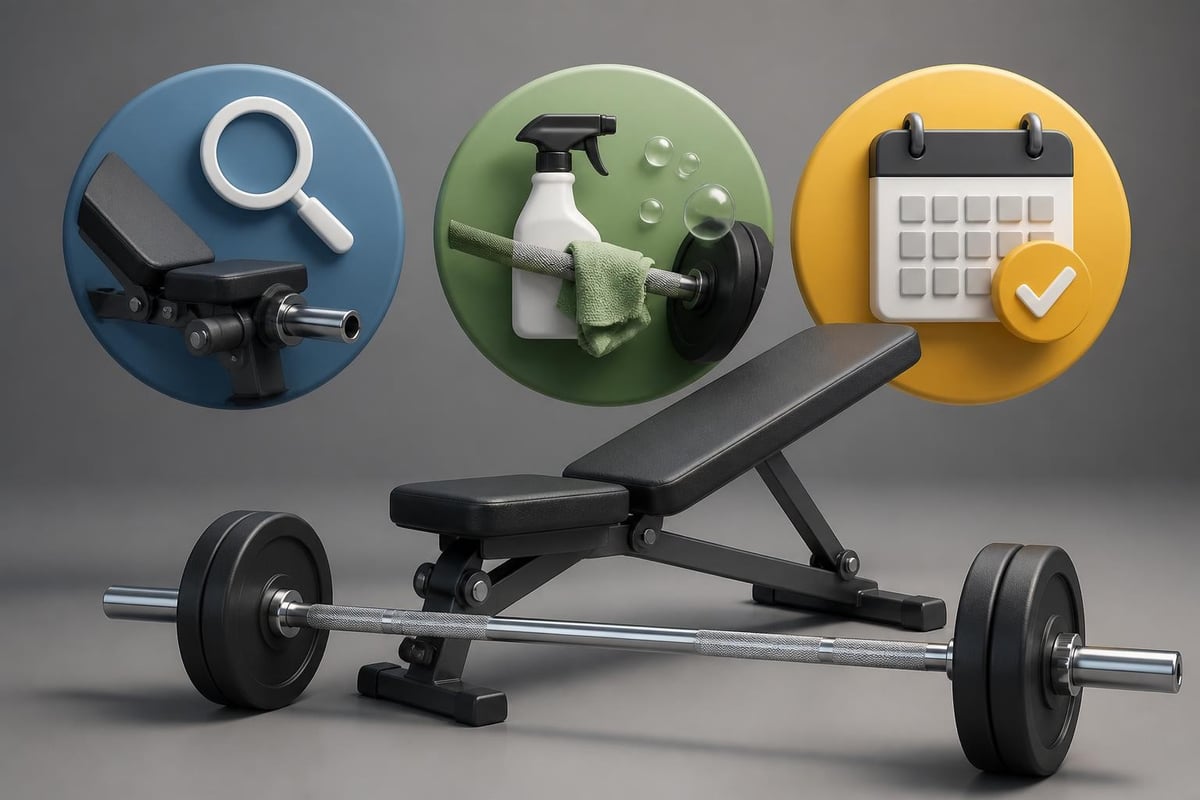
Proper maintenance extends the functional life of gym equipment bench press stations while ensuring safe operation. Weekly inspections should include checking upright stability, pad integrity, frame welds, and adjustment mechanisms. Loose bolts, worn padding, or unstable uprights create safety hazards that must be addressed immediately.
Padding maintenance involves regular cleaning with pH-neutral cleaners that don't degrade vinyl or leather upholstery. Avoid harsh solvents or abrasive materials that accelerate wear. Deep cleaning every 3-6 months removes accumulated skin oils, chalk, and debris that contribute to material breakdown.
Metal Component Care
Steel frames benefit from periodic inspection for rust, particularly in humid environments or facilities with pools nearby. Protective coatings can be reapplied to areas where powder coating or paint has chipped, preventing corrosion from spreading. Stainless steel components require less maintenance but cost significantly more.
Barbell sleeves require occasional lubrication to maintain smooth rotation. Remove the sleeves, clean the bushing or bearing surfaces, and apply a thin coat of lightweight machine oil or specialized barbell lubricant. This maintenance preserves the rotating mechanism that protects wrists and elbows during pressing movements.
| Maintenance Task | Frequency | Time Required | Priority |
|---|---|---|---|
| Visual safety inspection | Weekly | 5 minutes | Critical |
| Bolt tension check | Monthly | 15 minutes | High |
| Pad cleaning | Weekly | 10 minutes | Medium |
| Deep pad cleaning | Quarterly | 30 minutes | Medium |
| Barbell sleeve lubrication | Quarterly | 20 minutes | High |
| Frame touch-up coating | Annually | 45 minutes | Low |
Programming Considerations for Different Goals
The gym equipment bench press serves multiple training objectives depending on loading parameters, volume, and frequency. Strength development protocols typically employ 1-5 repetitions at 85-100% of one-repetition maximum (1RM), with longer rest periods (3-5 minutes) between sets to allow complete phosphocreatine restoration.
Hypertrophy-focused programming uses moderate loads (65-85% 1RM) for 6-12 repetitions, creating metabolic stress and mechanical tension that stimulate muscle growth. Rest periods shorten to 60-90 seconds, maintaining elevated metabolic demand throughout the training session.
Volume and Frequency Guidelines
Total weekly pressing volume significantly influences adaptation. Beginners typically respond well to 3-6 total sets of bench press variations per week, while advanced lifters may perform 12-20+ sets distributed across multiple sessions. Recovery capacity varies considerably based on training age, nutrition, sleep quality, and overall life stress.
Frequency distribution affects both skill acquisition and recovery management. Performing bench press work 2-3 times weekly allows multiple opportunities to practice the movement pattern while providing adequate recovery between sessions. Each session can emphasize different qualities: one focusing on heavy loads, another on volume, and a third on technique refinement.
Supporting your bench press training with proper recovery strategies accelerates progress and reduces injury risk. Recovery-focused equipment and accessories can help manage muscle soreness and maintain tissue quality between training sessions.
Accessory Movements and Equipment Needs
Complete upper body development requires supplementing the primary gym equipment bench press with targeted accessory work. Dumbbell pressing variations address left-right strength imbalances and increase stabilizer muscle activation. Adjustable dumbbells ranging from 5-100+ pounds provide progressive overload options without requiring extensive space.
Cable crossovers, dips, and push-up variations offer different resistance profiles and movement patterns that complement barbell pressing. These exercises require additional equipment beyond the basic bench press setup but contribute to comprehensive chest, shoulder, and triceps development.
Integrating Supplementary Strength Tools
Resistance bands add accommodating resistance that increases throughout the range of motion, creating a different strength curve than free weights alone. Bands can attach to the barbell or provide standalone training options. Resistance training accessories enable varied training stimulus without requiring heavy iron plates.
Grip work and forearm development support bench press performance by improving bar control and reducing grip fatigue during high-volume sessions. Specialized grip trainers strengthen often-neglected muscles that contribute to pressing stability and overall upper body power.
Common Setup Errors and Corrections
Even experienced lifters sometimes overlook critical setup details that compromise gym equipment bench press performance. Improper upright height forces awkward bar paths during unracking and racking, wasting energy and creating injury risk. The bar should clear the uprights by 2-4 inches at lockout, allowing smooth horizontal movement into pressing position.
Inadequate foot placement destabilizes the entire lift. Feet should contact the floor firmly, creating leg drive that contributes to whole-body tension. Some lifters benefit from placing small platforms under their feet if they cannot comfortably reach the floor while maintaining proper shoulder position on the bench.
Pad Positioning and Body Alignment
The lifter's eye position relative to the bar determines leverage and safety during unracking. Eyes should align directly beneath the bar or slightly behind it, allowing vertical or slightly rearward movement when lifting the bar from the uprights. Positioning too far forward requires pulling the bar over the face, creating unnecessary risk.
Shoulder blade positioning affects both safety and performance. Before unracking, lifters should retract and depress the scapulae, creating a stable platform that protects the shoulder joints. This position should be maintained throughout the entire set, with the upper back remaining tight and the chest elevated.
- Bar placement: Directly over or slightly behind eyes when lying on bench
- Grip width: Typically 1.5-2x shoulder width, marked by rings on Olympic bars
- Wrist alignment: Straight vertical alignment with forearms, not bent backward
- Elbow position: 45-75 degree angle from torso, not flared to 90 degrees
- Arch magnitude: Natural lordotic curve, not excessive hyperextension
- Glute contact: Maintained throughout entire set per competition rules
Proper setup combined with quality equipment creates the foundation for safe, effective training. When building your strength training arsenal, comprehensive fitness solutions provide the tools needed to support progressive development across all training phases.
Equipment Investment and Long-Term Value
Quality gym equipment bench press stations represent significant investments that should be evaluated based on projected use, space constraints, and training goals. Commercial-grade equipment costs $400-2,000+ for a complete bench press station but offers superior durability, warranty coverage, and resale value compared to budget alternatives.
Home gym users may find mid-range equipment ($200-600) provides adequate quality for personal use without the premium pricing of commercial models. The key decision factors include weight capacity, frame stability, pad quality, and adjustment mechanisms. Lower-cost benches often compromise on one or more of these features.
Cost-Benefit Analysis
Calculate equipment value by dividing total cost by projected years of use and training sessions. A $600 bench used 150 times annually for 10 years costs $0.40 per session. This per-use cost compares favorably to gym memberships while providing convenience and availability advantages.
Resale value preservation depends on brand reputation, condition maintenance, and market demand. Popular commercial brands retain 40-60% of original value after 5 years with proper maintenance, while unknown brands may sell for only 20-30% of initial cost.
Mastering the gym equipment bench press requires understanding proper equipment selection, setup protocols, and training principles that support long-term development. Whether you're outfitting a commercial facility or building a home gym, investing in quality equipment and learning correct technique creates the foundation for years of productive training. SkyFitNet offers comprehensive fitness and wellness solutions including training equipment, recovery tools, and mobility essentials designed to support your performance goals and active lifestyle. Explore their complete range of strength training and recovery products to build a complete training ecosystem that helps you train smarter, recover better, and live stronger.