

Equipment Home Workout: Build Your Perfect Training Space

Training at home has evolved from a temporary solution to a strategic fitness choice for millions worldwide. An equipment home workout offers unparalleled flexibility, cost efficiency, and privacy while delivering results that rival traditional gym training when properly structured. The key lies in understanding which equipment serves your goals, how to arrange your space effectively, and which programming approaches maximize your investment in both time and gear.
Essential Equipment for Your Home Training Foundation
Building an effective equipment home workout space begins with strategic selection. The right foundational pieces deliver versatility without overwhelming your space or budget.
Core Resistance Tools
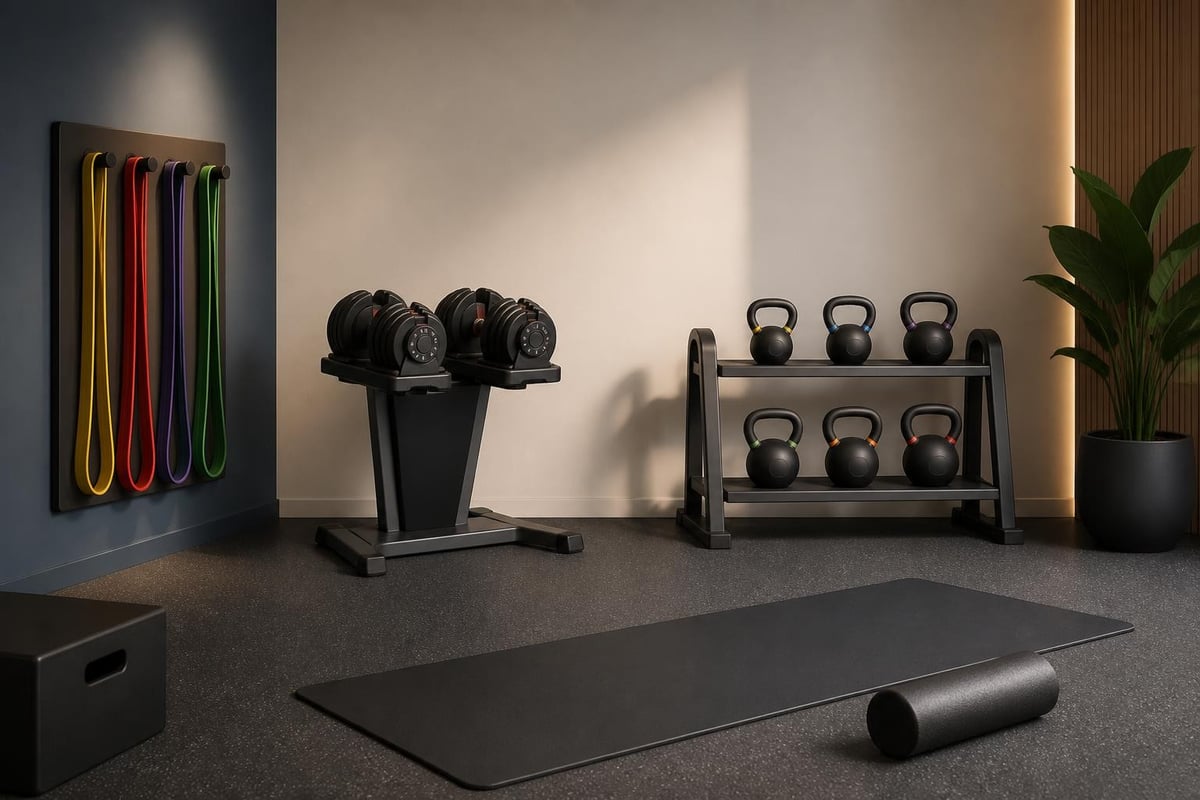
Resistance bands represent the most space-efficient starting point for any home training program. These elastic tools provide variable resistance throughout movement ranges, challenging muscles differently than fixed weights. They adapt to virtually every exercise pattern and fit in a drawer.
Adjustable dumbbells offer progressive overload potential in a compact footprint. Modern designs replace entire dumbbell racks with quick-adjustment mechanisms that dial from five to fifty pounds or more. This single investment supports hundreds of exercises targeting every major muscle group.
Kettlebells bring dynamic training options that blend strength and cardiovascular conditioning. Their offset center of gravity activates stabilizing muscles and enables ballistic movements like swings and snatches that boost metabolic demand.
| Equipment Type | Space Required | Versatility Score | Investment Level |
|---|---|---|---|
| Resistance Bands | Minimal (drawer) | 8/10 | $ |
| Adjustable Dumbbells | Small (2×2 ft) | 9/10 | $$ |
| Kettlebells | Small (1×1 ft per) | 7/10 | $ |
| Barbell with Plates | Medium (6×4 ft) | 10/10 | $$$ |
| Suspension Trainer | Minimal (door mount) | 8/10 | $ |
Stabilization and Support Equipment
A quality exercise mat protects joints during floor work and defines your training zone. Look for 6-8mm thickness for floor exercises, or 10-15mm for high-impact movements. Non-slip surfaces prevent sliding during planks and core work.
Stability balls engage core muscles during both traditional exercises and dedicated balance training. A properly sized ball (based on your height) transforms standard movements into full-body challenges that improve proprioception and functional strength.
The home fitness and strength collection at SkyFitNet provides curated equipment options that support progressive training programs without requiring commercial gym space.
Designing Your Training Space for Maximum Effectiveness
Physical environment significantly impacts workout consistency and safety. Thoughtful setup transforms any available space into a productive training zone.
Space Optimization Strategies
Measure and plan before purchasing equipment. A functional equipment home workout area needs minimum dimensions of 6×6 feet, though 8×10 feet provides comfortable movement range for most exercises. Ceiling height matters for overhead presses and jump movements-eight feet minimum prevents restrictions.
Vertical storage maximizes floor space. Wall-mounted racks hold resistance bands, suspension trainers, and yoga mats. Pegboards with hooks organize smaller items like jump ropes and ankle weights. This approach keeps equipment accessible while maintaining clear training area.
According to Harvard Health's guidance on creating a customized home workout space, proper flooring protects both joints and floors. Interlocking foam tiles cushion impact while rubber mats handle heavy weights without damage.
- Lighting: Bright, adjustable lighting maintains energy and enables proper form monitoring
- Ventilation: Airflow prevents overheating and maintains air quality during intense sessions
- Mirror placement: Full-length mirrors provide immediate form feedback for technique refinement
- Climate control: Temperature regulation (65-68°F optimal) supports performance and comfort
Safety Considerations
Equipment inspection should occur weekly. Check resistance bands for tears, dumbbell collars for tightness, and stability balls for proper inflation. Worn equipment compromises both safety and exercise effectiveness.
Clear pathways prevent trips during circuit training or high-intensity intervals. Store equipment immediately after use rather than leaving it scattered across the floor. This habit reduces injury risk and maintains training area organization.
Consumer Reports' guide on setting up an ideal home gym emphasizes equipment maintenance schedules and safety testing protocols that extend gear lifespan while protecting users.
Programming Your Equipment Home Workout for Measurable Results
Equipment selection means little without structured programming. Effective routines balance intensity, volume, and recovery while progressing systematically toward specific goals.
Resistance Training Frameworks
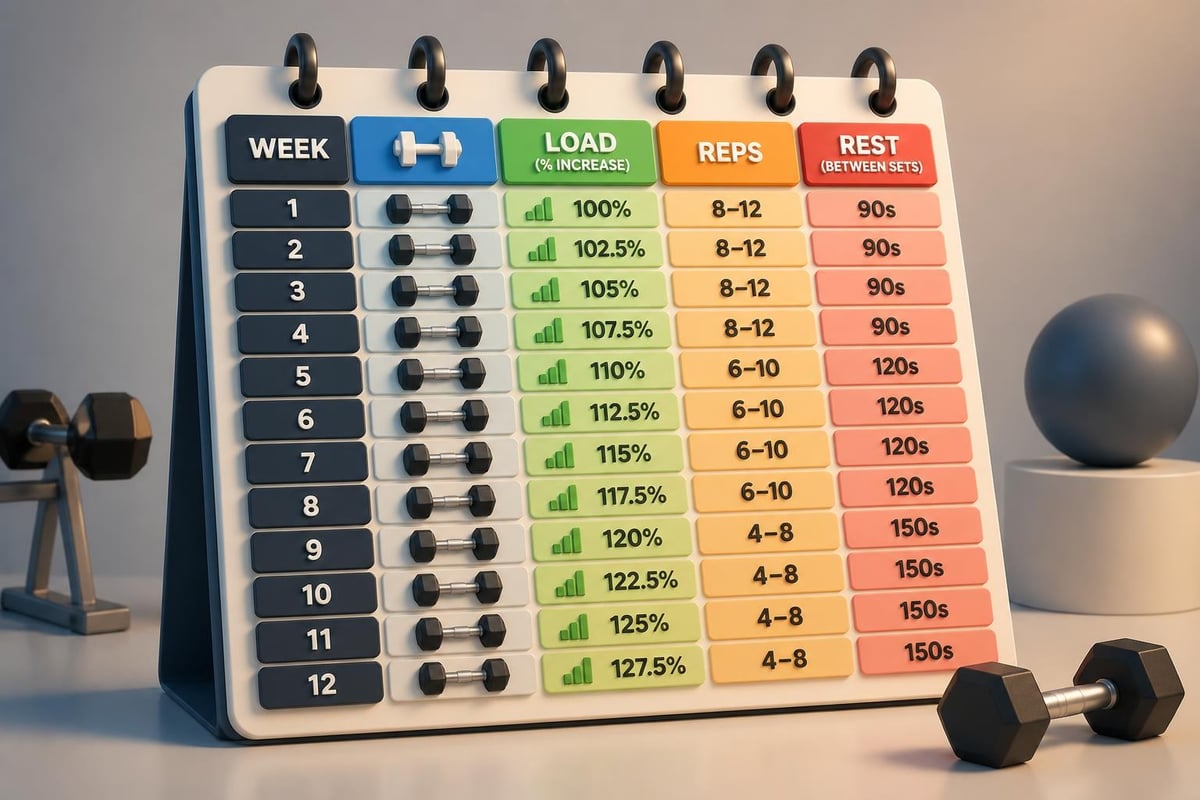
Progressive overload drives strength and muscle development. Each week should increase difficulty through added weight, repetitions, or exercise complexity. An equipment home workout built around dumbbells might progress from 10-pound goblet squats to 25-pound versions over eight weeks.
Research published in the Cochrane review on progressive resistance strength training demonstrates that systematic resistance progression improves physical function across age groups when performed two to three times weekly.
Full-Body Training Split
| Day | Focus Area | Sample Exercises | Equipment Used |
|---|---|---|---|
| Monday | Push | Dumbbell press, overhead press, tricep extensions | Dumbbells, resistance bands |
| Wednesday | Pull | Bent rows, bicep curls, face pulls | Dumbbells, bands |
| Friday | Lower Body & Core | Goblet squats, lunges, planks, deadlifts | Dumbbells, kettlebell, mat |
This three-day framework allows 48-hour recovery between sessions while hitting all major movement patterns. Beginners perform two sets of 10-12 repetitions; intermediate trainees progress to three sets of 8-10 reps with heavier loads.
Cardiovascular Integration
Cardio equipment isn't mandatory for effective conditioning. High-intensity interval training (HIIT) using bodyweight and minimal equipment delivers cardiovascular benefits comparable to steady-state cardio in less time.
A systematic review published in BMC Sports Science confirms home-based HIIT improves cardiorespiratory fitness when performed 2-3 times weekly. Kettlebell swings, jump rope intervals, or resistance band exercises in circuit format elevate heart rate effectively.
Sample HIIT circuit for equipment home workout:
- Kettlebell swings – 40 seconds
- Rest – 20 seconds
- Resistance band squats – 40 seconds
- Rest – 20 seconds
- Dumbbell thrusters – 40 seconds
- Rest – 20 seconds
- Repeat circuit 4-6 times
The yoga, Pilates, and mobility collection supports recovery and flexibility work that complements resistance and cardio training within a balanced program.
Addressing Common Equipment Home Workout Challenges
Even well-designed programs encounter obstacles. Understanding common challenges and evidence-based solutions maintains progress and prevents frustration.
Motivation and Consistency
Environmental cues trigger workout habits. Leaving equipment visible reminds you of training commitments. Setting up the night before reduces morning friction. Many successful home exercisers schedule workouts as non-negotiable appointments.
The NHS Better Health home workout resources provide free guided sessions that add structure and variety when self-directed motivation wanes.
Accountability mechanisms counteract isolation. Virtual training partners, online communities, or family participation create social pressure that reinforces commitment. Tracking workouts in a journal or app makes progress visible and builds momentum.
Plateau Prevention
Training adaptation requires continuous challenge. When exercises feel easy at current weight or resistance, progression options include:
- Increasing load by 5-10%
- Adding repetitions (2-3 more per set)
- Slowing tempo (4-second lowering phase)
- Reducing rest periods (60 to 45 seconds)
- Introducing unilateral variations (single-arm or single-leg)
Periodization structures planned variation. Four-week blocks focusing on strength (3-5 reps, heavy weight), hypertrophy (8-12 reps, moderate weight), or endurance (15-20 reps, lighter weight) prevent stagnation while developing different fitness qualities.
Research from PubMed on home-based physical activity programs indicates that structured variation maintains adherence and effectiveness over extended periods, particularly when programs include goal-setting and self-monitoring components.
Space and Equipment Limitations
Circuit training maximizes limited equipment. Rather than completing all sets of one exercise before moving to the next, rotate through 3-5 exercises with minimal rest. This approach maintains intensity while one muscle group recovers as another works.
Bodyweight progressions extend equipment utility. After mastering dumbbell squats, pistol squat progressions (single-leg) increase difficulty without additional weight. Push-up variations (decline, archer, one-arm progressions) challenge upper body strength indefinitely.
The recovery and muscle care products support equipment home workout sustainability by addressing muscle soreness and mobility restrictions that accumulate with consistent training.
Evidence-Based Activity Recommendations for Home Training
Understanding how much and what types of activity support health goals ensures your equipment home workout aligns with scientific guidelines.
Weekly Activity Targets
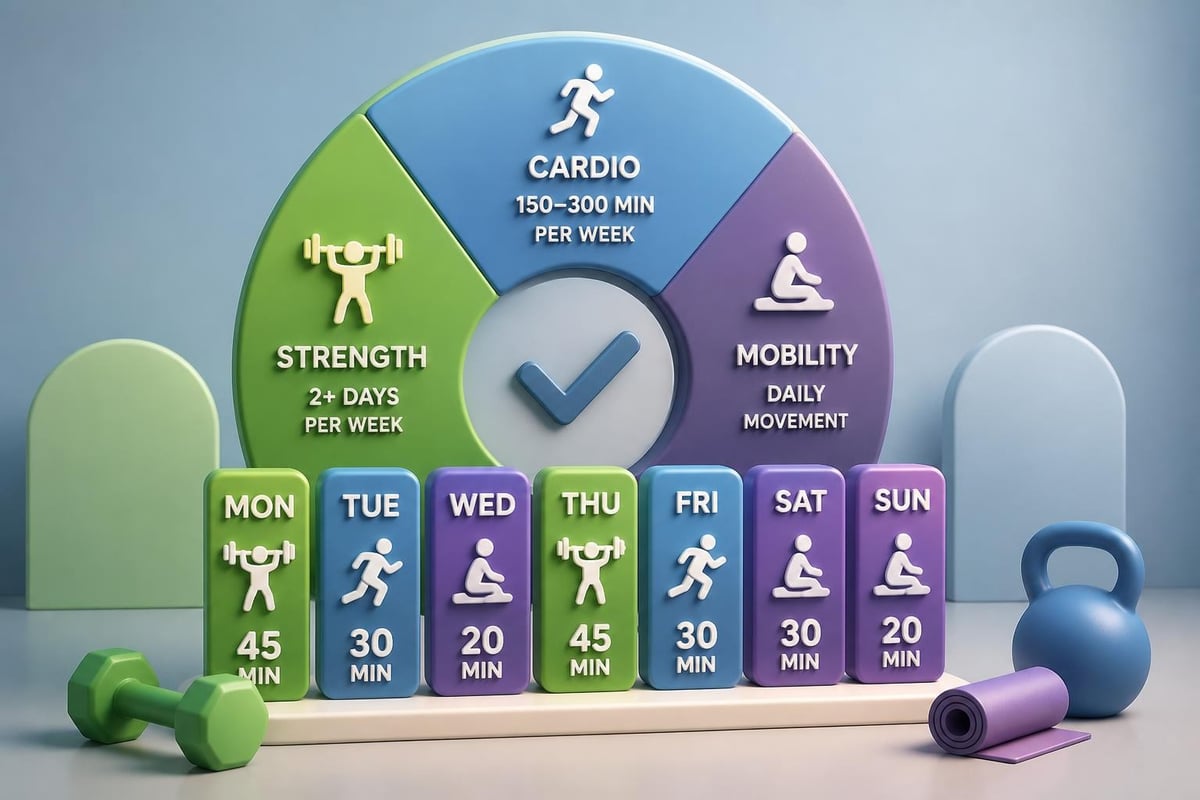
The WHO Guidelines on Physical Activity recommend adults perform 150-300 minutes of moderate-intensity or 75-150 minutes of vigorous-intensity aerobic activity weekly, plus muscle-strengthening activities involving all major muscle groups on two or more days.
An equipment home workout satisfies these recommendations efficiently:
Strength-focused days (Monday, Wednesday, Friday):
- 45 minutes resistance training
- Major muscle groups (legs, chest, back, shoulders, arms, core)
- Progressive loads using dumbbells, kettlebells, and bands
Active recovery or cardio (Tuesday, Thursday):
- 20-30 minutes HIIT or moderate cardio
- Mobility work or yoga
- Lower intensity supports recovery while accumulating aerobic minutes
Weekend flexibility:
- One additional strength or cardio session
- Active recreation (hiking, sports, cycling)
- Full rest if weekly volume is adequate
This framework delivers 135-225 minutes of resistance training plus 40-150 minutes of cardiovascular work, meeting or exceeding minimum recommendations while fitting realistic schedules.
Adaptation for Different Populations
Older adults benefit tremendously from home-based resistance training. Balance exercises using stability equipment reduce fall risk. Seated variations accommodate mobility limitations while still providing stimulus for strength maintenance.
Beginners should prioritize movement quality over load. Mastering bodyweight patterns (squats, hinges, pushes, pulls) establishes neuromuscular coordination before adding significant resistance. Two weekly sessions of 30 minutes build habit and capacity.
Advanced trainees need periodization and specialty equipment for continued adaptation. Olympic lifting platforms, heavier kettlebells, or specialized bars enable continued strength development. The best seller collection features proven equipment that supports intermediate to advanced progression.
Integration with Comprehensive Wellness Strategies
Physical training represents one pillar of complete fitness. An equipment home workout gains effectiveness when integrated with complementary wellness practices.
Recovery Protocols
Adequate recovery determines how effectively your body adapts to training stress. Sleep quality, nutrition timing, and active recovery modalities all influence results.
Post-workout nutrition within 60 minutes supports muscle protein synthesis. Combining protein (20-40g) with carbohydrates replenishes glycogen and initiates repair processes. Hydration throughout the day maintains performance capacity for subsequent sessions.
The hydration and workout essentials ensure proper fluid intake before, during, and after training-critical for performance and recovery.
Mobility and Flexibility Work
Static stretching post-workout maintains range of motion while dynamic mobility preps joints for training. Foam rolling and massage tools address muscle tension and trigger points that develop with repetitive movement patterns.
Dedicating 10-15 minutes to mobility work 3-4 times weekly prevents movement restrictions that compromise exercise form and increase injury risk. The posture and everyday mobility products support this often-neglected aspect of comprehensive fitness.
Lifestyle Activity Integration
Structured exercise complements, rather than replaces, daily movement. Standing desk usage, walking meetings, and active commuting accumulate activity outside formal workouts. This non-exercise activity thermogenesis (NEAT) contributes significantly to total daily energy expenditure.
Viewing fitness holistically-structured equipment home workout sessions within a generally active lifestyle-produces superior health outcomes compared to isolated intense exercise periods surrounded by prolonged sitting.
Equipment Selection for Specific Training Goals
Different objectives require tailored equipment priorities. Understanding these relationships optimizes investment and training focus.
Strength and Muscle Development
Heavy, progressive loading drives hypertrophy and strength gains. Adjustable dumbbells up to 50+ pounds, kettlebells from 25-70 pounds, or barbell sets enable continued progression as capacity increases.
Exercises emphasizing compound movements (squats, deadlifts, presses, rows) recruit maximum muscle mass and produce greatest strength adaptations. ACSM's home gym essentials guide emphasizes these multi-joint exercises as programming foundations.
Functional Fitness and Athletic Performance
Movement variety and instability develop coordination, balance, and real-world strength. Stability balls, suspension trainers, and resistance bands enable three-dimensional movement patterns that mirror athletic demands.
Plyometric exercises (jump squats, box jumps, medicine ball throws) develop power when integrated 1-2 times weekly. These high-intensity movements require adequate recovery but significantly enhance athletic capacity.
Body Composition and Weight Management
Metabolic conditioning through circuit training and HIIT maximizes caloric expenditure. Combining resistance and cardiovascular elements within single sessions saves time while promoting favorable body composition changes.
Kettlebell complexes, dumbbell circuits, and resistance band intervals elevate heart rate while maintaining strength stimulus. This dual benefit makes them efficient for those balancing multiple training objectives.
| Goal | Priority Equipment | Training Frequency | Session Duration |
|---|---|---|---|
| Strength | Heavy dumbbells, barbell | 3-4×/week | 45-60 min |
| Fat Loss | Kettlebells, bands, jump rope | 4-5×/week | 30-45 min |
| Functional Fitness | Suspension trainer, stability ball | 3-4×/week | 40-50 min |
| General Health | Bands, light dumbbells, mat | 2-3×/week | 30-40 min |
The newest arrivals at SkyFitNet feature innovative equipment designs that address emerging training methodologies and user preferences.
Long-Term Success Strategies for Home Training
Sustainability separates temporary fitness bursts from lasting lifestyle change. Several factors predict long-term equipment home workout adherence.
Habit Architecture
Consistency trumps intensity for sustainable results. Three moderate 30-minute sessions weekly, maintained for years, produce superior outcomes compared to sporadic intense training followed by extended breaks.
Starting minimally-perhaps 15 minutes, twice weekly-and gradually increasing creates manageable adaptation. Small wins build confidence and identity as someone who exercises regularly.
Goal Setting and Tracking
SMART goals (Specific, Measurable, Achievable, Relevant, Time-bound) provide direction and milestones. Rather than "get stronger," specify "increase dumbbell press from 20 to 30 pounds within 12 weeks."
Training logs document progress and identify patterns. Reviewing past performance reveals what works, what doesn't, and where adjustments might accelerate results. Digital apps simplify tracking though simple notebooks work equally well.
Community and Support
Social connection combats the isolation that sometimes accompanies home training. Online communities, virtual training groups, or family participation provide encouragement and accountability.
Sharing progress, challenges, and solutions creates collective wisdom greater than individual knowledge. Many successful home exercisers credit community support as the factor that sustained commitment through difficult periods.
Equipment Care and Maintenance
Proper maintenance extends equipment lifespan and ensures safety. Wipe down resistance bands after use to prevent rubber degradation. Check dumbbell adjustment mechanisms monthly. Replace worn grips or damaged components promptly.
Organized storage protects investment. Dedicated shelving, wall mounts, or storage containers prevent damage from moisture, temperature extremes, or accidental impacts. Well-maintained equipment retains resale value if goals change.
Advanced Programming Considerations
As training maturity develops, more sophisticated approaches optimize continued adaptation.
Periodization Models
Linear periodization progresses from high volume/low intensity toward low volume/high intensity over 12-16 weeks. This traditional model works well for strength-focused programs with specific peak performance dates.
Undulating periodization varies intensity and volume within each week or training block. Monday might emphasize heavy strength work (5×5), Wednesday targets hypertrophy (3×10), and Friday focuses on power (5×3 with explosive tempo).
Block periodization dedicates 3-4 week periods to specific adaptations (strength endurance, maximum strength, power) in sequence. Each block builds capacity for the next, creating cumulative improvement.
Exercise Selection Principles
Movement patterns rather than specific exercises should guide programming. Ensure each session includes:
- Knee-dominant (squats, lunges)
- Hip-dominant (deadlifts, hip thrusts)
- Horizontal push (push-ups, dumbbell press)
- Horizontal pull (rows, band pulls)
- Vertical push (overhead press)
- Vertical pull (pull-ups, lat pulldowns)
- Core stability (planks, carries)
This comprehensive approach prevents imbalances and ensures complete physical development.
Deload Strategies
Planned recovery weeks every 4-6 weeks prevent overtraining and optimize long-term progress. Reduce training volume by 40-50% or intensity by 20-30% while maintaining movement patterns.
Deload weeks allow accumulated fatigue to dissipate, connective tissues to repair, and central nervous system to recover. Many athletes discover they return stronger after these strategic rest periods.
Strategic equipment home workout programs deliver exceptional results when built on proper equipment selection, intelligent space design, evidence-based programming, and sustainable habits. The principles outlined here transform available space and modest equipment investments into comprehensive training systems that support strength, health, and performance goals for years. Whether you're establishing your first home training area or refining an existing setup, focusing on fundamentals while progressively challenging your capacity creates the foundation for lasting fitness success. SkyFitNet provides the quality training, recovery, and mobility essentials you need to build your ideal home workout environment and support your journey toward training smarter, recovering better, and living stronger.